Seasonality of infectious diseases and severe acute respiratory syndrome-what we don't know can hurt us
- PMID: 15522683
- PMCID: PMC7129396
- DOI: 10.1016/S1473-3099(04)01177-6
Seasonality of infectious diseases and severe acute respiratory syndrome-what we don't know can hurt us
Abstract
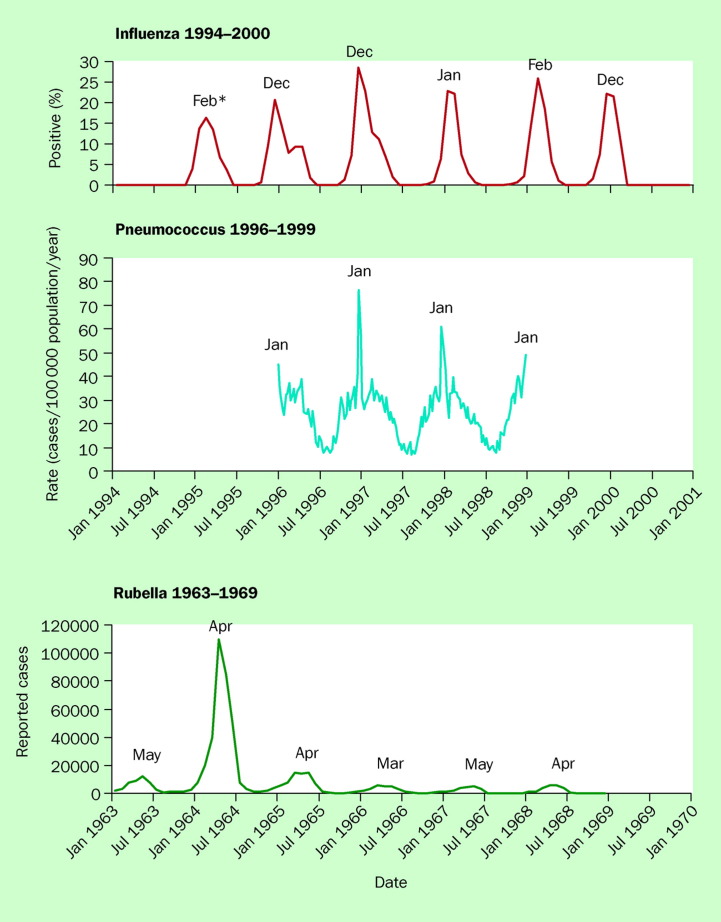
The novel severe acute respiratory syndrome (SARS) coronavirus caused severe disease and heavy economic losses before apparently coming under complete control. Our understanding of the forces driving seasonal disappearance and recurrence of infectious diseases remains fragmentary, thus limiting any predictions about whether, or when, SARS will recur. It is true that most established respiratory pathogens of human beings recur in wintertime, but a new appreciation for the high burden of disease in tropical areas reinforces questions about explanations resting solely on cold air or low humidity. Seasonal variation in host physiology may also contribute. Newly emergent zoonotic diseases such as ebola or pandemic strains of influenza have recurred in unpredictable patterns. Most established coronaviruses exhibit winter seasonality, with a unique ability to establish persistent infections in a minority of infected animals. Because SARS coronavirus RNA can be detected in the stool of some individuals for at least 9 weeks, recurrence of SARS from persistently shedding human or animal reservoirs is biologically plausible.
Figures

References
-
- Chinese SARS Molecular Epidemiology Consortium Molecular evolution of the SARS coronavirus during the course of the SARS epidemic in China. Science. 2004;303:1666–1669. - PubMed
-
- Anonymous Update: Influenza activity–United States, 1999–2000 season. MMWR Morb Mortal Wkly Rep. 2000;49:173–177. - PubMed
-
- Witte J, Karchmer A, Case M. Epidemiology of rubella. Am J Dis Child. 1969;118:107–111. - PubMed
Publication types
MeSH terms
LinkOut - more resources
Full Text Sources
Miscellaneous