Review
doi: 10.1136/bmj.329.7474.1093.
Users' guide to detecting misleading claims in clinical research reports
Affiliations
- PMID: 15528623
- PMCID: PMC526126
- DOI: 10.1136/bmj.329.7474.1093
Item in Clipboard
Review
Users' guide to detecting misleading claims in clinical research reports
BMJ.
.
Abstract
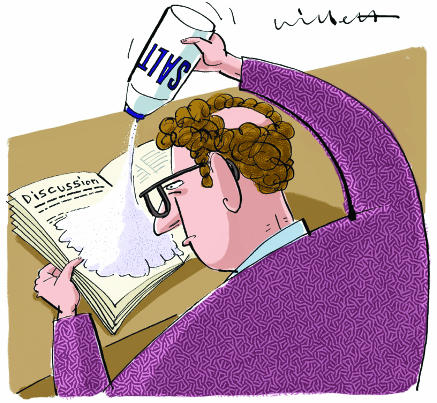
Plenty of advice is available to help readers identify studies with weak methods, but would you be able to identify misleading claims in a report of a well conducted study?
Comment in
-
Users' guide to detecting misleading claims in research: meta-analyses have led to misleading claims in the past.BMJ. 2005 Jan 15;330(7483):145; author reply 146. doi: 10.1136/bmj.330.7483.145-b. BMJ. 2005. PMID: 15649932 Free PMC article. No abstract available.
-
Users' guide to detecting misleading claims in research: discussion section helps redress the balance.BMJ. 2005 Jan 15;330(7483):145; author reply 146. doi: 10.1136/bmj.330.7483.145-a. BMJ. 2005. PMID: 15649933 Free PMC article. No abstract available.
-
Users' guide to detecting misleading claims in research: misleading claims may be symptom of even more serious flaws.BMJ. 2005 Jan 15;330(7483):145; author reply 146. doi: 10.1136/bmj.330.7483.145. BMJ. 2005. PMID: 15649934 Free PMC article. No abstract available.
References
-
- Greenhalgh T. How to read a paper. London: BMJ Books, 2001.
-
- Guyatt G, Rennie D, eds. Users' guides to the medical literature. A manual for evidence-based clinical practice. Chicago, IL: AMA Press, 2002.
-
- Bero LA, Rennie D. Influences on the quality of published drug studies. Int J Technol Assess Health Care 1996;12: 209-37. - PubMed
-
- Cook D, Guyatt G. Colloid use for fluid resuscitation: evidence and spin. Ann Intern Med 2001;135: 205-8. - PubMed
Publication types
MeSH terms
LinkOut - more resources
Full Text Sources