


Isoform-specific expression of the Coxsackie and adenovirus receptor (CAR) in neuromuscular junction and cardiac intercalated discs
- PMID: 15533241
- PMCID: PMC533869
- DOI: 10.1186/1471-2121-5-42
Isoform-specific expression of the Coxsackie and adenovirus receptor (CAR) in neuromuscular junction and cardiac intercalated discs
Abstract
Background: The Coxsackie and adenovirus receptor (CAR) has a restricted expression pattern in the adult. In skeletal muscle, although CAR is expressed in immature fibers, its transcript levels are barely detectable in mature muscle. This is in contrast to the robust expression observed in the heart. However, both heart and skeletal muscle are susceptible to infection with the Coxsackie B virus which utilizes primarily CAR for cellular internalization. The specific point of viral entry in skeletal and heart muscle remains unknown.
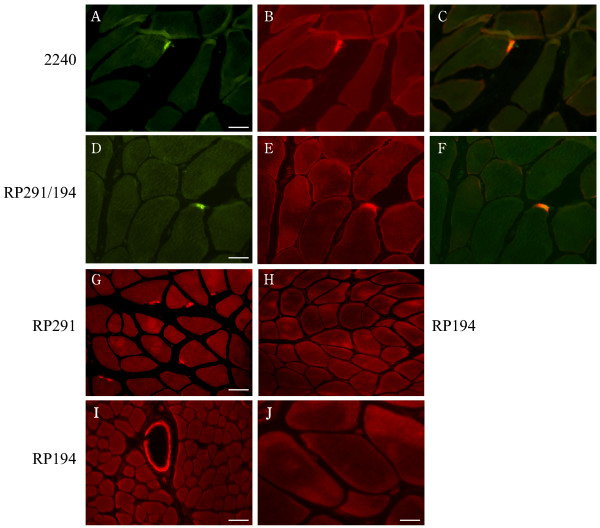
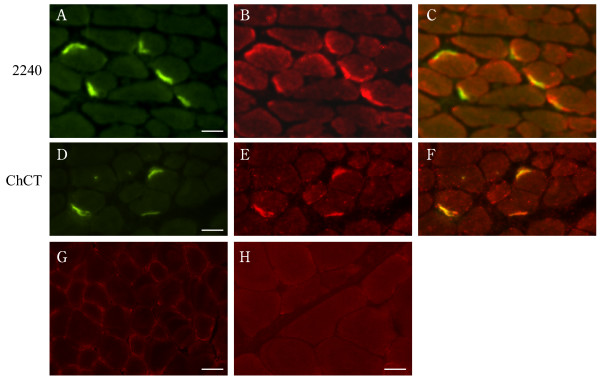
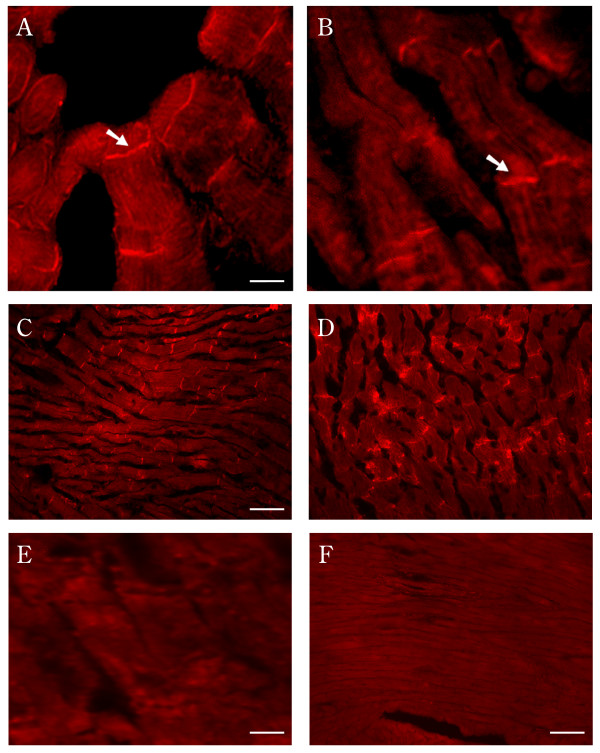
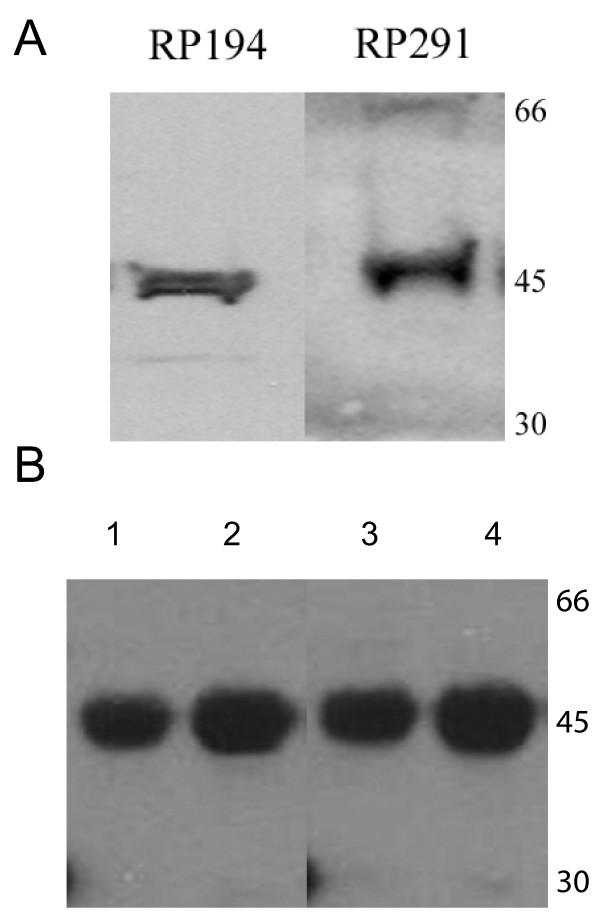
Results: Using antibodies directed against the extracellular and the cytoplasmic domains of CAR, we show CAR in normal human and mouse skeletal muscle to be a novel component of the neuromuscular junction. In cardiac muscle, CAR immunoreactivity is observed at the level of intercalated discs. We demonstrate a single isoform of CAR to be expressed exclusively at the human neuromuscular junction whereas both predominant CAR isoforms are expressed at the intercalated discs of non-diseased human heart.
Conclusion: The localization of CAR to these important junctional complexes suggests that CAR may play both a structural and a regulatory role in skeletal and cardiac muscle, and that these complexes may serve as a point of entry for Coxsackie B virus.
Figures
References
-
- Martino TA, Petric M, Weingartl H, Bergelson JM, Opavsky MA, Richardson CD, Modlin JF, Finberg RW, Kain KC, Willis N, Gauntt CJ, Liu PP. The coxsackie-adenovirus receptor (CAR) is used by reference strains and clinical isolates representing all six serotypes of coxsackievirus group B and by swine vesicular disease virus. Virology. 2000;271:99–108. doi: 10.1006/viro.2000.0324. - DOI - PubMed
Publication types
MeSH terms
Substances
LinkOut - more resources
Full Text Sources
Other Literature Sources
Molecular Biology Databases
