


Molecular dynamics simulations of spontaneous fibril formation by random-coil peptides
- PMID: 15534217
- PMCID: PMC526199
- DOI: 10.1073/pnas.0407273101
Molecular dynamics simulations of spontaneous fibril formation by random-coil peptides
Abstract
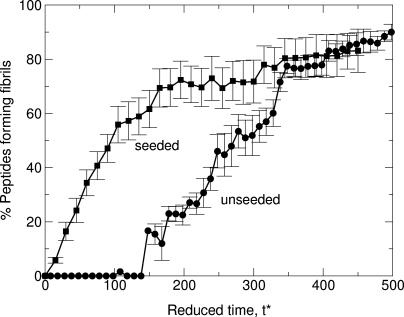
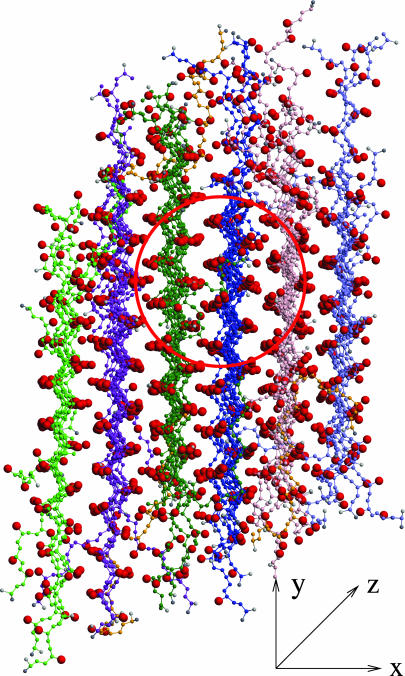
Assembly of normally soluble proteins into amyloid fibrils is a cause or associated symptom of numerous human disorders, including Alzheimer's and the prion diseases. We report molecular-level simulation of spontaneous fibril formation. Systems containing 12-96 model polyalanine peptides form fibrils at temperatures greater than a critical temperature that decreases with peptide concentration and exceeds the peptide's folding temperature, consistent with experimental findings. Formation of small amorphous aggregates precedes ordered nucleus formation and subsequent rapid fibril growth through addition of beta-sheets laterally and monomeric peptides at fibril ends. The fibril's structure is similar to that observed experimentally.
Figures



References
Publication types
MeSH terms
Substances
Grants and funding
LinkOut - more resources
Full Text Sources
Other Literature Sources
