


Dependence of ORC silencing function on NatA-mediated Nalpha acetylation in Saccharomyces cerevisiae
- PMID: 15542839
- PMCID: PMC529049
- DOI: 10.1128/MCB.24.23.10300-10312.2004
Dependence of ORC silencing function on NatA-mediated Nalpha acetylation in Saccharomyces cerevisiae
Abstract
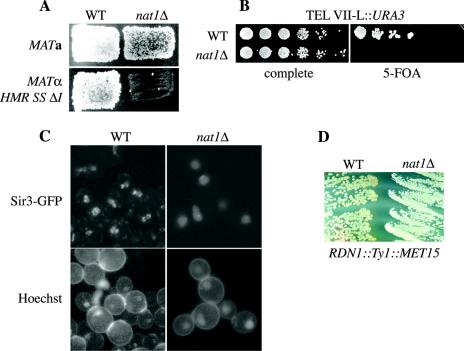
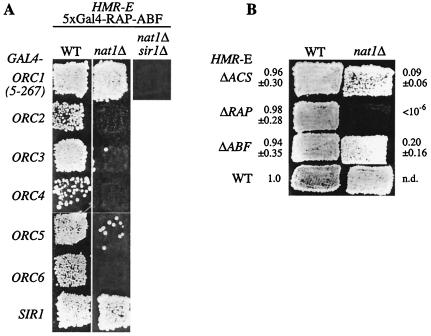
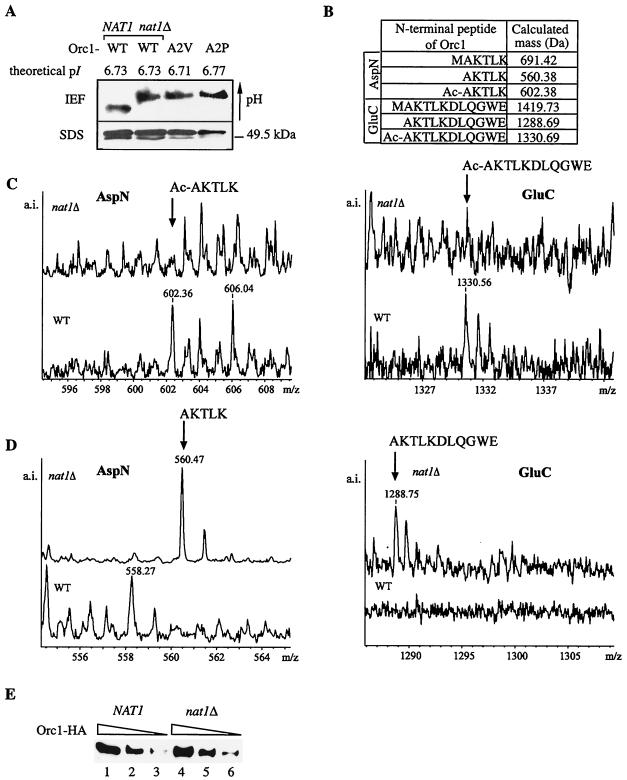
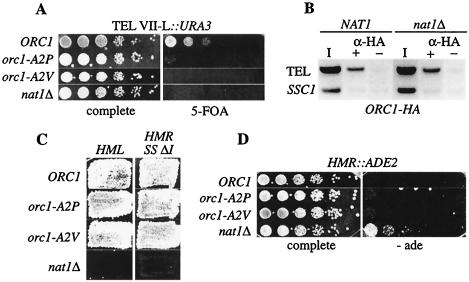
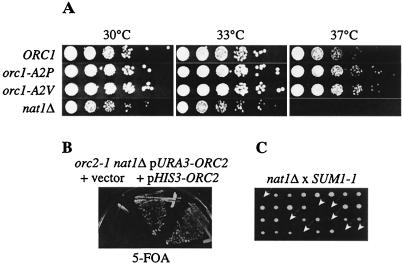
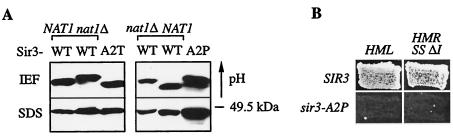
N(alpha) acetylation is one of the most abundant protein modifications in eukaryotes and is catalyzed by N-terminal acetyltransferases (NATs). NatA, the major NAT in Saccharomyces cerevisiae, consists of the subunits Nat1p, Ard1p, and Nat5p and is necessary for the assembly of repressive chromatin structures. Here, we found that Orc1p, the large subunit of the origin recognition complex (ORC), required NatA acetylation for its role in telomeric silencing. NatA functioned genetically through the ORC binding site of the HMR-E silencer. Furthermore, tethering Orc1p directly to the silencer circumvented the requirement for NatA in silencing. Orc1p was N(alpha) acetylated in vivo by NatA. Mutations that abrogated its ability to be acetylated caused strong telomeric derepression. Thus, N(alpha) acetylation of Orc1p represents a protein modification that modulates chromatin function in S. cerevisiae. Genetic evidence further supported a functional link between NatA and ORC: (i) nat1Delta was synthetically lethal with orc2-1 and (ii) the synthetic lethality between nat1Delta and SUM1-1 required the Orc1 N terminus. We also found Sir3p to be acetylated by NatA. In summary, we propose a model by which N(alpha) acetylation is required for the binding of silencing factors to the N terminus of Orc1p and Sir3p to recruit heterochromatic factors and establish repression.
Figures
References
-
- Aparicio, O. M., B. L. Billington, and D. E. Gottschling. 1991. Modifiers of position effect are shared between telomeric and silent mating-type loci in Saccharomyces cerevisiae. Cell 66:1279-1287. - PubMed
-
- Arnold, R. J., B. Polevoda, J. P. Reilly, and F. Sherman. 1999. The action of N-terminal acetyltransferases on yeast ribosomal proteins. J. Biol. Chem. 274:37035-37040. - PubMed
-
- Bell, S. P., R. Kobayashi, and B. Stillman. 1993. Yeast origin recognition complex functions in transcription silencing and DNA replication. Science 262:1844-1849. - PubMed
-
- Bell, S. P., J. Mitchell, J. Leber, R. Kobayashi, and B. Stillman. 1995. The multidomain structure of Orc1p reveals similarity to regulators of DNA replication and transcriptional silencing. Cell 83:563-568. - PubMed
-
- Brand, A. H., G. Micklem, and K. Nasmyth. 1987. A yeast silencer contains sequences that can promote autonomous plasmid replication and transcriptional activation. Cell 51:709-719. - PubMed
Publication types
MeSH terms
Substances
LinkOut - more resources
Full Text Sources
Molecular Biology Databases
