


RNA interference using boranophosphate siRNAs: structure-activity relationships
- PMID: 15545637
- PMCID: PMC534620
- DOI: 10.1093/nar/gkh936
RNA interference using boranophosphate siRNAs: structure-activity relationships
Abstract
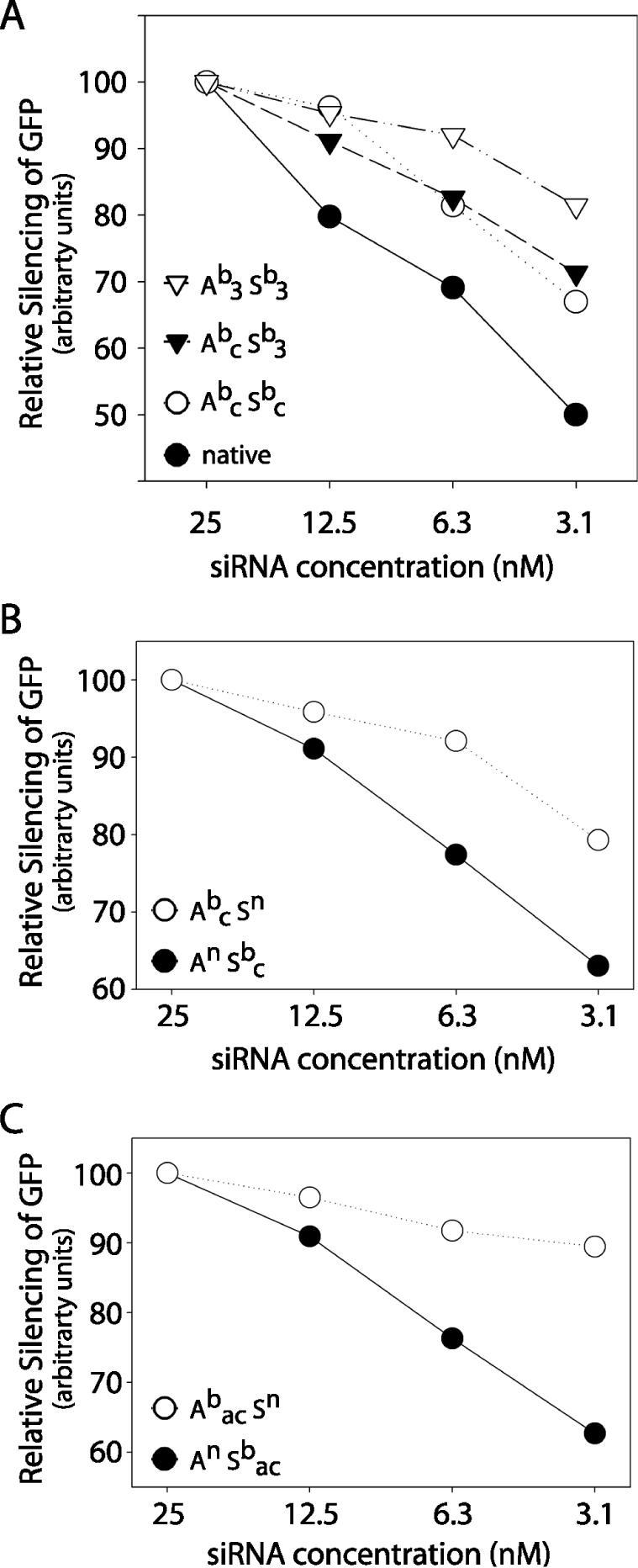
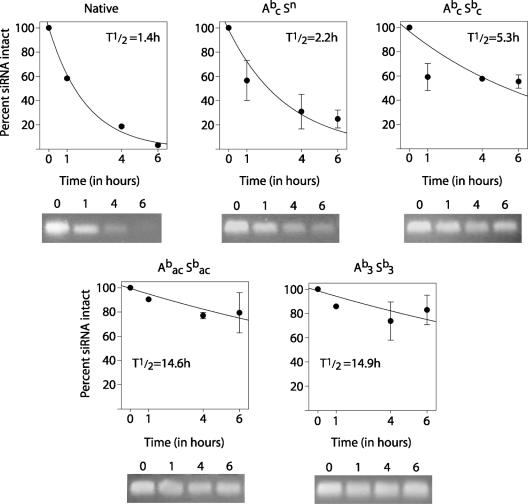
In RNA interference (RNAi), short double-stranded RNA (known as siRNA) inhibits expression from homologous genes. Clinical or pre-clinical use of siRNAs is likely to require stabilizing modifications because of the prevalence of intracellular and extracellular nucleases. In order to examine the effect of modification on siRNA efficacy and stability, we developed a new method for synthesizing stereoregular boranophosphate siRNAs. This work demonstrates that boranophosphate siRNAs are consistently more effective than siRNAs with the widely used phosphorothioate modification. Furthermore, boranophosphate siRNAs are frequently more active than native siRNA if the center of the antisense strand is not modified. Boranophosphate modification also increases siRNA potency. The finding that boranophosphate siRNAs are at least ten times more nuclease resistant than unmodified siRNAs may explain some of the positive effects of boranophosphate modification. The biochemical properties of boranophosphate siRNAs make them promising candidates for an RNAi-based therapeutic.
Figures


References
-
- Denli A.M. and Hannon,G.J. (2003) RNAi: an ever-growing puzzle. Trends Biochem. Sci., 28, 196–201. - PubMed
-
- McManus M.T. and Sharp,P.A. (2002) Gene silencing in mammals by small interfering RNAs. Nature Rev. Genet., 3, 737–747. - PubMed
-
- Tuschl T. (2002) Expanding small RNA interference. Nat. Biotechnol., 20, 446–448. - PubMed
-
- Hutvagner G. and Zamore,P.D. (2002) RNAi: nature abhors a double-strand. Curr. Opin. Genet. Dev., 12, 225–232. - PubMed
Publication types
MeSH terms
Substances
Grants and funding
LinkOut - more resources
Full Text Sources
Other Literature Sources
