


Bitter receptor gene (TAS2R38), 6-n-propylthiouracil (PROP) bitterness and alcohol intake
- PMID: 15547448
- PMCID: PMC1397913
- DOI: 10.1097/01.alc.0000145789.55183.d4
Bitter receptor gene (TAS2R38), 6-n-propylthiouracil (PROP) bitterness and alcohol intake
Abstract
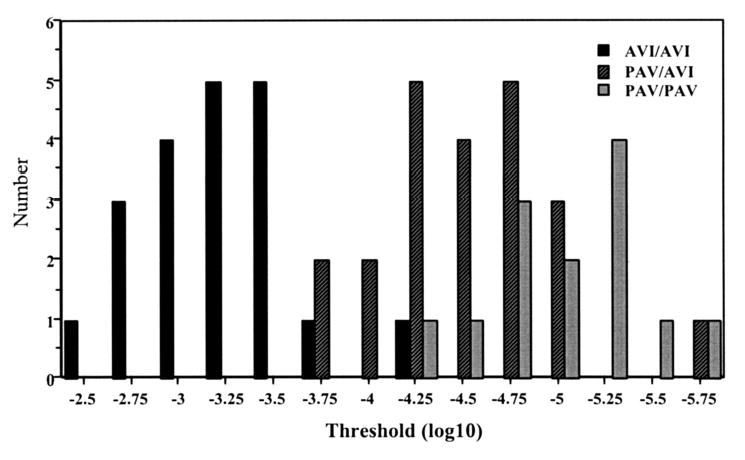
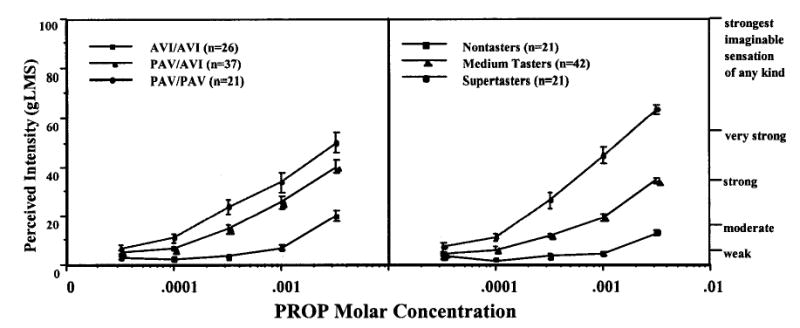
Background: Phenylthiocarbamide (PTC) and 6-n-propylthiouracil (PROP), chemically related compounds, are probes for genetic variation in bitter taste, although PROP is safer with less sulfurous odor. Threshold for PROP distinguishes nontasters (increased threshold) from tasters (lower threshold); perceived intensity subdivides tasters into medium tasters (PROP is bitter) and supertasters (PROP is very bitter). Compared with supertasters, nontasters have fewer taste papillae on the anterior tongue (fungiform papillae) and experience less negative (e.g., bitterness) and more positive (eg, sweetness) sensations from alcohol. We determined whether the TAS2R38 gene at 7q36 predicted PROP bitterness, alcohol sensation and use.
Methods: Healthy adults (53 women, 31 men; mean age 36 years)--primarily light and moderate drinkers--reported the bitterness of five PROP concentrations (0.032-3.2 mM) and intensity of 50% ethanol on the general Labeled Magnitude Scale. PROP threshold and density of fungiform papillae were also measured. Subjects had common TAS2R38 gene haplotypes [alanine-valine-isoleucine (AVI) and proline-alanine-valine (PAV)].
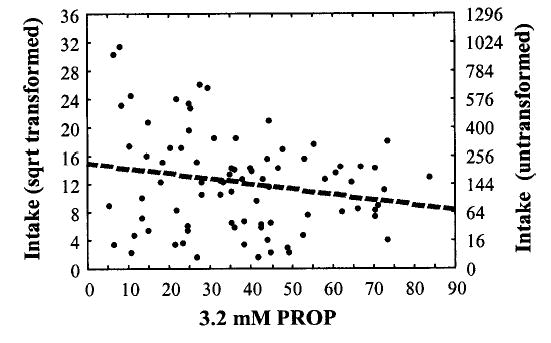
Results: PROP bitterness varied significantly across genotypes with repeated measures ANOVA: 26 AVI/AVI homozygotes tasted less bitterness than either 37 PAV/AVI heterozygotes or 21 PAV/PAV homozygotes. The PAV/PAV group exceeded the PAV/AVI group for bitterness only for the top PROP concentrations. The elevated bitterness was musch less than if we defined the groups using psychophysical criteria. With multiple regression analyses, greater bitterness from 3.2 mM PROP was a significant predictor of greater ethanol intensity and less alcohol intake--effects separate from age and sex. Genotype was a significant predictor of alcohol intake, but not ethanol intensity. With ANOVA, AVI/AVI homozygotes reported higher alcohol use than either PAV/AVI heterozygotes or PAV/PAV homozygotes. When age effects were minimized, PROP bitterness explained more variance in alcohol intake than did the TAS2R38 genotype.
Conclusions: These results support taste genetic effects on alcohol intake. PROP bitterness serves as a marker of these effects.
Figures

References
-
- Bamshad M, Wooding S, Salisbury BA, Stephens JC. Deconstructing the relationship between genetics and race. Nat Rev Genet. 2004;5:598–609. - PubMed
-
- Barnicot NA, Harris H, Kalmus H. Taste thresholds of further eighteen compounds and their correlation with P.T.C. thresholds. Ann Eugen. 1951;16:119–128. - PubMed
-
- Bartoshuk L. The psychophysics of taste. Am J Clin Nutr. 1978;31:1068–1077. - PubMed
-
- Bartoshuk L, Conner E, Grubin D, Karrer T, Kochenbach K, Palcso M, Snow D, Pelchat M, Danowski S. PROP supertasters and the perception of ethyl alcohol. Chem Senses. 1993;18:526–527.
-
- Bartoshuk L, Duffy V, Chapo AK, Fast K, Snyder D, Yiee J, Hoffman H, Ko K, Snyder DJ (2004a) From psychophysics to the clinic: missteps and advances. Food Qual Pref, in press.
Publication types
MeSH terms
Substances
Grants and funding
LinkOut - more resources
Full Text Sources
Other Literature Sources
Medical
