


The effect of short-duration sub-maximal cycling on balance in single-limb stance in patients with anterior cruciate ligament injury: a cross-sectional study
- PMID: 15548328
- PMCID: PMC544556
- DOI: 10.1186/1471-2474-5-44
The effect of short-duration sub-maximal cycling on balance in single-limb stance in patients with anterior cruciate ligament injury: a cross-sectional study
Abstract
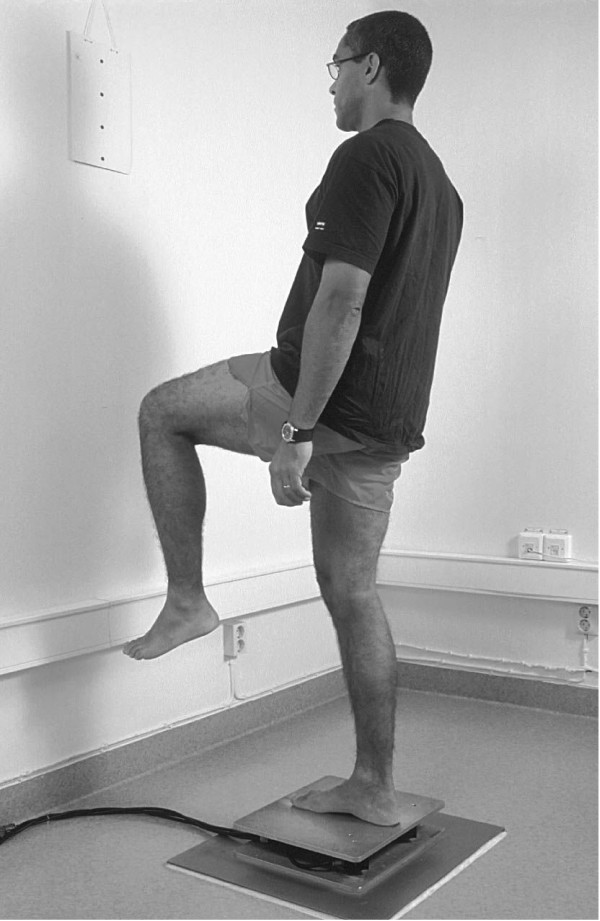
Background: It has previously been shown that an anterior cruciate ligament (ACL) injury may lead to impaired postural control, and that the ability to maintain postural control is decreased by fatigue in healthy subjects. To our knowledge, no studies have reported the effect of fatigue on postural control in subjects with ACL injury. This study was aimed at examining the effect of fatigue on balance in single-limb stance in subjects with ACL injury, and to compare the effects, and the ability to maintain balance, with that of a control group of uninjured subjects.
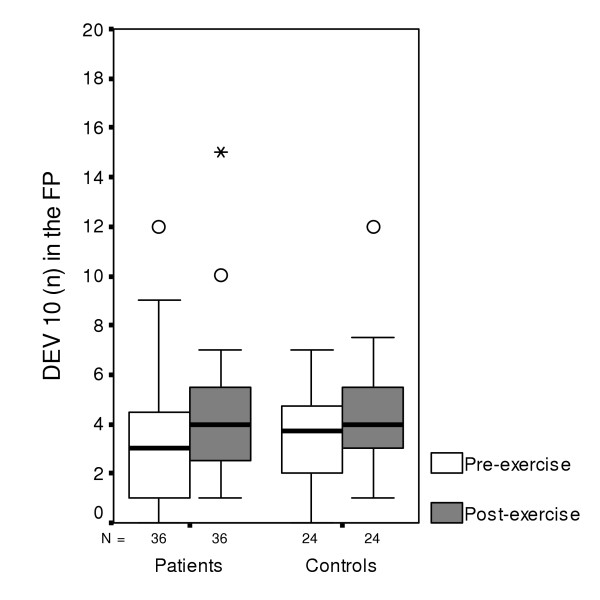
Methods: Thirty-six patients with unilateral, non-operated, non-acute ACL injury, and 24 uninjured subjects were examined with stabilometry before (pre-exercise) and immediately after (post-exercise) short-duration, sub-maximal cycling. In addition, the post-exercise measurements were compared, to evaluate the instantaneous ability to maintain balance and any possible recovery. The amplitude and average speed of center of pressure movements were registered in the frontal and sagittal planes. The paired t-test was used for the intra-group comparisons, and the independent t-test for the inter-group comparisons, with Bonferroni correction for multiple comparisons.
Results: No differences were found in the effects of exercise between the patients and the controls. Analysis of the post-exercise measurements revealed greater effects or a tendency towards greater effects on the injured leg than in the control group. The average speed was lower among the patients than in the control group.
Conclusions: The results of the present study showed no differences in the effects of exercise between the patients and the controls. However, the patients seemed to react differently regarding ability to maintain balance in single-limb stance directly after exercise than the control group. The lower average speed among the patients may be an expression of different neuromuscular adaptive strategies than in uninjured subjects.
Figures




References
-
- Ageberg E, Zätterström R, Moritz U, Fridén T. Influence of supervised and nonsupervised training on postural control after an acute anterior cruciate ligament rupture: A 3-year longitudinal prospective study. J Orthop Sports Phys Ther. 2001;31:632–644. - PubMed
-
- Gauffin H, Pettersson G, Tegner Y, Tropp H. Function testing in patients with old rupture of the anterior cruciate ligament. Int J Sports Med. 1990;11:73–77. - PubMed
-
- Lysholm M, Ledin T, Ödkvist LM, Good L. Postural control-a comparison between patients with chronic anterior cruciate ligament insufficiency and healthy individuals. Scand J Med Sci Sports. 1998;8:432–438. - PubMed
-
- Zätterström R, Fridén T, Lindstrand A, Moritz U. The effect of physiotherapy on standing balance in chronic anterior cruciate ligament insufficiency. Am J Sports Med. 1994;22:531–536. - PubMed
Publication types
MeSH terms
LinkOut - more resources
Full Text Sources
