


Saposin C promotes survival and prevents apoptosis via PI3K/Akt-dependent pathway in prostate cancer cells
- PMID: 15548330
- PMCID: PMC535542
- DOI: 10.1186/1476-4598-3-31
Saposin C promotes survival and prevents apoptosis via PI3K/Akt-dependent pathway in prostate cancer cells
Abstract
Background: In addition to androgens, growth factors are also implicated in the development and neoplastic growth of the prostate gland. Prosaposin is a potent neurotrophic molecule. Homozygous inactivation of prosaposin in mice has led to the development of a number of abnormalities in the male reproductive system, including atrophy of the prostate gland and inactivation of mitogen-activated protein kinase (MAPK) and Akt in prostate epithelial cells. We have recently reported that prosaposin is expressed at a higher level by androgen-independent (AI) prostate cancer cells as compared to androgen-sensitive prostate cancer cells or normal prostate epithelial and stromal cells. In addition, we have demonstrated that a synthetic peptide (prosaptide TX14A), derived from the trophic sequence of the saposin C domain of prosaposin, stimulated cell proliferation, migration and invasion and activated the MAPK signaling pathway in prostate cancer cells. The biological significances of saposin C and prosaposin in prostate cancer are not known.
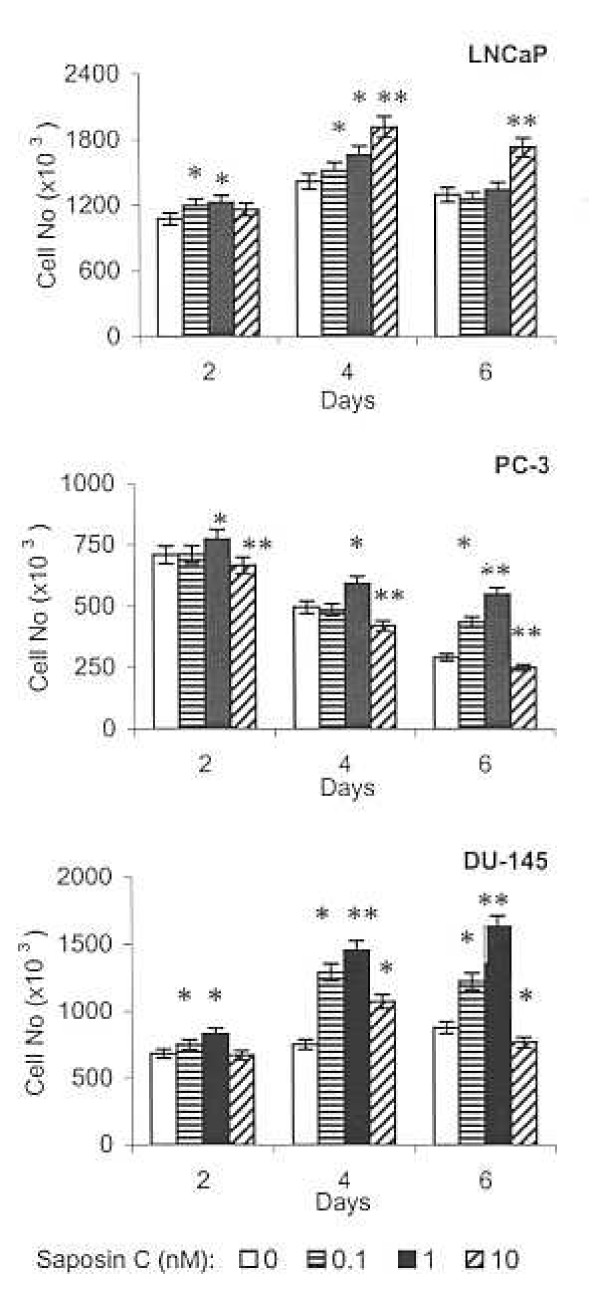
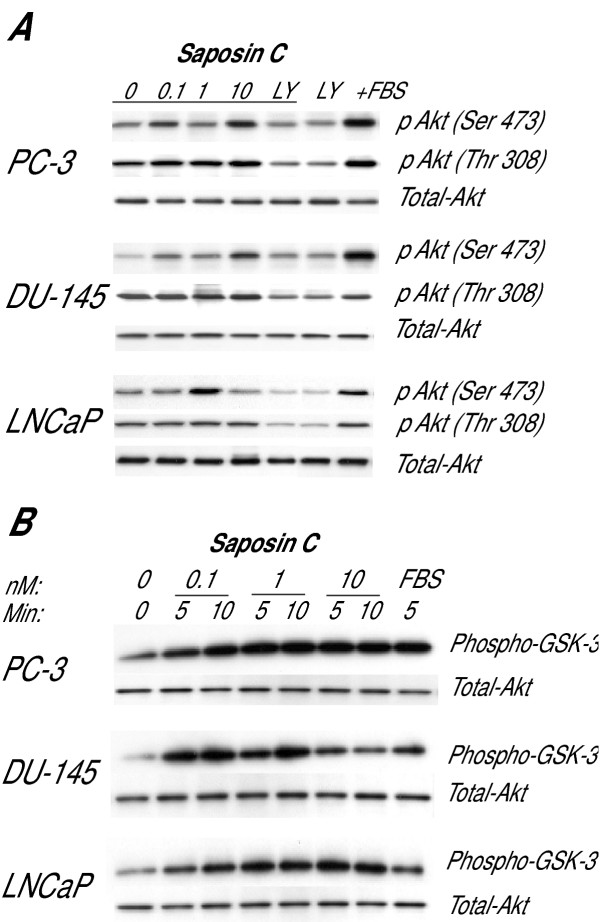
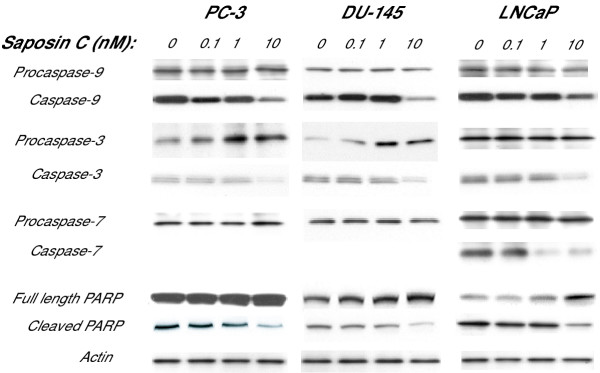
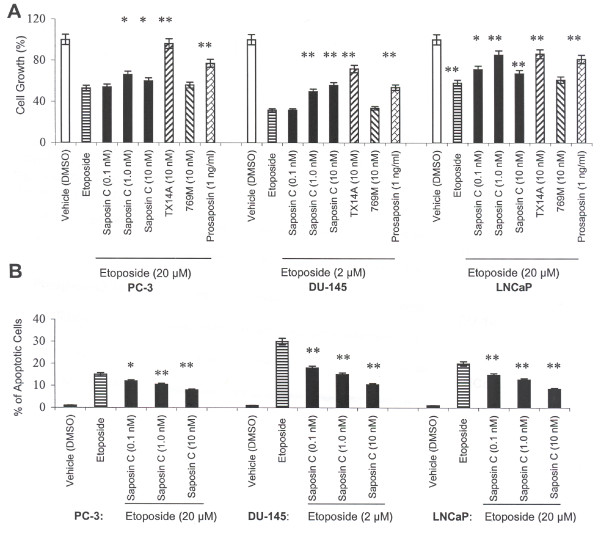
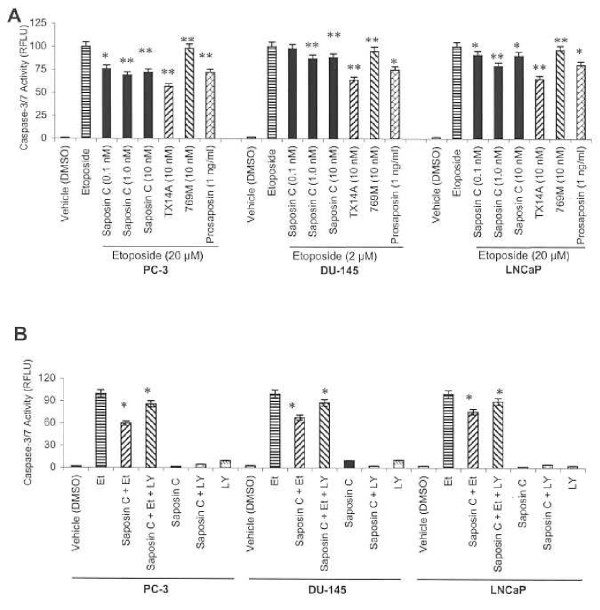
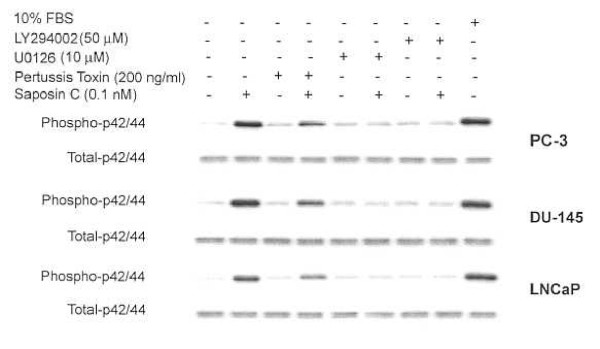
Results: Here, we report that saposin C, in a cell type-specific and dose-dependent manner, acts as a survival factor, activates the Akt-signaling pathway, down-modulates caspase-3, -7, and -9 expression and/or activity, and decreases the cleaved nuclear substrate of caspase-3 in prostate cancer cells under serum-starvation stress. In addition, prosaptide TX14A, saposin C, or prosaposin decreased the growth-inhibitory effect, caspase-3/7 activity, and apoptotic cell death induced by etoposide. We also discovered that saposin C activates the p42/44 MAP kinase pathway in a pertussis toxin-sensitive and phosphatidylinositol 3-kinase (PI3K) /Akt-dependent manner in prostate cancer cells. Our data also show that the anti-apoptotic activity of saposin C is at least partially mediated via PI3K/Akt signaling pathway.
Conclusion: We postulate that as a mitogenic, survival, and anti-apoptotic factor for prostate cancer cells, saposin C or prosaposin may contribute to prostate carcinogenesis at its early androgen-dependent or metastatic AI state.
Figures
References
-
- Kishimoto Y, Hiraiwa M, O'Brien JS. Saposins: structure, function, distribution, and molecular genetics. J Lipid Res. 1992;33:1255–1267. - PubMed
-
- Campana WM, O'Brien JS, Hiraiwa M, Patton S. Secretion of prosaposin, a multifunctional protein, by breast cancer cells. Biochim Biophys Acta. 1999;1427:392–400. - PubMed
-
- Morimoto S, Yamamoto Y, O'Brien JS, Kishimoto Y. Determination of saposin proteins (sphingolipid activator proteins) in human tissues. Anal Biochem. 1990;190:154–157. - PubMed
-
- Chang MH, Bindloss CA, Grabowski GA, Qi X, Winchester B, Hopwood JJ, Meikle PJ. Saposins A, B, C, and D in plasma of patients with lysosomal storage disorders. Clin Chem. 2000;46:167–174. - PubMed
Publication types
MeSH terms
Substances
LinkOut - more resources
Full Text Sources
Other Literature Sources
Medical
Research Materials
Miscellaneous
