


A gene encoding a putative FAD-dependent L-2-hydroxyglutarate dehydrogenase is mutated in L-2-hydroxyglutaric aciduria
- PMID: 15548604
- PMCID: PMC534725
- DOI: 10.1073/pnas.0404840101
A gene encoding a putative FAD-dependent L-2-hydroxyglutarate dehydrogenase is mutated in L-2-hydroxyglutaric aciduria
Abstract
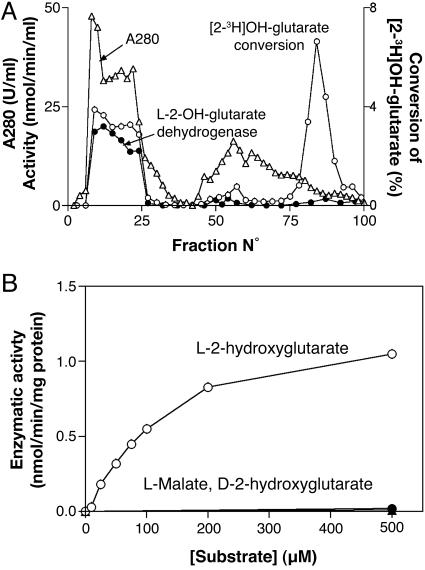
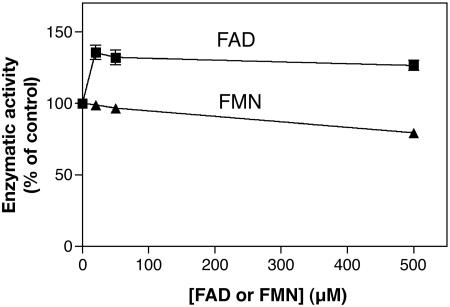
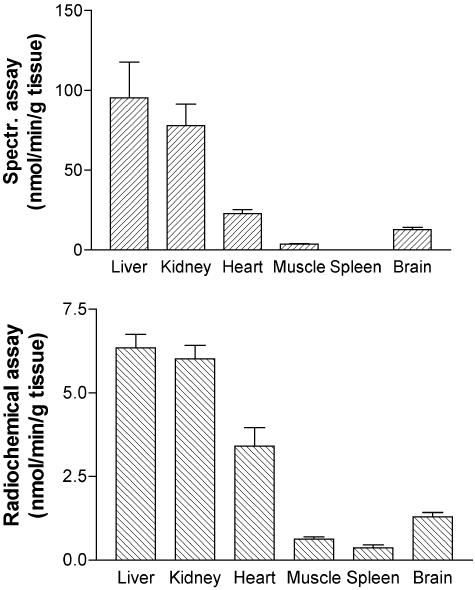
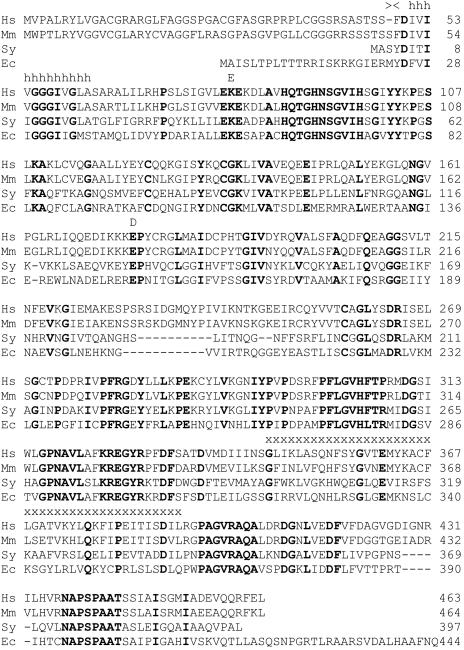
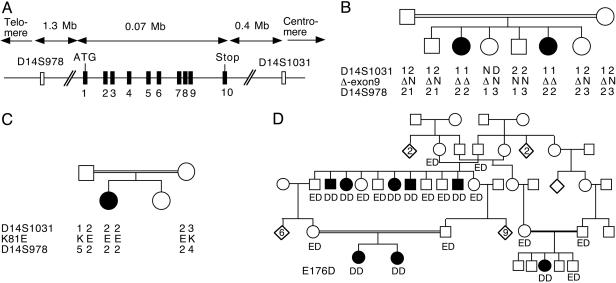
The purpose of this study was to identify the biochemical and genetic defect in L-2-hydroxyglutaric aciduria, a neurometabolic disorder characterized by the presence of elevated concentrations of L-2-hydroxyglutaric acid in urine, plasma, and cerebrospinal fluid. Evidence is provided for the existence in rat tissues of a FAD-dependent enzyme catalyzing specifically the oxidation of L-2-hydroxyglutarate to alpha-ketoglutarate. This enzyme is mainly expressed in liver and kidney but also at lower levels in heart, brain, and other tissues. Subcellular fractionation indicates that the liver enzyme is present in mitochondria, where it is bound to membranes. Based on this information, a database search led to the identification of a gene encoding a human hypothetical protein homologous to bacterial FAD-dependent malate dehydrogenases and targeted to mitochondria. The gene encoding this protein, present on chromosome 14q22.1, was found to be in a region homozygous in patients with L-2-hydroxyglutaric aciduria from two consanguineous families. Three mutations that replaced a highly conserved residue (Lys-71-Glu and Glu-176-Asp) or removed exon 9 were identified in homozygous state in patients from three distinct families and were found to cosegregate with the disease. It is concluded that L-2-hydroxyglutarate is normally metabolized to alpha-ketoglutarate in mammalian tissues and that L-2-hydroxyglutaric aciduria is caused by mutations in the gene that most likely encodes L-2-hydroxyglutarate dehydrogenase. The pathological findings observed in this metabolic disorder must therefore be due to a toxic effect of L-2-hydroxyglutarate on the central nervous system.
Figures
References
-
- Duran, M., Kamerling, J. P., Bakker, H. D., van Gennip, A. H. & Wadman, S. K. (1980) J. Inherited Metab. Dis. 3, 109–112. - PubMed
-
- Barth, P. G., Hoffmann, G. F., Jaeken, J., Wanders, R. J., Duran, M., Jansen, G. A., Jakobs, C., Lehnert, W., Hanefeld, F., Valk, J., et al. (1993) J. Inherited Metab. Dis. 16, 753–761. - PubMed
-
- Chen, E., Nyhan, W. L., Jakobs, C., Greco, C. M., Barkovich, A. J., Cox, V. A. & Packman, S. (1996) J. Inherited Metab. Dis. 19, 335–343. - PubMed
-
- Jansen, G. A. & Wanders, R. J. (1993) Biochim. Biophys. Acta 1225, 53–56. - PubMed
-
- Wanders, R. J., Vilarinho, L., Hartung, H. P., Hoffmann, G. F., Mooijer, P. A., Jansen, G. A., Huijmans, J. G., de Klerk, J. B., ten Brink, H. J., Jakobs C., et al. (1997) J. Inherited Metab. Dis. 20, 725–726. - PubMed
Publication types
MeSH terms
Substances
Associated data
- Actions
LinkOut - more resources
Full Text Sources
Other Literature Sources
Medical
Molecular Biology Databases
