


Functional cloning of Bacillus anthracis dihydrofolate reductase and confirmation of natural resistance to trimethoprim
- PMID: 15561838
- PMCID: PMC529193
- DOI: 10.1128/AAC.48.12.4643-4649.2004
Functional cloning of Bacillus anthracis dihydrofolate reductase and confirmation of natural resistance to trimethoprim
Abstract
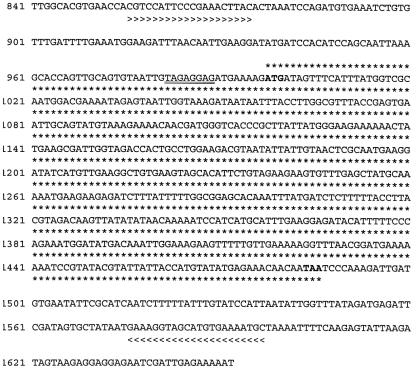
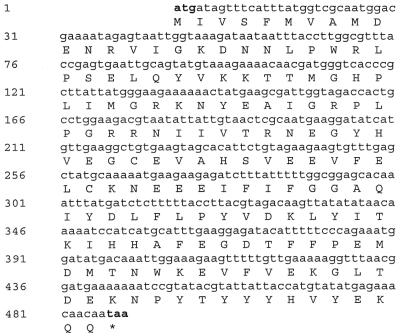
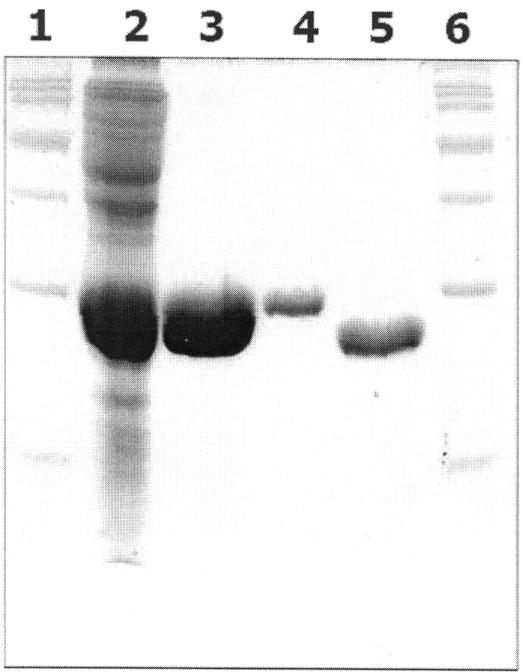
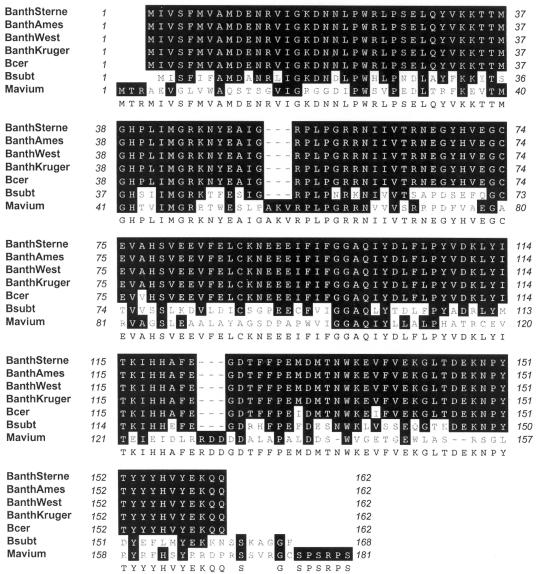
Bacillus anthracis is reported to be naturally resistant to trimethoprim (TMP), a drug that inhibits dihydrofolate reductase (DHFR), a key enzyme in the folate pathway. A microdilution broth assay established that the MIC of TMP for B. anthracis Sterne is >2,048 but < or =4,096 microg/ml. A putative DHFR sequence was amplified from B. anthracis Sterne genomic DNA. The PCR product was cloned into the Invitrogen pCRT7/CT-TOPO vector, followed by transformation into Escherichia coli TOP10F' chemically competent cells. Plasmid DNA from a clone showing the correct construct with a thrombin cleavage site attached downstream from the terminus of the cloned PCR product was transformed into E. coli BL21 Star (DE3)pLysS competent cells for expression of the six-histidine-tagged fusion protein and purification on a His-Bind resin column. Functionality of the purified Sterne recombinant DHFR (Sterne rDHFR) was confirmed in an established enzyme assay. The 50% inhibitory concentrations of TMP and methotrexate for the Sterne rDHFR were found to be 77,233 and 12.2 nM, respectively. TMP resistance was observed with E. coli BL21 Star (DE3)pLysS competent cells transformed with the Sterne DHFR gene. Alignment of the amino acid sequence of the Sterne DHFR gene revealed 100% homology with various virulent strains of B. anthracis. These results confirm the natural resistance of B. anthracis to TMP and clarify that the resistance is correlated to a lack of selectivity for the chromosomally encoded gene product. These findings will assist in the development of narrow-spectrum antimicrobial agents for treatment of anthrax.
Figures
References
-
- Bakici, M. Z., N. Elaldi, M. Bakir, I. Dodmetas, M. Erandac, and M. Turan. 2002. Antimicrobial susceptibility of Bacillus anthracis in an endemic area. Scand. J. Infect. Dis. 34:564-566. - PubMed
-
- Brook, I., T. B. Elliott, H. I. Pryor, T. E. Sautter, B. T. Gnade, J. H. Thakar, and G. B. Knudson. 2001. In vitro resistance of Bacillus anthracis Sterne to doxycycline, macrolides and quinolones. Int. J. Antimicrob. Agents 18:559-562. - PubMed
Publication types
MeSH terms
Substances
Grants and funding
LinkOut - more resources
Full Text Sources
Other Literature Sources
Chemical Information
