Comparative Study
. 2004 Dec;165(6):1979-92.
doi: 10.1016/S0002-9440(10)63249-X.

Hypoxia in renal disease with proteinuria and/or glomerular hypertension

Affiliations
Comparative Study

Hypoxia in renal disease with proteinuria and/or glomerular hypertension

Tetsuhiro Tanaka et al. Am J Pathol. 2004 Dec.

Abstract

Despite the increasing need to identify and quantify tissue oxygenation at the cellular level, relatively few methods have been available. In this study, we developed a new hypoxia-responsive reporter vector using a hypoxia-responsive element of the 5' vascular endothelial growth factor untranslated region and generated a novel hypoxia-sensing transgenic rat. We then applied this animal model to the detection of tubulointerstitial hypoxia in the diseased kidney. With this model, we were able to identify diffuse cortical hypoxia in the puromycin aminonucleoside-induced nephrotic syndrome and focal and segmental hypoxia in the remnant kidney model. Expression of the hypoxia-responsive transgene increased throughout the observation period, reaching 2.2-fold at 2 weeks in the puromycin aminonucleoside model and 2.6-fold at 4 weeks in the remnant kidney model, whereas that of vascular endothelial growth factor showed a mild decrease, reflecting distinct behaviors of the two genes. The degree of hypoxia showed a positive correlation with microscopic tubulointerstitial injury in both models. Finally, we identified the localization of proliferating cell nuclear antigen-positive, ED-1-positive, and terminal dUTP nick-end labeled-positive cells in the hypoxic cortical area in the remnant kidney model. We propose here a possible pathological tie between chronic tubulointerstitial hypoxia and progressive glomerular diseases.


Figures
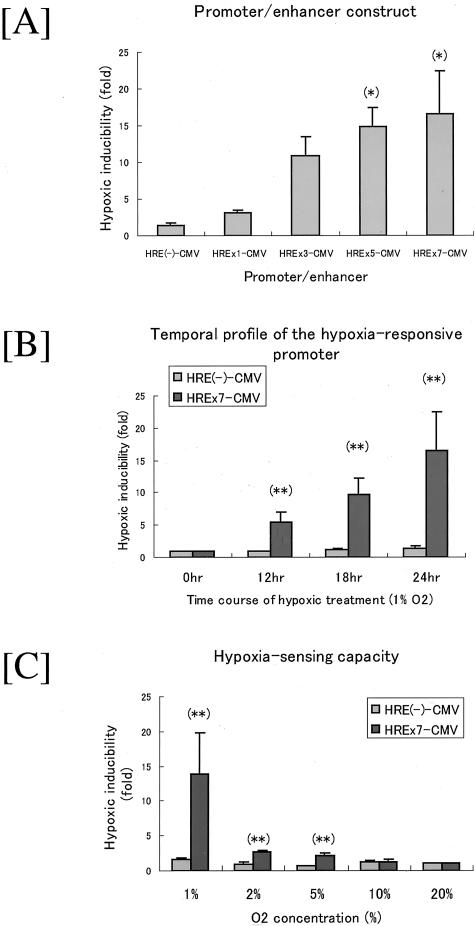
Figure 1
Figure 1
Characterization of the hypoxia-responsive vector. FLAG-tagged luciferase reporter vectors driven by HRE (×1, 3, 5, 7 repeats) and hmCMVp were constructed and transfected to IRPTC. A: After hypoxic exposure (1% O2, 24 hours), the hypoxic inducibility was calculated as 3.2 ± 0.2-fold, 10.9 ± 2.4-fold, 14.8 ± 2.7-fold (P < 0.05), and 16.5 ± 6.8-fold (P < 0.05), respectively. Because hypoxic response increased significantly in association with the number of HREs, pHREx7-CMV-Luc was characterized in detail. B: Stimulating the transfected cells in 1% O2 for 12, 18, and 24 hours resulted in 5.5-, 9.8-, and 16.5-fold increases in luciferase activity, showing a temporal increase. C: The hypoxic response of the reporter was tested in graded oxygen contents. After 24 hours, there was a reciprocal increase in hypoxic inducibility as the oxygen concentration decreased. Statistical significance was reached at less than 5% O2 (dual-luciferase assay; n ≥ 3; *, P < 0.05; **, P < 0.01 versus control).
Figure 2
Figure 2
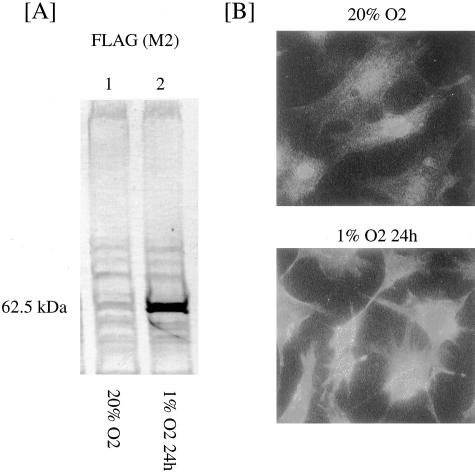
Expression of HRE-driven FLAF-tagged luciferase in IRPTC. Expression of FLAG-tagged luciferase was visualized by Western blotting and immunocytochemistry using anti-FLAG (M2) antibody. A: In Western blotting, clearly stronger bands were detected at 62.5 kd in hypoxic samples than in controls. B: Immunocytochemistry revealed similar hypoxic inducibility of FLAG-tagged luciferase expression within the cytosol.
Figure 3
Figure 3
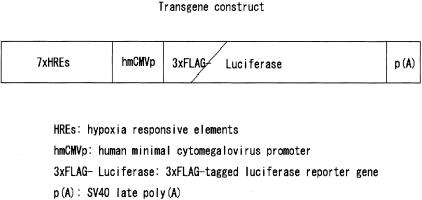
Construct of the transgene. A schematic diagram of the transgene is shown. The transgene is controlled by the combination of seven repeats of HRE and hmCMV promoter. To facilitate detection of the transgene expression within the tissues, the luciferase reporter was tagged with 3× FLAG at its N-terminal.
Figure 4
Figure 4
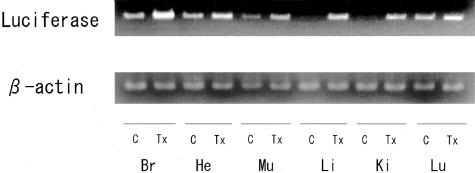
Organ distribution of the transgene. Transgene expression in various organs was examined by RT-PCR, both under control and stimulated (cobalt chloride, 30 mg/kg i.p.) conditions. RNA was isolated from brain, heart, muscle, liver, kidney (cortex), and lung. At baseline, the bands of the transgene were faintly visible, but were much stronger in samples of cobalt-treated rats, showing a conditional up-regulation of the transgene (PCR, 26 cycles; representative data).
Figure 5
Figure 5
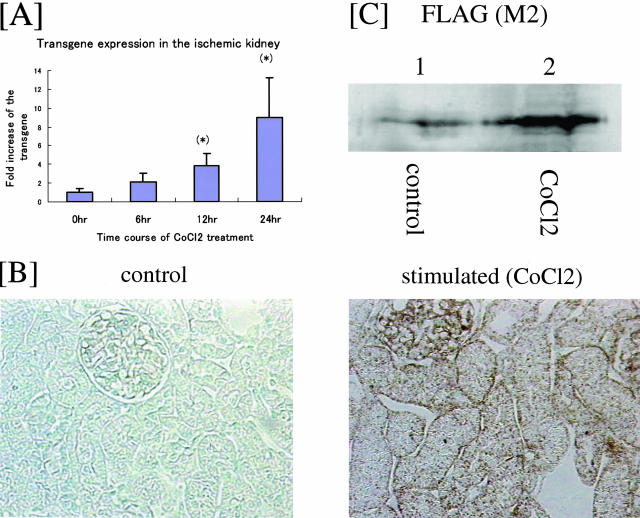
Up-regulation of the transgene in the ischemic kidney. Transgene expression was further characterized in the ischemic kidney. A: Temporal expression of the transgene in the cortex was measured by real-time PCR. Stimulation with cobalt chloride (30 mg/kg i.p.) for various periods of time caused a temporal increase, reaching 8.9 ± 4.3-fold at 24 hours (n = 4; *, P < 0.05 versus control). B: Spatial expression within the kidney. In control kidneys, the expression of FLAG-tagged luciferase was minimal in the tubulointerstitium. When stimulated with cobalt chloride, expression was markedly increased in tubular cells, glomerular epithelial cells, and interstitial cells. Positive staining was observed in the medullary area in both normoxic and hypoxic samples because of an oxygen gradient within the physiological kidney (not shown). Western blotting in C further corroborates quantitative up-regulation of the transgene in response to cobalt stimulation. Aliquots of protein from renal cortex were immunoprecipitated with protein G-Sepharose beads, resolved by 10% sodium dodecyl sulfate-polyacrylamide gel electrophoresis, transferred, and probed with anti-FLAG (M2) antibody. Original magnification, ×400 (B).
Figure 6
Figure 6
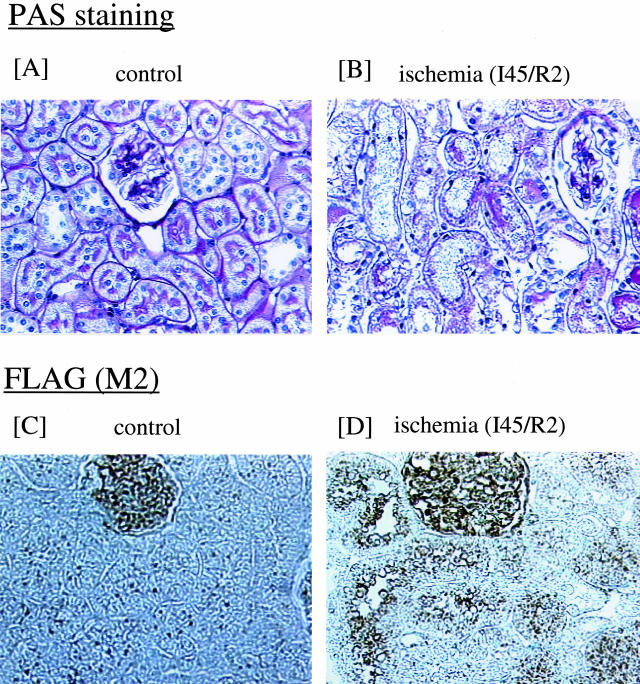
Detection of hypoxia in renal ischemia-reperfusion injury. Hypoxia-responsive transgene expression was also verified in the hypoxic, diseased kidney. A and B: Periodic acid-Schiff staining of the ischemic kidneys revealed morphological changes such as tubular dilatation, sloughing of tubular epithelial cells, cast formation, and interstitial edema. C and D: Immunostaining with anti-FLAG antibody revealed up-regulation of the transgene in some dilated proximal tubular cells, especially in the apical side 2 hours after reperfusion. Positive staining in proximal tubular cells was observed immediately after clamp-release and persisted for up to 4 hours after reoxygenation (not shown) (ischemia-reperfusion model). Original magnifications, ×400.
Figure 7
Figure 7
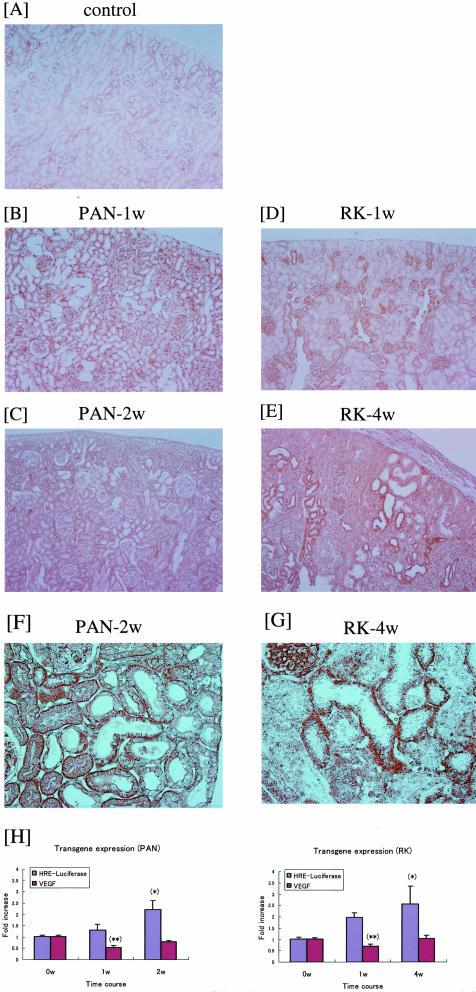
Tubular hypoxia in the PAN and RK models. Tubulointerstitial hypoxia is visualized in immunohistochemistry. B and C: In the PAN model, hypoxic tubules were detected diffusely in the cortex at 1 and 2 weeks. In the RK model, hypoxic areas were essentially focal in the cortex, which extended from the outer medulla to the cortex. D and E: At 4 weeks, foci of atrophic, dilated tubules appeared exhibiting strong signals for the hypoxia-responsive transgene. F and G: Representative magnified views in the cortex are shown. In contrast to the diffuse up-regulation in the PAN model, the transgene signal was focal in the RK model, and was especially apparent in dilated, damaged tubules. The quantitative data are shown in H. The expression of the transgene mRNA showed a time-dependent increase in both models, reaching 2.2-fold (PAN, 2 weeks) and 2.6-fold (RK, 4 weeks), respectively, whereas VEGF mRNA showed a mild decrease at week 1. Note that they harbor a common responsive element (HRE) in the promoter region (real-time PCR, n ≥ 6; *, P < 0.05; **, P < 0.01 versus control). Original magnifications: ×100 (A–E); ×400 (F, G).
Figure 8
Figure 8
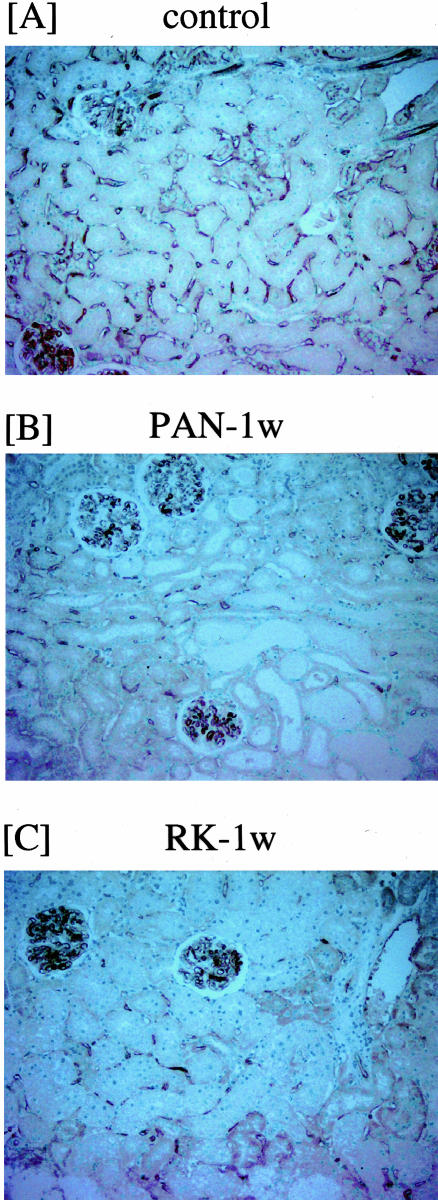
Tubulointerstitial microvasculature. Capillary network in the hypoxic tubulointerstitium was examined by tomato lectin perfusion/binding study. In both models, peritubular capillaries were markedly narrowed and disorganized at week 1 (B and C). The glomerular microvasculature was retained at this stage in both models.
Figure 9
Figure 9
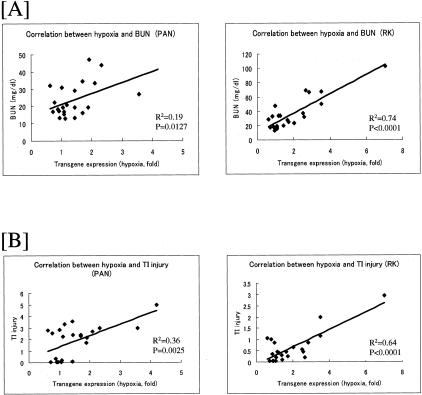
Correlation of hypoxia with BUN and tubulointerstitial injury. A and B: Correlations of hypoxia with BUN and tubulointerstitial injury scores were investigated in individual rats. BUN levels were positively correlated with the degree of hypoxia in both models, with the RK having higher linearity [R2 = 0.19, P = 0.0127 (PAN), R2 = 0.74, P < 0.0001 (RK)]. Similarly, the extent of tubulointerstitial injury was more highly correlated with hypoxia in the RK model (R2 = 0.64, P < 0.0001) than in the PAN-treated rats (R2 = 0.36, P = 0.0025).
Figure 10
Figure 10
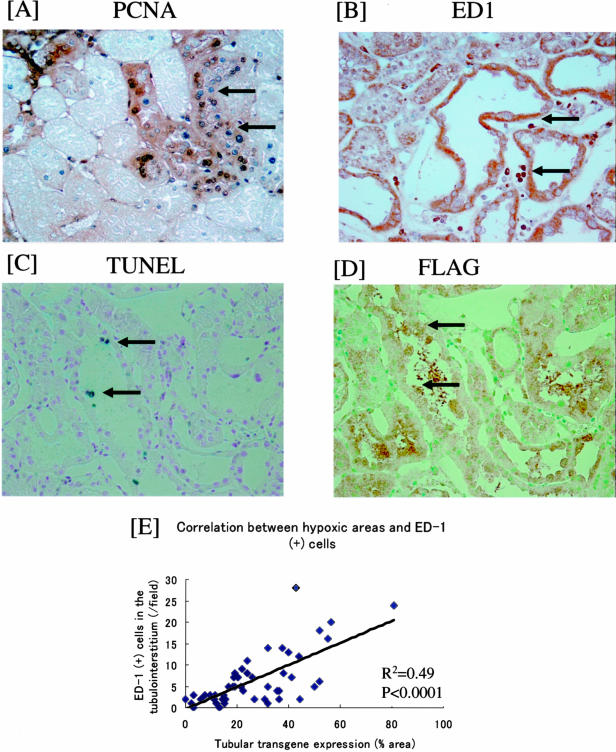
Spatial co-localization of the transgene. Spatial co-localization of the transgene with factors modulating disease progression was investigated in the RK model. Sections were double-stained with anti-FLAG and anti-PCNA (A) or anti-ED1 (B) antibodies. TUNEL staining was performed in serial sections (C and D). Most PCNA-positive tubules were positively stained with the transgene at 1 week (A). At 4 weeks, macrophage accumulation was observed in areas with hypoxic dilated tubules (B). Most apoptotic cells were surrounded by hypoxic, dilated proximal tubules (C and D). Positive cells for PCNA, ED-1, and TUNEL staining are indicated with arrows. Correlations between tubular hypoxia and infiltrating macrophages are quantified in E. A positive correlation was observed both spatially and quantitatively (R2 = 0.49, P < 0.0001). Color development: brown, FLAG; dark brown, PCNA and ED-1; and green, TUNEL. Original magnifications: ×400.

References

    1. Wiener CM, Booth G, Semenza GL. In vivo expression of mRNAs encoding hypoxia-inducible factor 1. Biochem Biophys Res Commun. 1996;225:485–488. - PubMed
    1. Semenza GL. Regulation of mammalian O2 homeostasis by hypoxia-inducible factor 1. Annu Rev Cell Dev Biol. 1999;15:551–578. - PubMed
    1. Semenza GL. HIF-1: mediator of physiological and pathophysiological responses to hypoxia. J Appl Physiol. 2000;88:1474–1480. - PubMed
    1. Wenger RH. Mammalian oxygen sensing, signalling and gene regulation. J Exp Biol. 2000;203:1253–1263. - PubMed
    1. Jaakkola P, Mole DR, Tian YM, Wilson MI, Gielbert J, Gaskell SJ, Kriegsheim A, Hebestreit HF, Mukherji M, Schofield CJ, Maxwell PH, Pugh CW, Ratcliffe PJ. Targeting of HIF-alpha to the von Hippel-Lindau ubiquitylation complex by O2-regulated prolyl hydroxylation. Science. 2001;292:468–472. - PubMed

Publication types

MeSH terms

Substances