


Quantitative trait loci (QTL) detection in multicross inbred designs: recovering QTL identical-by-descent status information from marker data
- PMID: 15579720
- PMCID: PMC1448798
- DOI: 10.1534/genetics.104.028993
Quantitative trait loci (QTL) detection in multicross inbred designs: recovering QTL identical-by-descent status information from marker data
Abstract
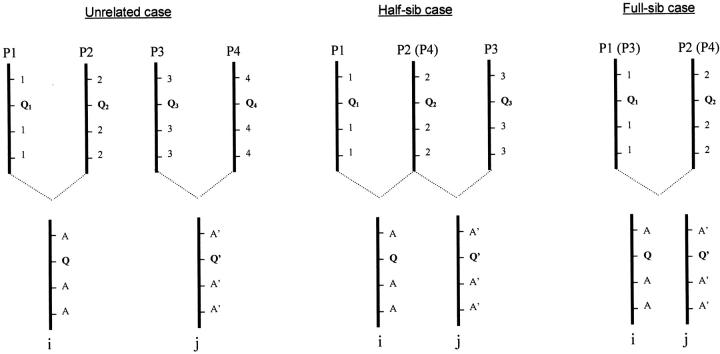
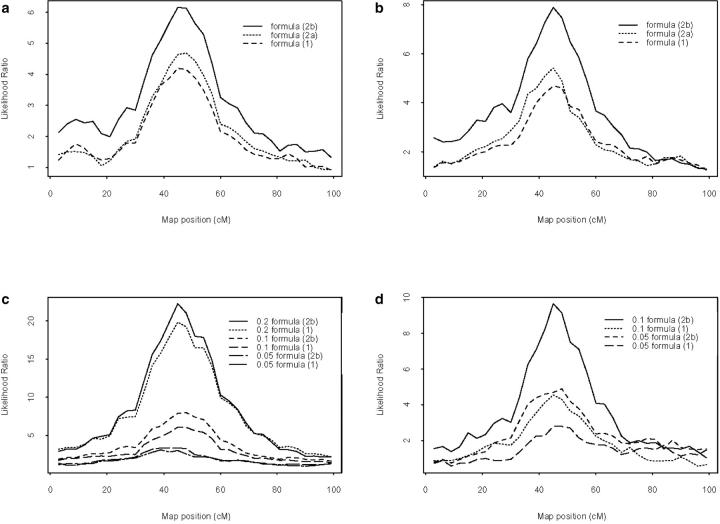
Mapping quantitative trait loci in plants is usually conducted using a population derived from a cross between two inbred lines. The power of such QTL detection and the parameter estimates depend largely on the choice of the two parental lines. Thus, the QTL detected in such populations represent only a small part of the genetic architecture of the trait. In addition, the effects of only two alleles are characterized, which is of limited interest to the breeder, while common pedigree breeding material remains unexploited for QTL mapping. In this study, we extend QTL mapping methodology to a generalized framework, based on a two-step IBD variance component approach, applicable to any type of breeding population obtained from inbred parents. We then investigate with simulated data mimicking conventional breeding programs the influence of different estimates of the IBD values on the power of QTL detection. The proposed method would provide an alternative to the development of specifically designed recombinant populations, by utilizing the genetic variation actually managed by plant breeders. The use of these detected QTL in assisting breeding would thus be facilitated.
Figures

References
-
- Bernardo, R., 1993. Estimation of coefficient of coancestry using molecular markers in maize. Theor. Appl. Genet. 85: 1055–1062. - PubMed
-
- Bink, M. C. A. M., P. Uimari, M. Sillanpää, L. Janss and R. Jansen, 2002. Multiple QTL mapping in related plant populations via a pedigree-analysis approach. Theor. Appl. Genet. 104: 751–762. - PubMed
-
- Gilmour, A. R., B. R. Cullis, S. J. Welham and R. Thompson, 1998 ASREML. Program User Manual. Orange Agricultural Institute, Orange, New South Wales, Australia.
Publication types
MeSH terms
Substances
LinkOut - more resources
Full Text Sources
