


Subcortical modulation of attention counters change blindness
- PMID: 15601929
- PMCID: PMC6730360
- DOI: 10.1523/JNEUROSCI.3724-04.2004
Subcortical modulation of attention counters change blindness
Abstract
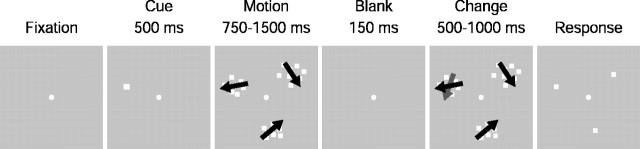
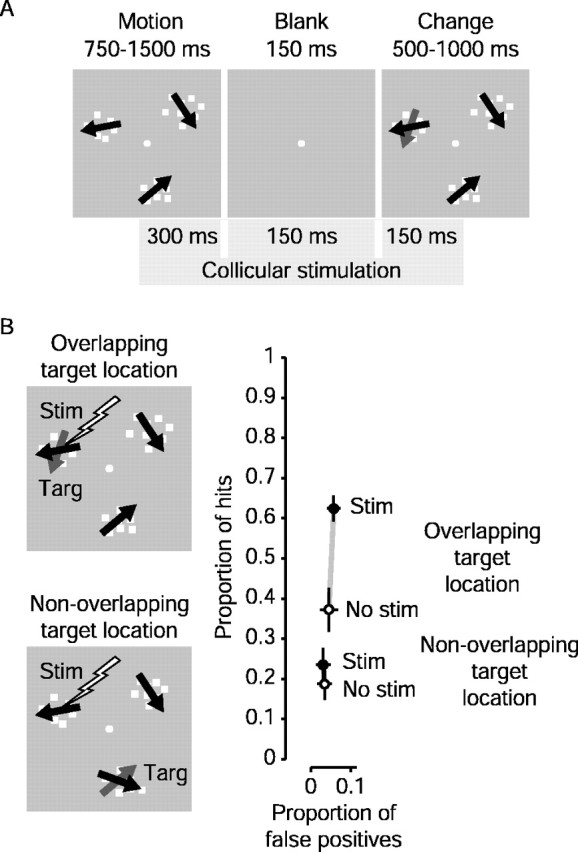
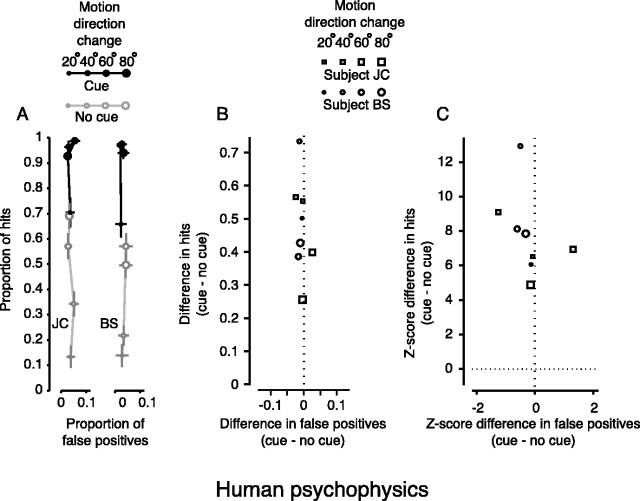
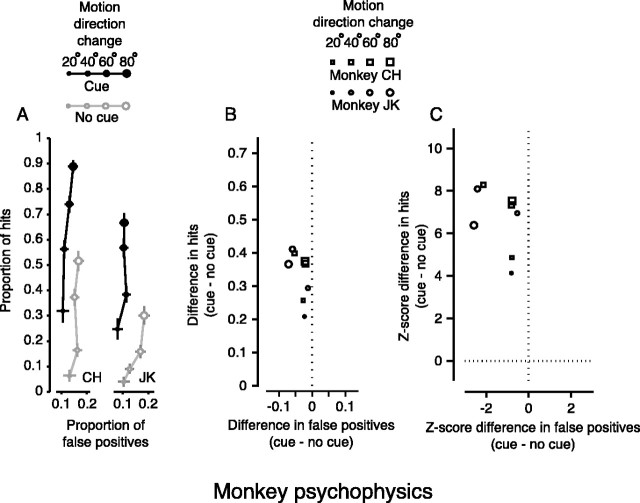
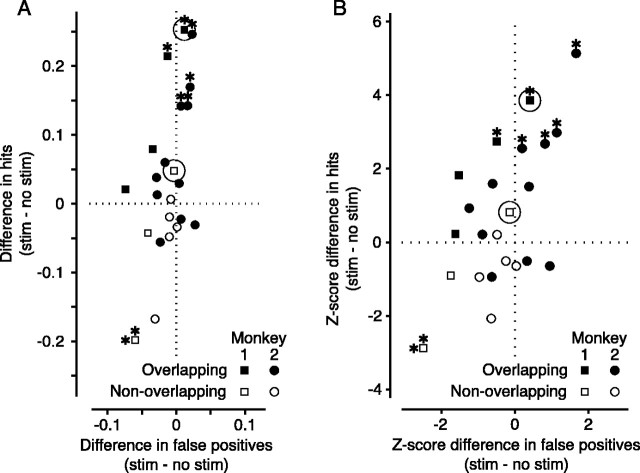
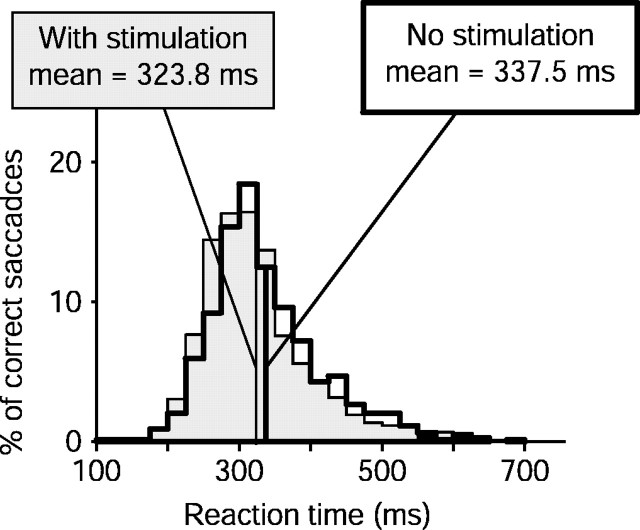
Change blindness is the failure to see large changes in a visual scene that occur simultaneously with a global visual transient. Such visual transients might be brief blanks between visual scenes or the blurs caused by rapid or saccadic eye movements between successive fixations. Shifting attention to the site of the change counters this "blindness" by improving change detection and reaction time. We developed a change blindness paradigm for visual motion and then showed that presenting an attentional cue diminished the blindness in both humans and old world monkeys. We then replaced the visual cue with weak electrical stimulation of an area in the monkey's brainstem, the superior colliculus, to see if activation at such a late stage in the eye movement control system contributes to the attentional shift that counters change blindness. With this stimulation, monkeys more easily detected changes and had shorter reaction times, both characteristics of a shift of attention.
Figures
References
-
- Bell AH, Fecteau JH, Munoz DP (2004) Using auditory and visual stimuli to investigate the behavioral and neuronal consequences of reflexive covert orienting. J Neurophysiol 91: 2172-2184. - PubMed
-
- Brindley GS (1982) Effects of electrical stimulation of the visual cortex. Hum Neurobiol 1: 281-283. - PubMed
-
- Cavanaugh J, Wurtz R (2002) Change-blindness for motion in macaque monkey. J Vision 2: 16a.
-
- Cavanaugh JR, Wurtz RH (2003) Detection of changes in direction of motion in a visual attention task is enhanced by stimulation of the superior colliculus. Soc Neurosci Abstr 29: 767.4.
MeSH terms
LinkOut - more resources
Full Text Sources
Other Literature Sources
