


Treatment of pregnancy-related pelvic girdle and/or low back pain after delivery design of a randomized clinical trial within a comprehensive prognostic cohort study [ISRCTN08477490]
- PMID: 15619331
- PMCID: PMC544583
- DOI: 10.1186/1471-2458-4-67
Treatment of pregnancy-related pelvic girdle and/or low back pain after delivery design of a randomized clinical trial within a comprehensive prognostic cohort study [ISRCTN08477490]
Abstract
Background: Pregnancy-related pelvic girdle and/or low back pain is a controversial syndrome because insight in etiology and prognosis is lacking. The controversy relates to factors eliciting pain and some prognostic factors such as the interpretation of pain at the symphysis. Recent research about treatment strategies also reflects those various opinions, in fact suggesting there is professional uncertainty about the optimal approach. Currently, physiotherapists often prescribe a pain-contingent treatment regime of relative rest and avoiding several day-to-day activities. Additionally, treatment more often includes an exercise program to guide rectification of the muscle imbalance and alignment of the pelvic girdle. Effectiveness of those interventions is not proven and the majority of the studies are methodologically flawed. Investigators draw particular attention to biomedical factors but there is growing evidence that important prognostic issues such as biopsychosocial factors appear to be even more important as point of action in a treatment program.
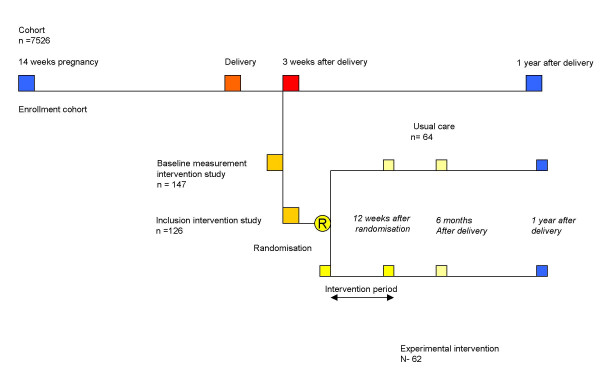
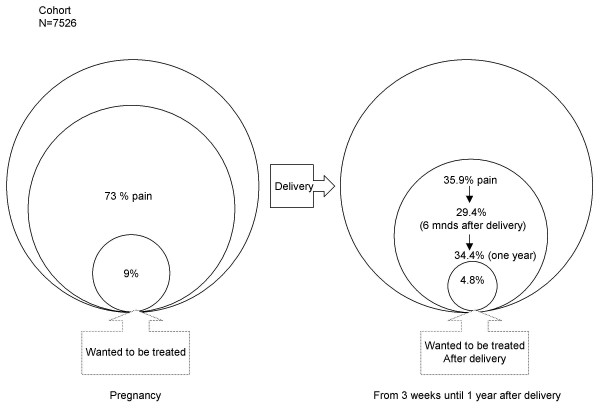
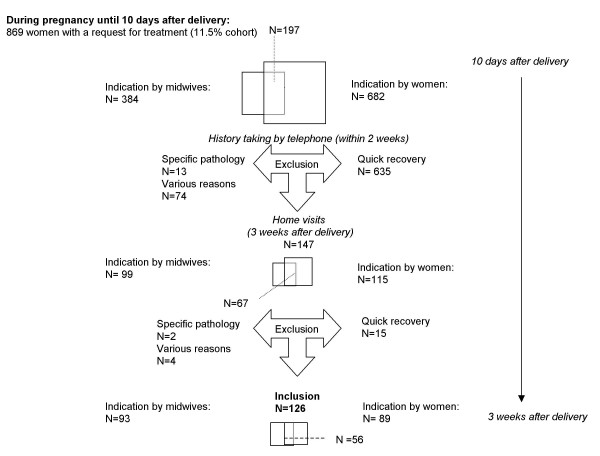
Methods/design: This pragmatic randomized controlled trial is designed to evaluate the effectiveness of a tailor-made treatment program with respect to biopsychosocial factors in primary care. The effect of the experimental intervention and usual care are evaluated as they are applied in primary health care. The trial is embedded in a cohort study that is designed as a longitudinal, prospective study, which studies prevalence, etiology, severity and prognosis during pregnancy until one year after delivery. The present paper focuses on choices regarding recruitment procedures, in-/exclusion criteria and the development of a well-timed intervention.
Discussion: This section briefly discusses the actions taken to minimize bias in the design, the proper time-window for the experimental intervention and the contrast between the experimental intervention and usual care.
Figures
References
-
- Walde J. Obstetrical and gynaecological back and pelvic pains, especially those contracted during pregnancy. Acta Obstet Gynecol Scand. 1962;41:11–53. - PubMed
-
- Ostgaard HC, Zetherström G, Roos Hansson E. The posterior pelvic pain provocation test in pregnant women. Eur Spine J. 1994;3:258–260. - PubMed
Publication types
MeSH terms
Associated data
LinkOut - more resources
Full Text Sources
Medical
