


Human intestinal macrophages display profound inflammatory anergy despite avid phagocytic and bacteriocidal activity
- PMID: 15630445
- PMCID: PMC539188
- DOI: 10.1172/JCI19229
Human intestinal macrophages display profound inflammatory anergy despite avid phagocytic and bacteriocidal activity
Abstract
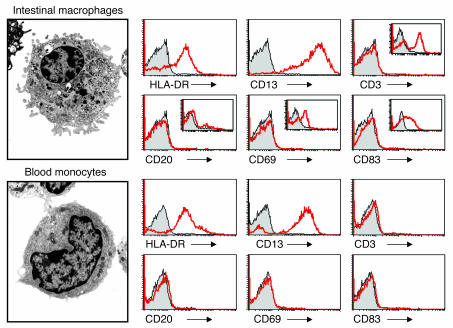
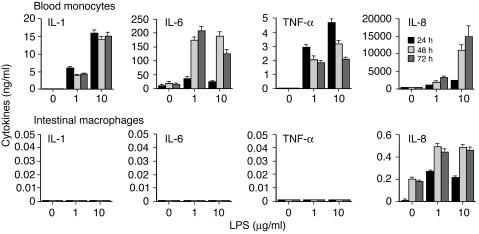
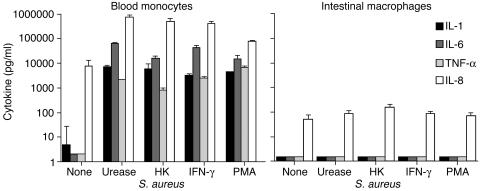
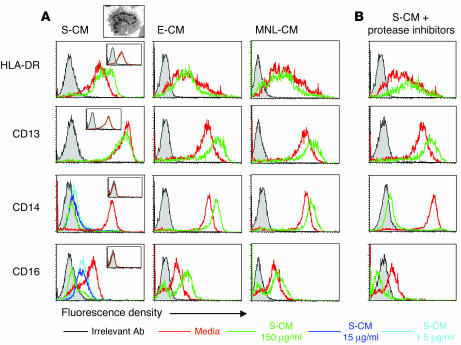
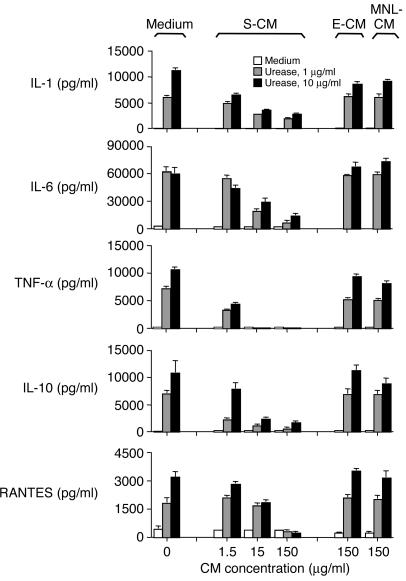
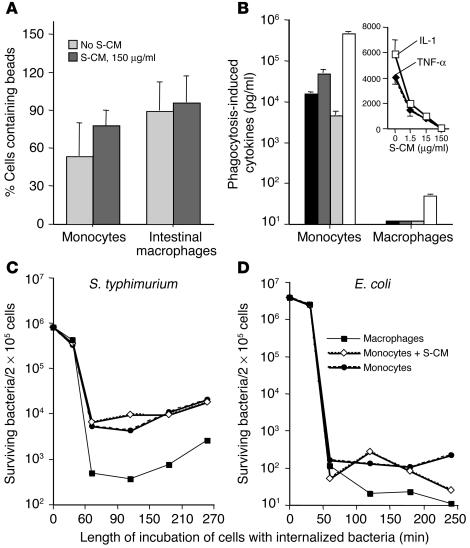
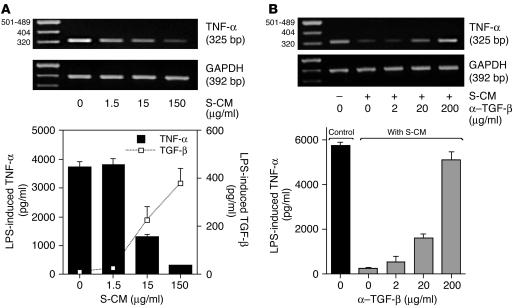
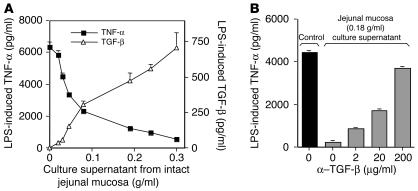
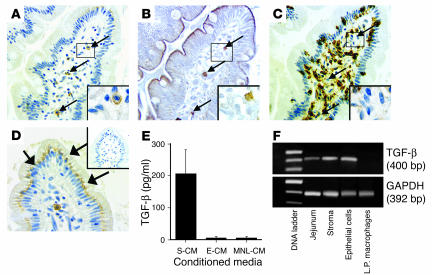
Intestinal macrophages, which are thought to orchestrate mucosal inflammatory responses, have received little investigative attention compared with macrophages from other tissues. Here we show that human intestinal macrophages do not express innate response receptors, including the receptors for LPS (CD14), Fcalpha (CD89), Fcgamma (CD64, CD32, CD16), CR3 (CD11b/CD18), and CR4 (CD11c/CD18); the growth factor receptors IL-2 (CD25) and IL-3 (CD123); and the integrin LFA-1 (CD11a/CD18). Moreover, resident intestinal macrophages also do not produce proinflammatory cytokines, including IL-1, IL-6, IL-10, IL-12, RANTES, TGF-beta, and TNF-alpha, in response to an array of inflammatory stimuli but retain avid phagocytic and bacteriocidal activity. Thus, intestinal macrophages are markedly distinct in phenotype and function from blood monocytes, although intestinal macrophages are derived from blood monocytes. To explain this paradox, we show that intestinal stromal cell-derived products downregulate both monocyte receptor expression and, via TGF-beta, cytokine production but not phagocytic or bacteriocidal activity, eliciting the phenotype and functional profile of intestinal macrophages. These findings indicate a mechanism in which blood monocytes recruited to the intestinal mucosa retain avid scavenger and host defense functions but acquire profound "inflammatory anergy," thereby promoting the absence of inflammation characteristic of normal intestinal mucosa despite the close proximity of immunostimulatory bacteria.
Figures
References
-
- Brandtzaeg P. Overview of the mucosal immune system. Curr. Top. Microbiol. Immunol. 1989;146:13–25. - PubMed
-
- Ulevitch RJ, Tobias PS. Receptor-dependent mechanisms of cell stimulation by bacterial endotoxin. Ann. Rev. Immunol. 1995;13:437–457. - PubMed
-
- Smith PD, et al. Isolation and purification of CD14-negative mucosal macrophages from normal human small intestine. J. Immunol. Meth. 1997;202:1–11. - PubMed
-
- Smith PD, et al. Intestinal macrophages lack CD14 and CD89 and consequently are down-regulated for LPS- and IgA-mediated activities. J. Immunol. 2001;167:2651–2656. - PubMed
Publication types
MeSH terms
Substances
Grants and funding
LinkOut - more resources
Full Text Sources
Other Literature Sources
Research Materials
Miscellaneous
