


Severe falciparum malaria in Gabonese children: clinical and laboratory features
- PMID: 15638948
- PMCID: PMC546207
- DOI: 10.1186/1475-2875-4-1
Severe falciparum malaria in Gabonese children: clinical and laboratory features
Abstract
Background: Malaria continues to claim one to two million lives a year, mainly those of children in sub-Saharan Africa. Reduction in mortality depends, in part, on improving the quality of hospital care, the training of healthcare workers and improvements in public health. This study examined the prognostic indicators of severe falciparum malaria in Gabonese children.
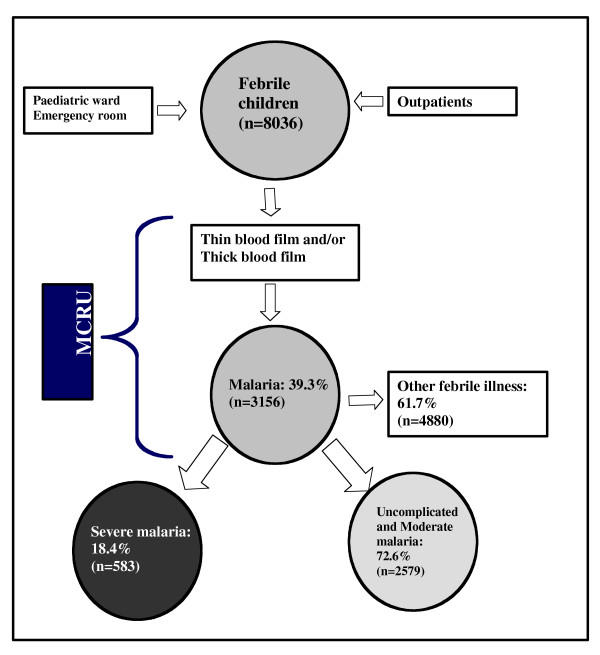
Methods: An observational study examining the clinical presentations and laboratory features of severe malaria was conducted at the Centre Hospitalier de Libreville, Gabon over two years. Febrile children aged from 0 to 10 years with Plasmodium falciparum infection and one or more features of severe malaria were enrolled.
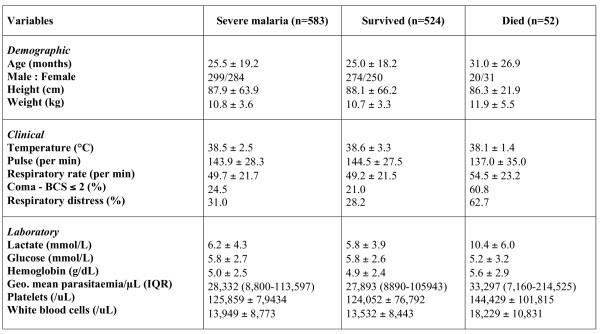
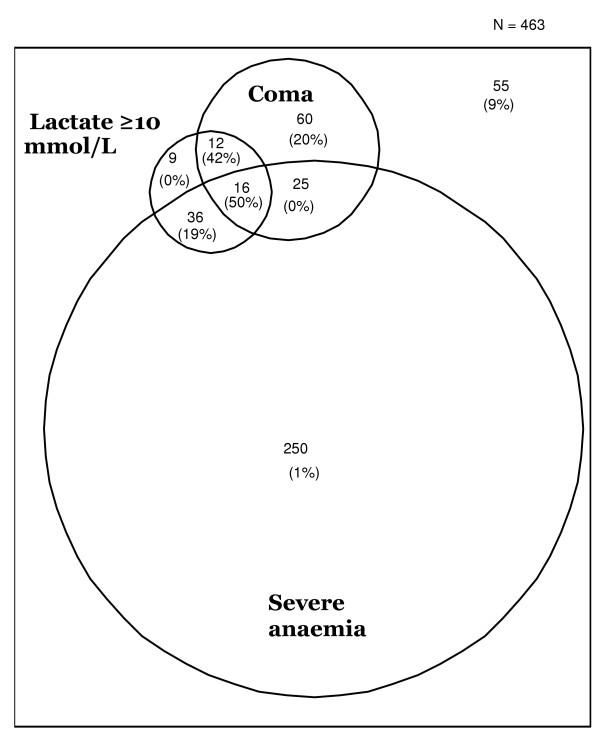
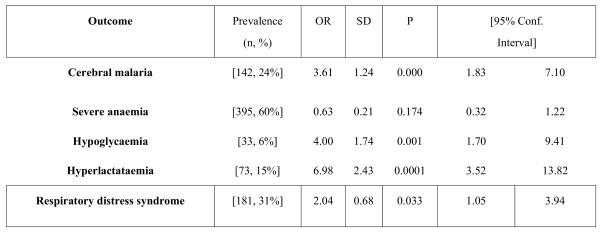
Results: Most children presenting with severe falciparum malaria were less than 5 years (92.3% of 583 cases). Anaemia was the most frequent feature of severe malaria (67.8% of cases), followed by respiratory distress (31%), cerebral malaria (24%) hyperlactataemia (16%) and then hypoglycaemia (10%). Anaemia was more common in children under 18 months old, while cerebral malaria usually occurred in those over 18 months. The overall case fatality rate was 9%. The prognostic indicators with the highest case fatality rates were coma/seizures, hyperlactataemia and hypoglycaemia, and the highest case fatality rate was in children with all three of these features.
Conclusions: Prompt and appropriate, classification and treatment of malaria helps identify the most severely ill children and aids early and appropriate management of the severely ill child.
Figures
References
-
- Breman JG. The ears of the hippopotamus: manifestations, determinants, and estimates of the malaria burden. Am J Trop Med Hyg. 2001;64:1–11. - PubMed
-
- Newton CR, Taylor TE, Whitten RO. Pathophysiology of fatal falciparum malaria in African children. Am J Trop Med Hyg. 1998;58:673–683. - PubMed
-
- Molyneux ME, Taylor TE, Wirima JJ, Borgstein A. Clinical features and prognostic indicators in paediatric cerebral malaria: a study of 131 comatose Malawian children. QJM. 1989;71:369–371. - PubMed
-
- Waller D, Krishna S, Crawley J, Miller K, Nosten F, Chapman D, ter Kuile FO, Craddock C, Berry C, Holloway PA, White NJ. Clinical features and outcome of severe malaria in Gambian children. Clin Infect Dis. 1995;21:577–587. - PubMed
-
- Krishna S, Waller DW, ter Kuile F, Kwiatkowski D, Crawley J, Craddock CF, Nosten F, Chapman D, Brewster D, Holloway PA, White NJ. Lactic acidosis and hypoglycaemia in children with severe malaria: pathophysiological and prognostic significance. Trans R Soc Trop Med Hyg. 1994;88:67–73. doi: 10.1016/0035-9203(94)90504-5. - DOI - PubMed
MeSH terms
Substances
LinkOut - more resources
Full Text Sources
