


Bombesin-induced gastroprotection
- PMID: 15650631
- PMCID: PMC1360124
- DOI: 10.1097/01.sla.0000151790.14274.5d
Bombesin-induced gastroprotection
Abstract
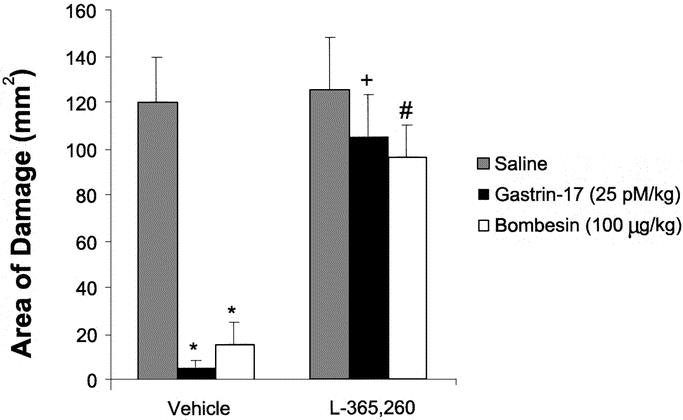
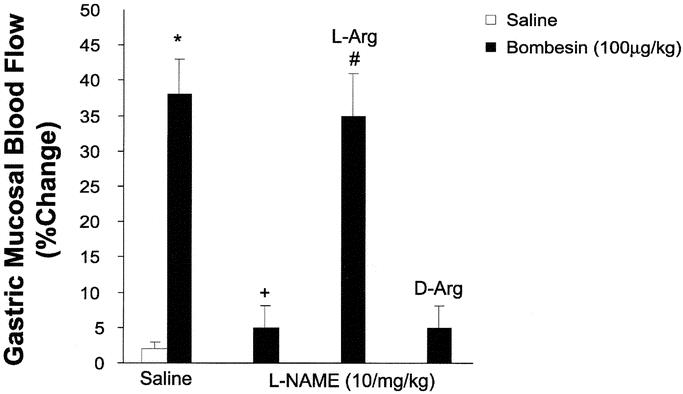
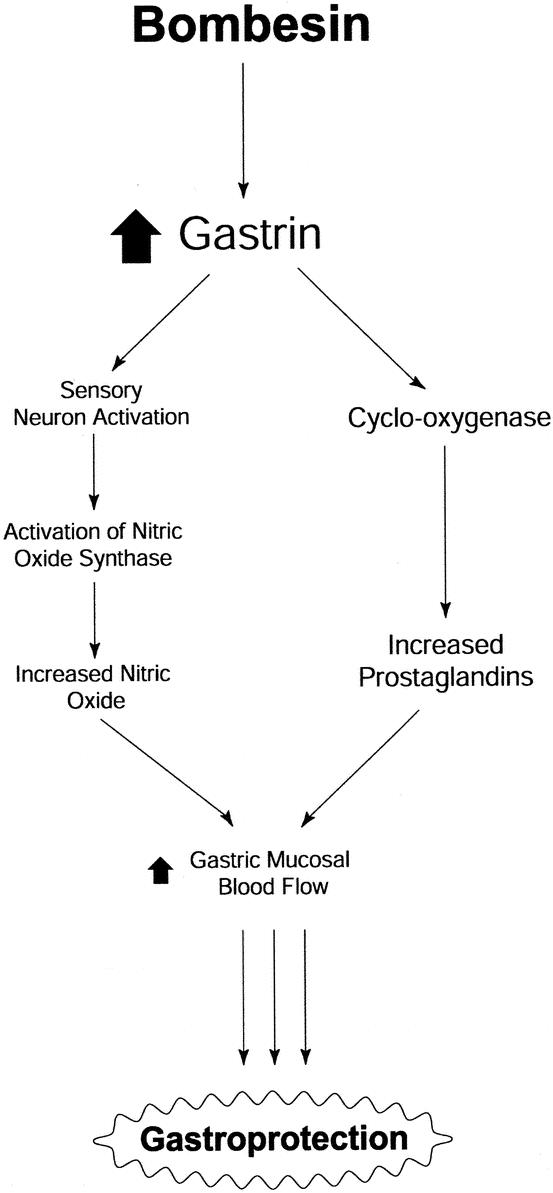
Bombesin is an endogenous gut peptide that is prominent in the stomach. In addition to its effects on modulating acid and gut peptide secretion, recent evidence indicates that bombesin is a potent gastroprotective agent. This review article examines the ability of bombesin to prevent gastric injury. Its protective actions appear to be mediated primarily via the release of endogenous gastrin, as gastroprotection is negated by blockade of gastrin receptors. Bombesin-induced gastroprotection and gastrin release are modified by somatostatin. Immunoneutralization of endogenous somatostatin increases the ability of bombesin to prevent gastric injury by increasing gastrin release. In mechanistic studies, ablation of capsaicin-sensitive afferent neurons abolishes bombesin-induced gastroprotection while cyclo-oxygenase inhibition partially reverses this effect. Nitric oxide synthase inhibition also negates bombesin-induced gastroprotection as well as the ability of bombesin to increase gastric mucosal blood flow. Taken together, the available evidence indicates that bombesin causes release of endogenous gastrin that activates sensory neurons located in the gastric mucosa. Activation of sensory neurons causes increased production of nitric oxide through activation of constitutive nitric oxide synthase, which leads to a resultant increase in gastric mucosal blood flow and renders the stomach less susceptible to damage from luminal irritants.
Figures
References
-
- Erspamer V, Erspamer GF, Inselvini M. Some pharmacological actions of alytesin and bombesin. J Pharm Pharmacol. 1970;22:875–876. - PubMed
-
- Greeley GH Jr, Partin M, Spannage A, et al. Distribution of bombesin-like peptides in the alimentary canal of several vertebrate species. Regul Pept. 1986;16:169–181. - PubMed
-
- Richelsen B, Rehfeld JF, Larsson LI. Antral gland cell column: a method for studying release of gastric hormones. Am J Physiol. 1983;245:G463–G469. - PubMed
Publication types
MeSH terms
Substances
Grants and funding
LinkOut - more resources
Full Text Sources
