Quantitative proton MR spectroscopic findings of cortical reorganization in the auditory cortex of musicians
- PMID: 15661714
- PMCID: PMC7975031
Quantitative proton MR spectroscopic findings of cortical reorganization in the auditory cortex of musicians
Abstract
Background and purpose: Brain has a capacity for reorganization that enables use-dependent adaptations to acquire skills. Previous studies demonstrated morphometric and functional use-dependent changes in the brains of musicians. The purpose of this study was to investigate the differences in metabolite concentrations in the planum temporale, an area strongly associated with the processing of music perception, between trained musicians and non-musicians. We hypothesized that the microscopic changes leading to use-dependent adaptations in brain might cause neurometabolite changes that could be detected with quantitative proton MR spectroscopy.
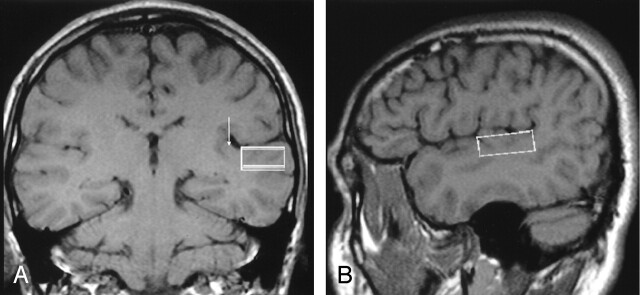
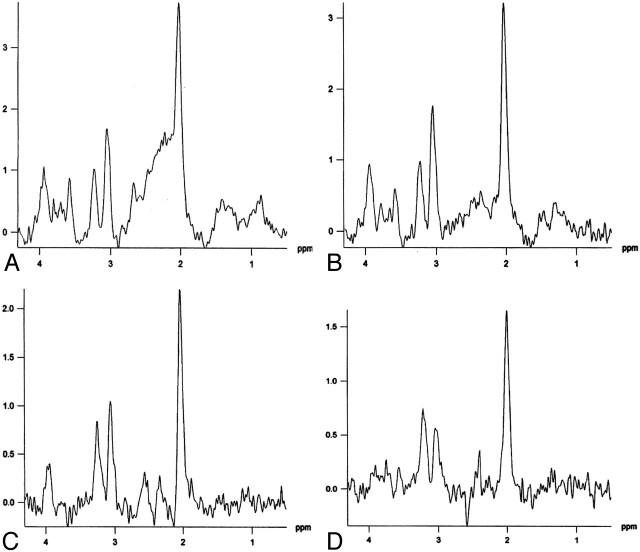
Methods: We performed quantitative proton MR spectroscopy in the left planum temporale of 10 musicians (six men and four women; age range, 20-37 years) and in those of 10 age- and sex-matched control subjects who had no musical training. We calculated the major metabolite concentrations in the left planum temporale.
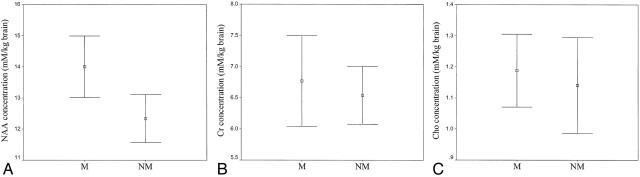
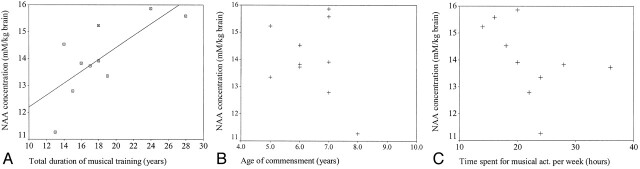
Results: The difference in N-acetylaspartate (NAA) concentrations between the musicians and the non-musician control subjects was statistically significant (P <.01). No significant difference was noted in the choline and creatine concentrations between the musicians and the non-musician control subjects (P >.05). The NAA concentration of the musicians correlated with the total duration of musical training and activity (r=0.733, P <.05).
Conclusion: Long-term, professional musical activity caused significant changes in the neurometabolite concentrations that might reflect the physiologic mechanism(s) of use-dependent adaptation in the brains of musicians.
Figures


References
-
- Chen R, Cohen LG, Hallet M. Nervous system reorganization following injury. Neuroscience 2002;6:761–773 - PubMed
-
- Elbert T, Pantev C, Wienbruch C, Rockstroh B, Taub E. Increased cortical representation of the fingers of the left hand in string players. Science 1995;270:305–307 - PubMed
-
- Platel H, Price C, Baron JC, et al. The structural components of music perception: a functional anatomical study. Brain 1997;120:229–243 - PubMed
MeSH terms
Substances
LinkOut - more resources
Full Text Sources
Medical