


The neurobiology of alcoholism in genetically selected rat models
- PMID: 15704355
- PMCID: PMC6826823
The neurobiology of alcoholism in genetically selected rat models
Abstract
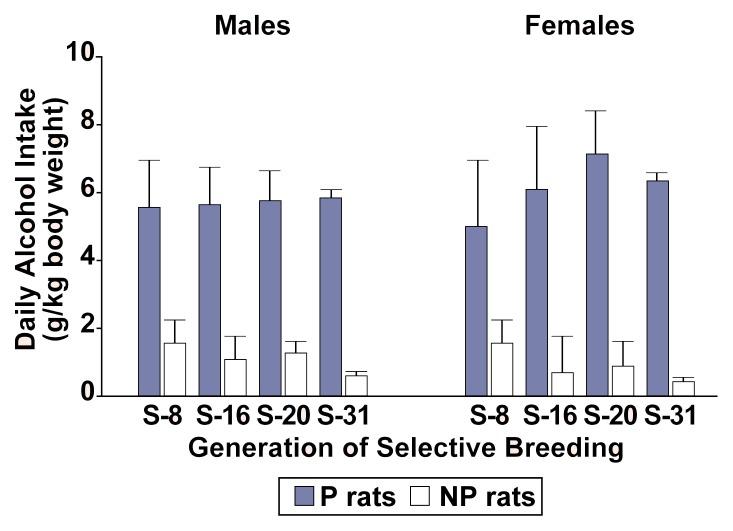
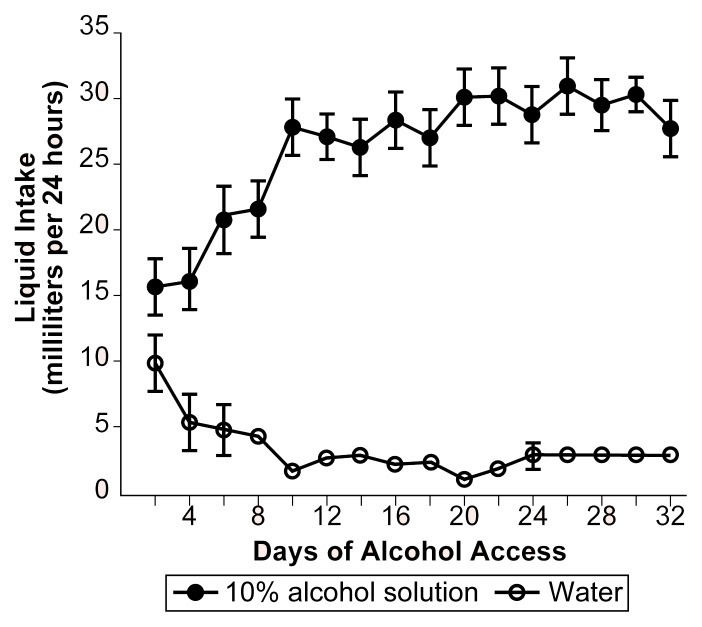
Rats selectively bred for their tendency to drink large or small quantities of alcohol are a useful model for investigators examining the possible neurobiological processes underlying alcoholism. Studies with the alcohol-preferring (P) and alcohol-nonpreferring (NP) and the high-alcohol-drinking (HAD) and low-alcohol-drinking (LAD) pairs of rat lines developed at Indiana University have illustrated differences in several behavioral and neurobiological characteristics associated with alcohol consumption. Specifically, compared with alcohol-avoiding rats, rats with an affinity for alcohol have a greater sensitivity to the stimulatory effects of low to moderate doses and a reduced sensitivity to the negative effects of high doses. Rats that voluntarily drink large quantities of alcohol also acquire tolerance to alcohol's aversive effects. In addition, these rats differ from their alcohol-avoiding counterparts in the levels of several chemical mediators (i.e., neurotransmitters) found in the brain, including serotonin, dopamine, gamma-aminobutyric acid (GABA), and the endogenous opioids.
Figures
References
-
- Altshuler HL, Phillips PE, Feinhandler DA. Alteration of ethanol self-administration by naltrexone. Life Sciences. 1980;26:679–688. - PubMed
-
- Bice PJ, Kiefer SW. Taste reactivity in alcohol preferring and nonpreferring rats. Alcoholism: Clinical and Experimental Research. 1990;14(5):721–727. - PubMed
-
- Cicero TJ. A critique of animal analogues of alcoholism. In: Majchrowicz E, Noble EP, editors. Biochemistry and Pharmacology of Ethanol. Vol. 2. New York: Plenum Press; 1979. pp. 533–560.
-
- Cloninger CR. Neurogenetic adaptive mechanisms in alcoholism. Science. 1987;236(4800):410–416. - PubMed
-
- Eriksson K. Genetic selection for voluntary alcohol consumption in the albino rat. Science. 1968;159(3816):739–741. - PubMed
Publication types
MeSH terms
LinkOut - more resources
Full Text Sources
Medical
Miscellaneous