


Immune problems in central nervous system cell therapy
- PMID: 15717048
- PMCID: PMC534953
- DOI: 10.1602/neurorx.1.4.472
Immune problems in central nervous system cell therapy
Abstract
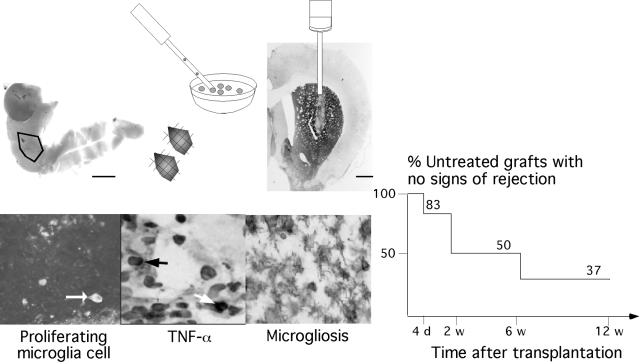
Transplantation of cells and tissues to the mammalian brain and CNS has revived the interest in the immunological status of brain and its response to grafted tissue. The previously held view that the brain was an absolute "immunologically privileged site" allowing indefinite survival without rejection of grafts of cells has proven to be wrong. Thus, the brain should be regarded as a site where immune responses can occur, albeit in a modified form, and under certain circumstances these are as vigorous as those seen in other peripheral sites. Clinical cell transplant trials have now been performed in Parkinson's disease, Huntington's disease, demyelinating diseases, retinal disorders, stroke, epilepsy, and even deafness, and normally are designed as cell replacement strategies, although implantation of genetically modified cells for supplementation of growth factors has also been tried. In addition, some disorders of the CNS for which cell therapies are being considered have an immunological basis, such as multiple sclerosis, which further complicates the situation. Embryonic neural tissue allografted into the CNS of animals and patients with neurodegenerative conditions survives, makes and receives synapses, and ameliorates behavioral deficits. The use of aborted human tissue is logistically and ethically complicated, which has lead to the search for alternative sources of cells, including xenogeneic tissue, genetically modified cells, and stem cells, all of which can and will induce some level of immune reaction. We review some of the immunological factors involved in transplantation of cells to CNS.
References
-
- Billingham RW, Boswell T. Studies on the problem of corneal honografts. Proc R Soc Lond B Biol Sci 141: 392–406, 1953. - PubMed
-
- Barker CF, Billingham RE. Immunologically privileged sites. Adv Immunol 25: 1–54, 1977. - PubMed
-
- Hickey WH. Basic principles of immunological surveillance of the normal central nervous system. Glia 36: 118–124, 2001. - PubMed
Publication types
MeSH terms
Substances
Grants and funding
LinkOut - more resources
Full Text Sources
Other Literature Sources
