Bcl-2 enhances Ca(2+) signaling to support the intrinsic regenerative capacity of CNS axons
- PMID: 15719013
- PMCID: PMC554135
- DOI: 10.1038/sj.emboj.7600589
Bcl-2 enhances Ca(2+) signaling to support the intrinsic regenerative capacity of CNS axons
Abstract
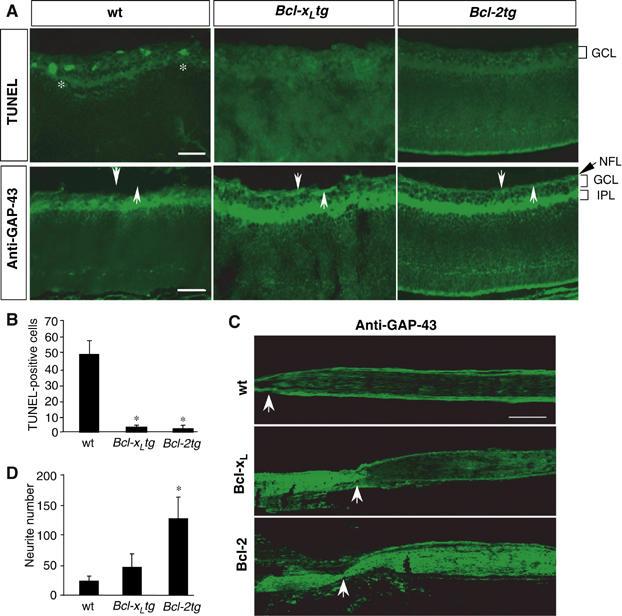
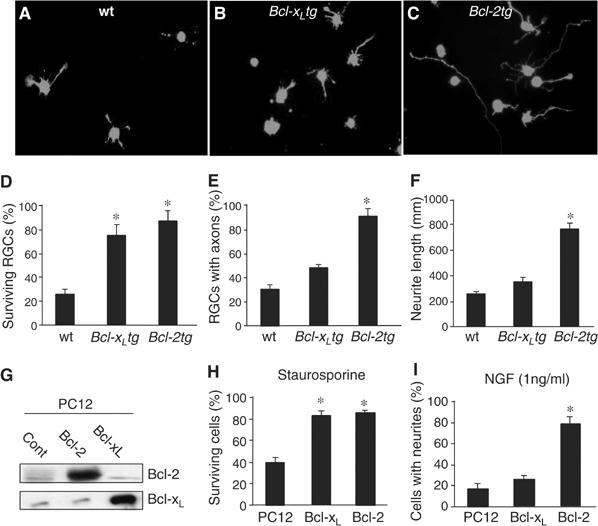
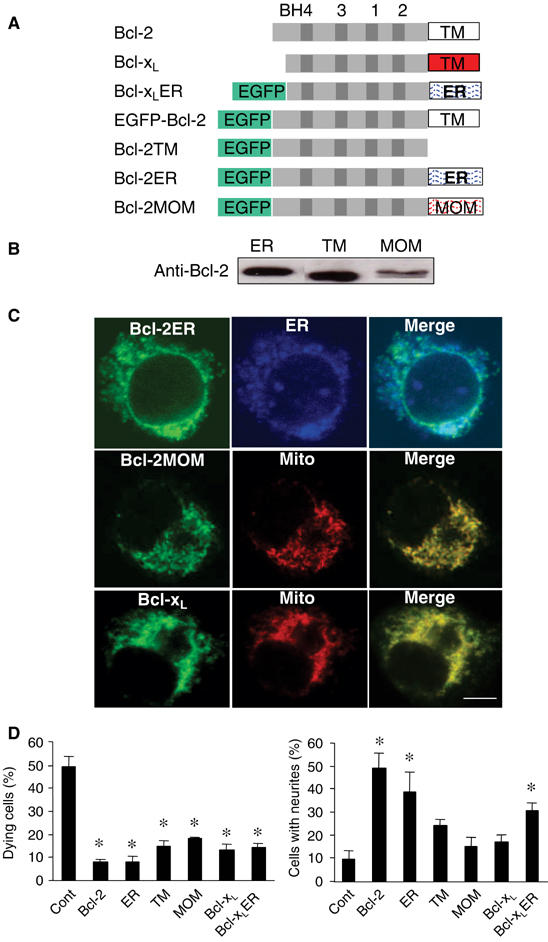
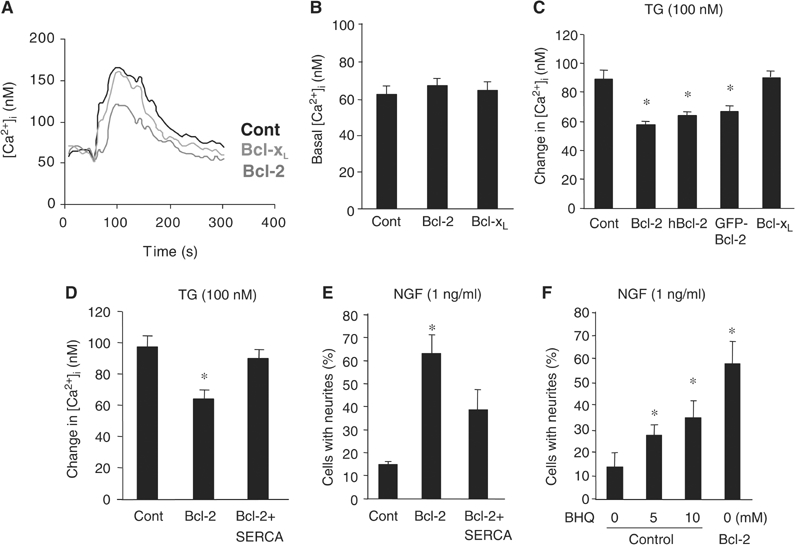
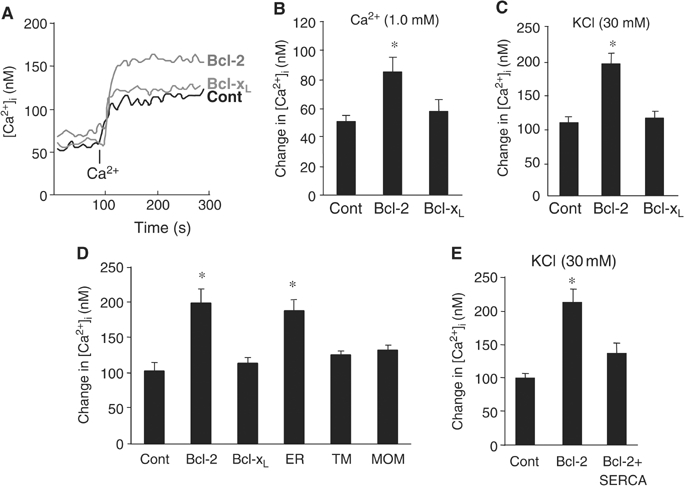
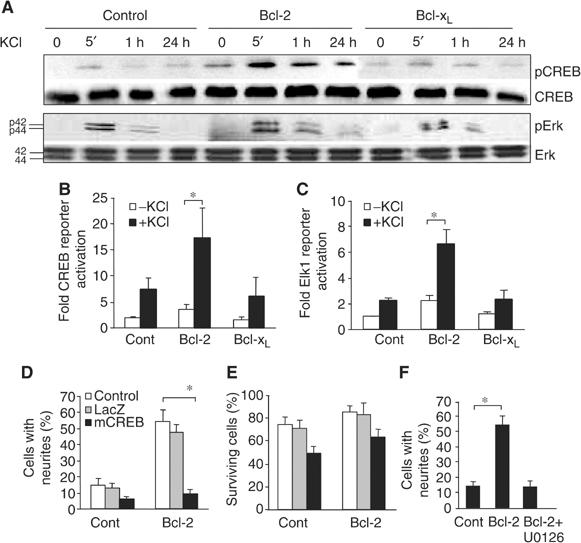
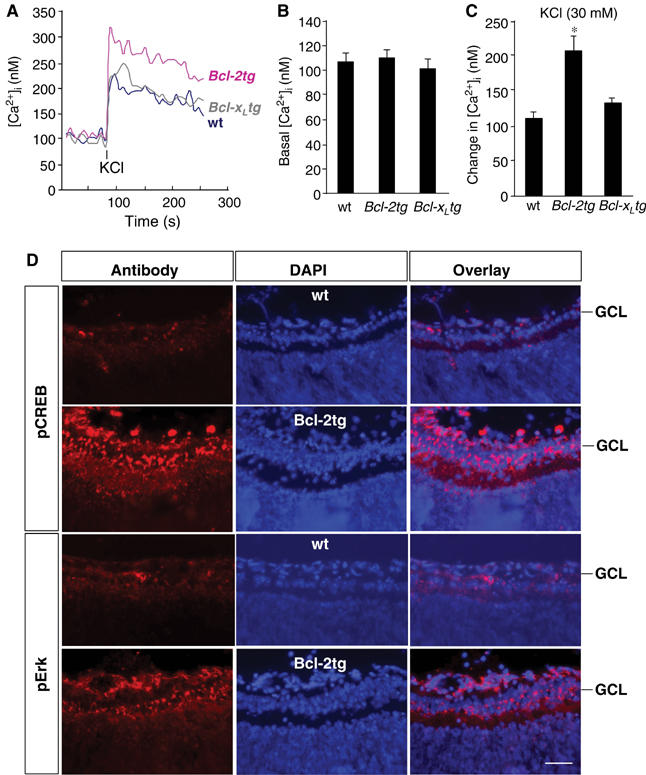
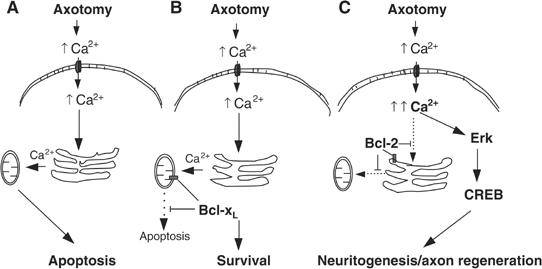
At a certain point in development, axons in the mammalian CNS undergo a profound loss of intrinsic growth capacity, which leads to poor regeneration after injury. Overexpression of Bcl-2 prevents this loss, but the molecular basis of this effect remains unclear. Here, we report that Bcl-2 supports axonal growth by enhancing intracellular Ca(2+) signaling and activating cAMP response element binding protein (CREB) and extracellular-regulated kinase (Erk), which stimulate the regenerative response and neuritogenesis. Expression of Bcl-2 decreases endoplasmic reticulum (ER) Ca(2+) uptake and storage, and thereby leads to a larger intracellular Ca(2+) response induced by Ca(2+) influx or axotomy in Bcl-2-expressing neurons than in control neurons. Bcl-x(L), an antiapoptotic member of the Bcl-2 family that does not affect ER Ca(2+) uptake, supports neuronal survival but cannot activate CREB and Erk or promote axon regeneration. These results suggest a novel role for ER Ca(2+) in the regulation of neuronal response to injury and define a dedicated signaling event through which Bcl-2 supports CNS regeneration.
Figures
References
-
- Adams JP, Sweatt JD (2002) Molecular psychology: roles for the ERK MAP kinase cascade in memory. Annu Rev Pharmacol Toxicol 42: 135–163 - PubMed
-
- Berridge MJ (1998) Neuronal calcium signaling. Neuron 21: 13–26 - PubMed
-
- Chen DF, Schneider GE, Martinou JC, Tonegawa S (1997) Bcl-2 promotes regeneration of severed axons in mammalian CNS. Nature 385: 434–439 - PubMed
Publication types
MeSH terms
Substances
Grants and funding
LinkOut - more resources
Full Text Sources
Molecular Biology Databases
Research Materials
Miscellaneous