


CD4+CD25+ T regulatory cells, immunotherapy of cancer, and interleukin-2
- PMID: 15725955
- PMCID: PMC1242172
- DOI: 10.1097/01.cji.0000155049.26787.45
CD4+CD25+ T regulatory cells, immunotherapy of cancer, and interleukin-2
Abstract
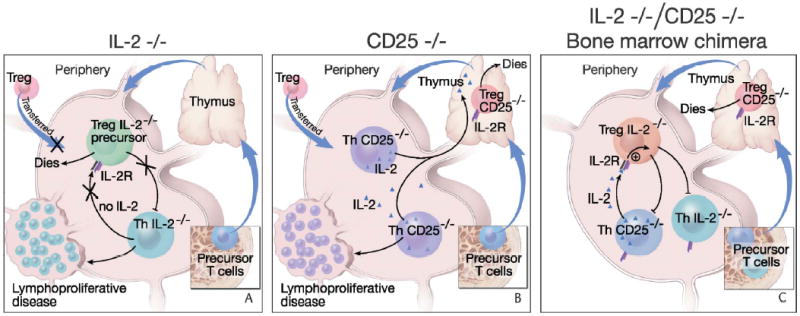
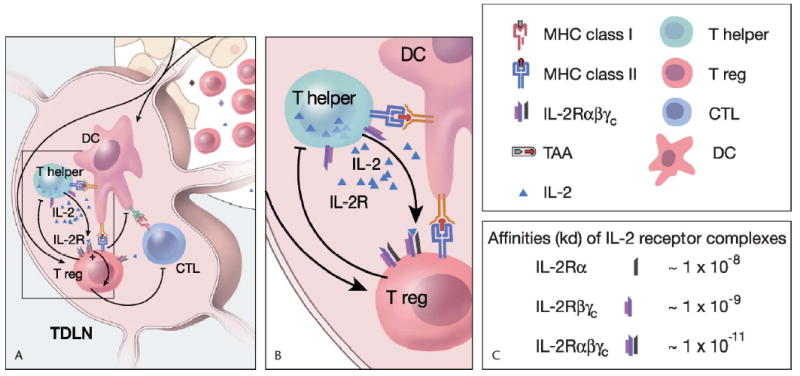
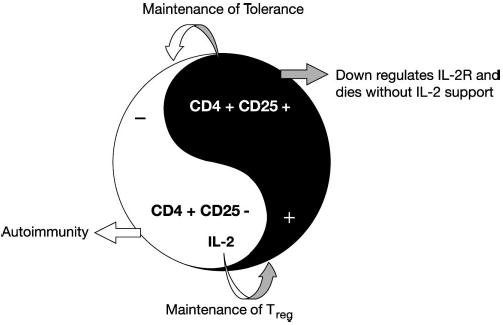
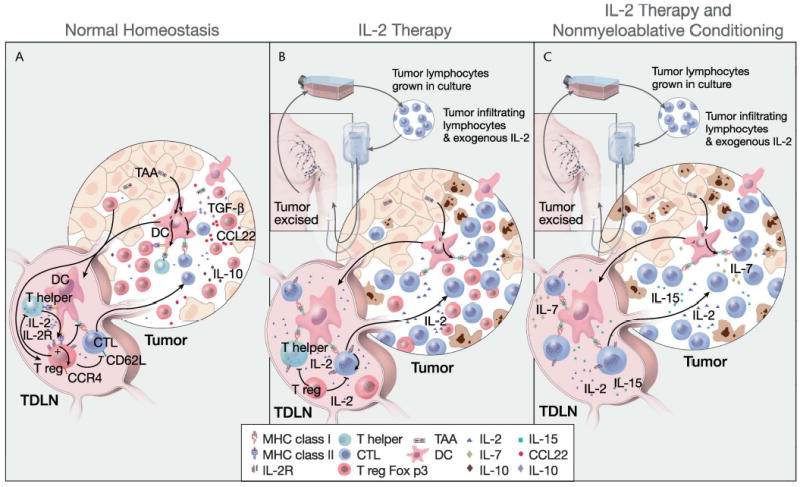
CD4+CD25+ T regulatory (Treg) cells control immunologic tolerance to self-antigens and play a role in suppressing antitumor immune responses, but the mechanism of suppression in vivo remains uncertain. Recently, signaling through the high-affinity interleukin-2 (IL-2) receptor has been shown to be critical for Treg cell differentiation and survival in vivo. Mice deficient in IL-2 or its receptor (CD25 or CD122) or deficient in downstream signaling molecules, including JAK-3 and STAT-5, do not develop a stable population of Treg cells and subsequently acquire lymphoproliferative disease and autoimmunity. in vitro, IL-2 is required to expand Treg cells and to induce their suppressive characteristics. Conversely, IL-2-based regimens can activate cellular antitumor immunity and are the mainstay of immunotherapies directed against melanoma and kidney cancers. Given the seemingly disparate effects of IL-2, the authors discuss the possibility that IL-2 may not be the optimal T-cell growth factor in vivo, but rather an inducer of self-tolerance. The authors propose that other gamma c-signaling cytokines, including IL-15, may be alternative choices for the immunotherapy of cancer.
Figures
References
-
- Morgan DA, Ruscetti FW, Gallo R. Selective in vitro growth of T lymphocytes from normal human bone marrows. Science. 1976;193:1007–1008. - PubMed
-
- Almeida AR, Legrand N, Papiernik M, et al. Homeostasis of peripheral CD4+ T cells: IL-2R alpha and IL-2 shape a population of regulatory cells that controls CD4+ T cell numbers. J Immunol. 2002;169:4850–4860. - PubMed
-
- Belkaid Y, Piccirillo CA, Mendez S, et al. CD4+CD25+ regulatory T cells control Leishmania major persistence and immunity. Nature. 2002;420:502–507. - PubMed
-
- Suri-Payer E, Amar AZ, Thornton AM, et al. CD4(+)CD25(+) T cells inhibit both the induction and effector function of autoreactive T cells and represent a unique lineage of immunoregulatory cells. J Immunol. 1998;160:1212–1218. - PubMed
Publication types
MeSH terms
Substances
Grants and funding
LinkOut - more resources
Full Text Sources
Other Literature Sources
Medical
Research Materials
Miscellaneous
