Evidence of a dose-response relationship between "truth" antismoking ads and youth smoking prevalence
- PMID: 15727971
- PMCID: PMC1449196
- DOI: 10.2105/AJPH.2004.049692
Evidence of a dose-response relationship between "truth" antismoking ads and youth smoking prevalence
Abstract
Objectives: In early 2000, the American Legacy Foundation launched the national "truth" campaign, the first national antismoking campaign to discourage tobacco use among youths. We studied the impact of the campaign on national smoking rates among US youths (students in grades 8, 10, and 12).
Methods: We used data from the Monitoring the Future survey in a pre/post quasi-experimental design to relate trends in youth smoking prevalence to varied doses of the "truth" campaign in a national sample of approximately 50000 students in grades 8, 10, and 12, surveyed each spring from 1997 through 2002.
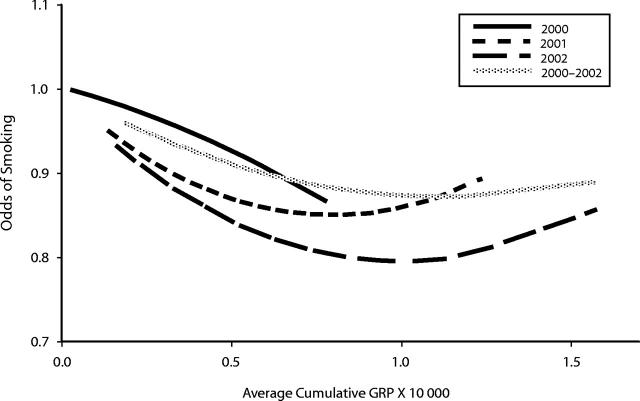
Results: Findings indicate that the campaign accounted for a significant portion of the recent decline in youth smoking prevalence. We found that smoking prevalence among all students declined from 25.3% to 18.0% between 1999 and 2002 and that the campaign accounted for approximately 22% of this decline.
Conclusions: This study showed that the campaign was associated with substantial declines in youth smoking and has accelerated recent declines in youth smoking prevalence.
Figures
References
-
- Siegel M. Antismoking advertising: figuring out what works. J Health Commun. 2002;7(2):157–162. - PubMed
-
- Wakefield M, Flay B, Nichter M, Giovino G. Effects of anti-smoking advertising on youth smoking: a review. J Health Commun. 2003;8(3):229–247. - PubMed
-
- Bauer UE, Johnson TM, Hopkins RS, Brooks RG. Changes in youth cigarette use and intentions following implementation of a tobacco control program: findings from the Florida Youth Tobacco Survey, 1998–2000. JAMA. 2000;284:723–728. - PubMed
Publication types
MeSH terms
LinkOut - more resources
Full Text Sources
Medical