


The de novo centriole assembly pathway in HeLa cells: cell cycle progression and centriole assembly/maturation
- PMID: 15738265
- PMCID: PMC2171814
- DOI: 10.1083/jcb.200411126
The de novo centriole assembly pathway in HeLa cells: cell cycle progression and centriole assembly/maturation
Abstract
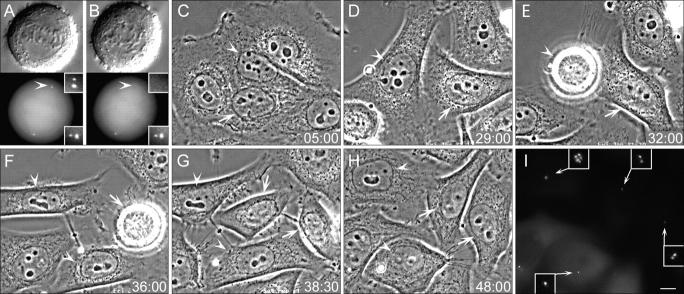
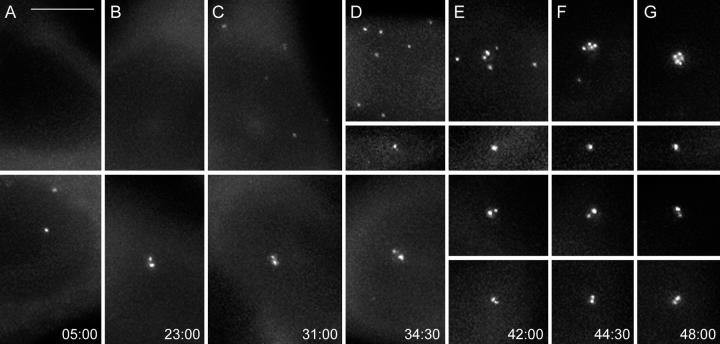
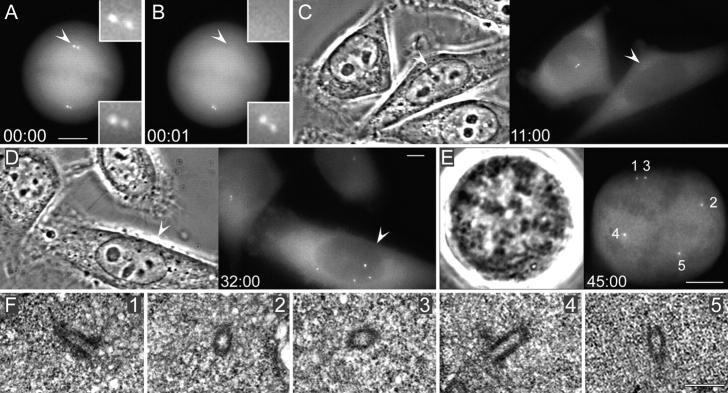
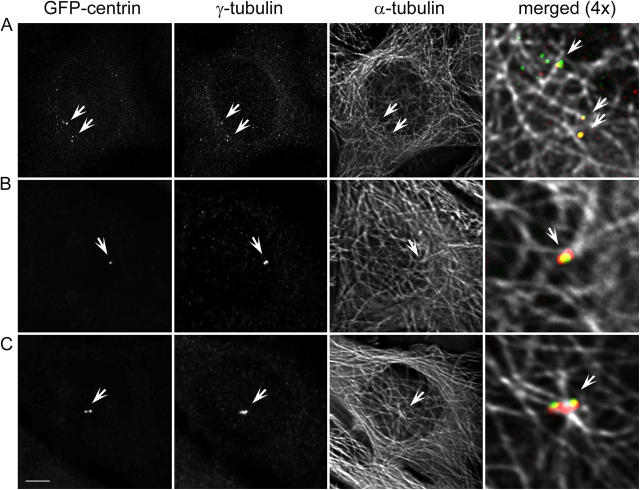
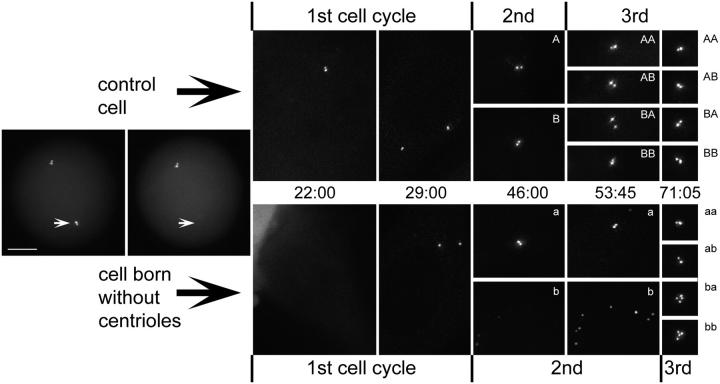
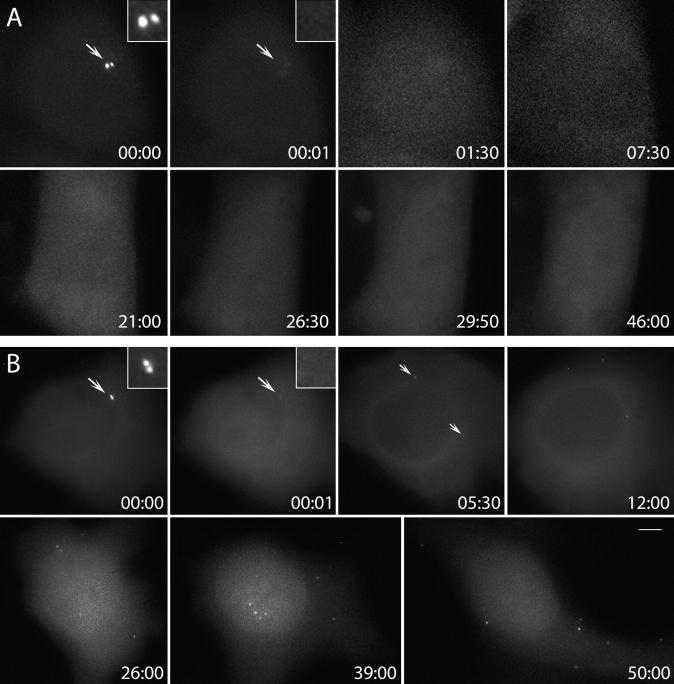
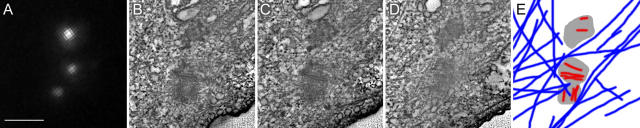
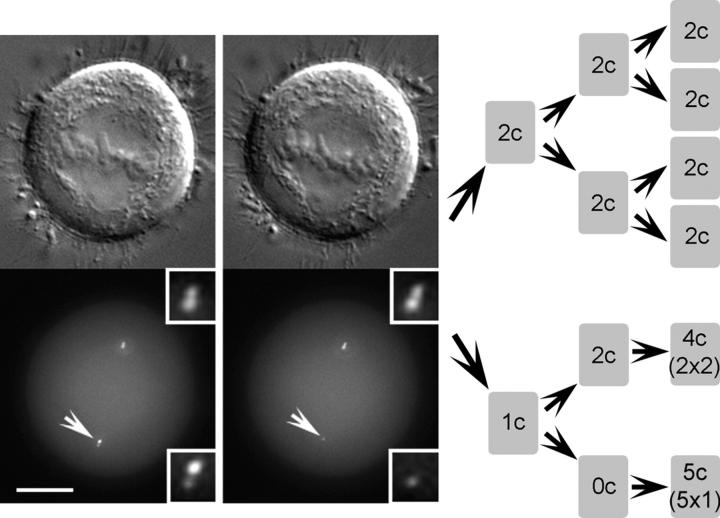
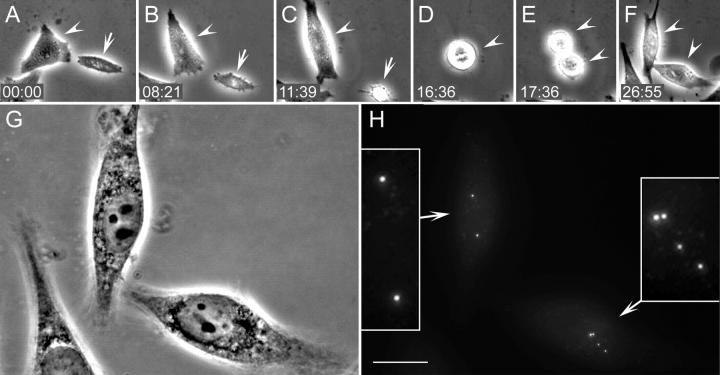
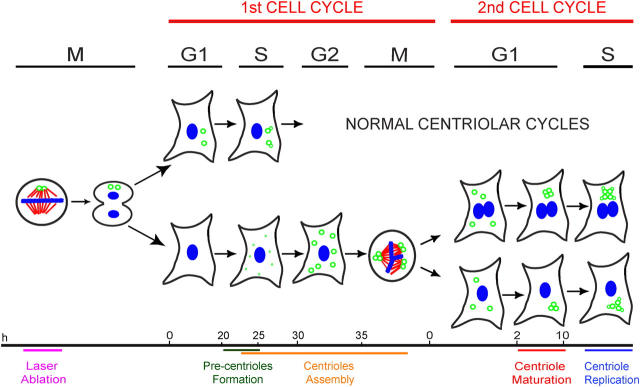
It has been reported that nontransformed mammalian cells become arrested during G1 in the absence of centrioles (Hinchcliffe, E., F. Miller, M. Cham, A. Khodjakov, and G. Sluder. 2001. Science. 291:1547-1550). Here, we show that removal of resident centrioles (by laser ablation or needle microsurgery) does not impede cell cycle progression in HeLa cells. HeLa cells born without centrosomes, later, assemble a variable number of centrioles de novo. Centriole assembly begins with the formation of small centrin aggregates that appear during the S phase. These, initially amorphous "precentrioles" become morphologically recognizable centrioles before mitosis. De novo-assembled centrioles mature (i.e., gain abilities to organize microtubules and replicate) in the next cell cycle. This maturation is not simply a time-dependent phenomenon, because de novo-formed centrioles do not mature if they are assembled in S phase-arrested cells. By selectively ablating only one centriole at a time, we find that the presence of a single centriole inhibits the assembly of additional centrioles, indicating that centrioles have an activity that suppresses the de novo pathway.
Figures
References
-
- Brinkley, B.R. 2001. Managing the centrosome numbers game: from chaos to stability in cancer cell division. Trends Cell Biol. 11:18–21. - PubMed
-
- Brinkley, B.R., and T.M. Goepfert. 1998. Supernumerary centrosomes and cancer: Boveri's hypothesis resurrected. Cell Motil. Cytoskeleton. 41:281–288. - PubMed
-
- Hartwell, L.H., and T.A. Weinert. 1989. Checkpoints: controls that ensure the order of cell cycle events. Science. 246:629–634. - PubMed
