


Human desmoid fibroblasts: matrix metalloproteinases, their inhibitors and modulation by Toremifene
- PMID: 15740610
- PMCID: PMC555538
- DOI: 10.1186/1471-2407-5-22
Human desmoid fibroblasts: matrix metalloproteinases, their inhibitors and modulation by Toremifene
Abstract
Background: Desmoid tumour is a benign, non metastasising neoplasm characterised by an elevated deposition of organic macromolecules in the extracellular matrix (ECM). The matrix metalloproteinases (MMPs) are a family of zinc-dependent proteinases involved in the degradation of ECM macromolecules. The MMPs and their natural inhibitors (TIMPs) have been implicated in tumour growth, invasion and metastasis. In this study we provide evidence that the in vitro cultured cell line from desmoid tumour accumulates more collagen fibres in the ECM than healthy fibroblasts.
Methods: We investigated collagen accumulation by 3H-thymidine incorporation, MMP expression by substrate gel zymography and TIMP expression by Western blot analysis.
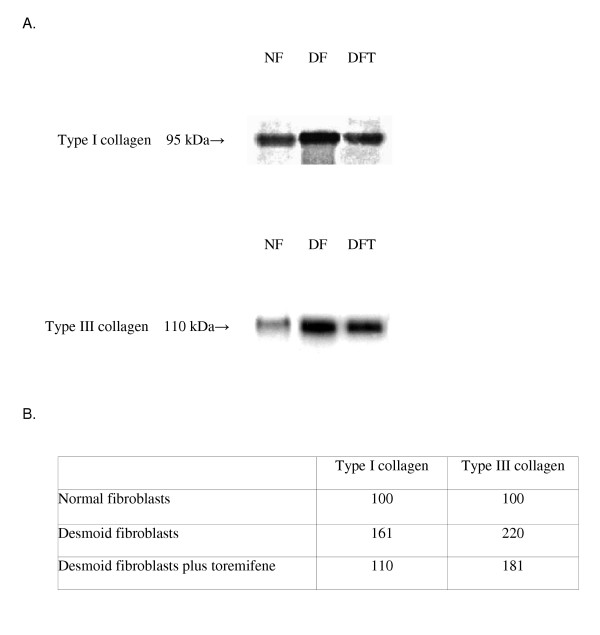
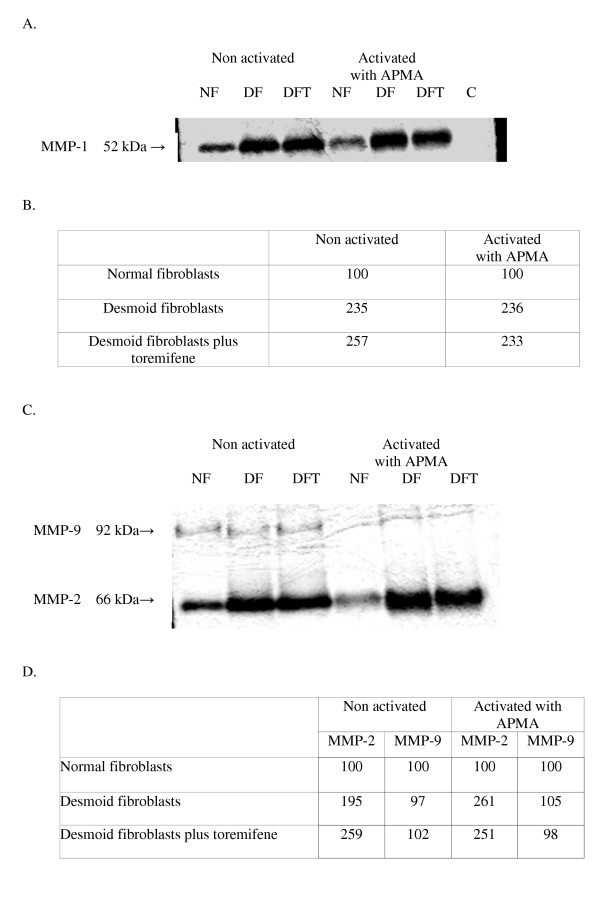
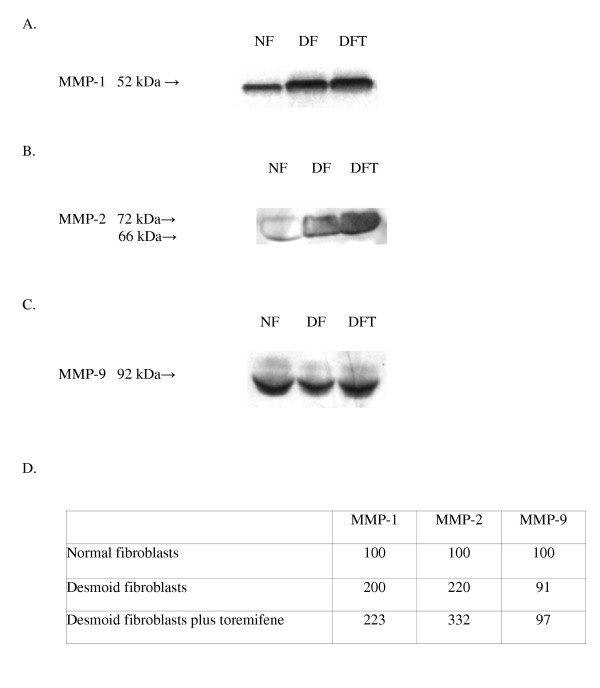
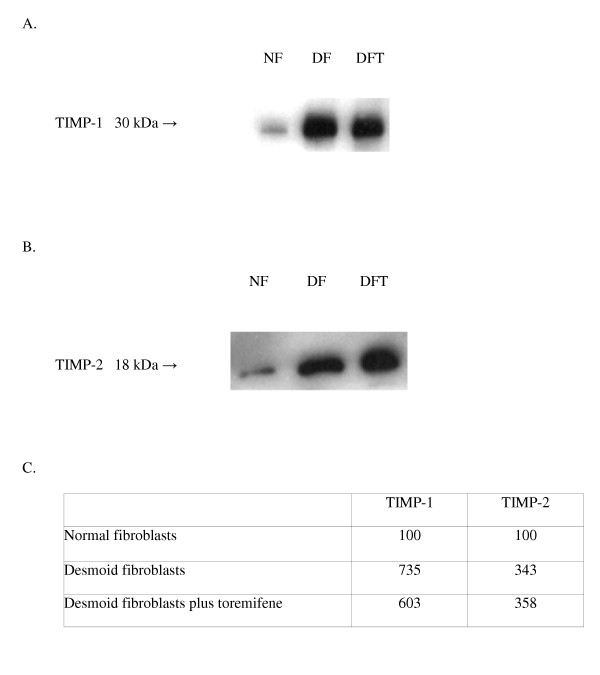
Results: Desmoid fibroblasts showed a reduction in MMP activity and an increase of type I and III collagen and TIMPs compared to normal fibroblasts.
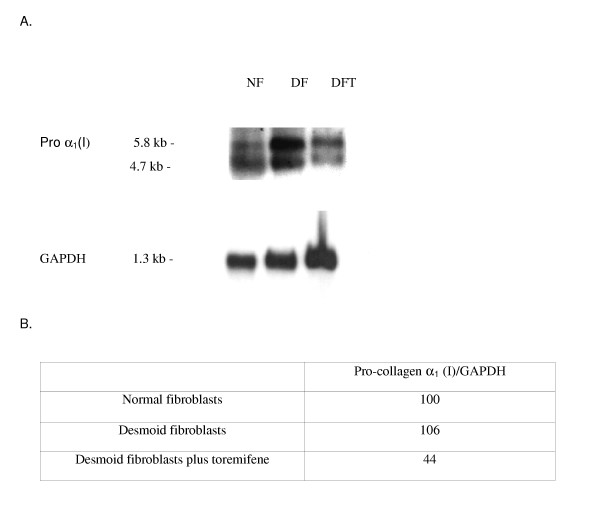
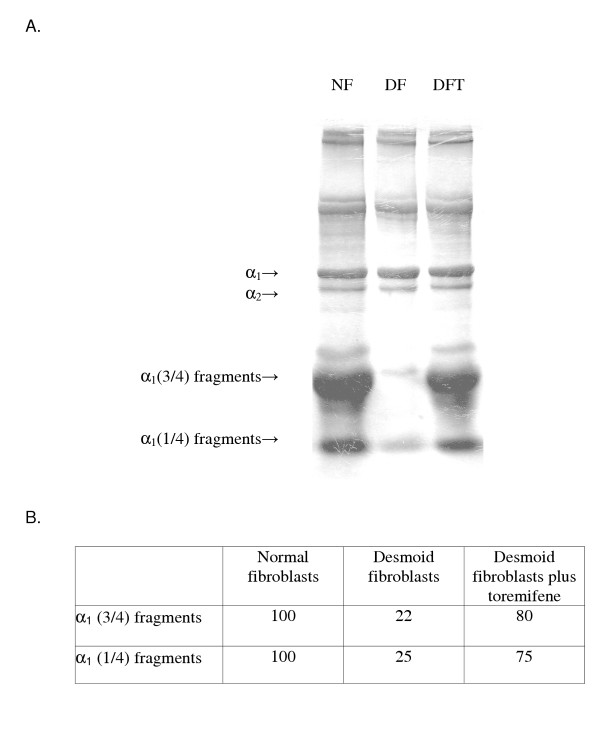
Conclusion: The increase in collagen in desmoid fibroblasts was due to inhibited collagen degradation (reduction of MMP activity) rather than to increased collagen synthesis. Adding toremifene, an anti-estrogen triphenylethylene derivate, to desmoid fibroblasts reduced collagen accumulation by decreasing mRNA expression and increasing collagen degradation.
Figures
References
-
- Locci P, Bellocchio S, Lilli C, Marinucci L, Cagini L, Baroni T, Giustozzi G, Becchetti E. Synthesis and secretion of transforming growth factor-β1 by human desmoid fibroblast cell line and its modulation by toremifene. J Interf Cytok Res. 2001;21:961–970. doi: 10.1089/107999001753289578. - DOI - PubMed
MeSH terms
Substances
LinkOut - more resources
Full Text Sources
Research Materials
Miscellaneous
