


Inner and outer retinal pathways both contribute to surround inhibition of salamander ganglion cells
- PMID: 15760938
- PMCID: PMC1464530
- DOI: 10.1113/jphysiol.2005.083436
Inner and outer retinal pathways both contribute to surround inhibition of salamander ganglion cells
Abstract
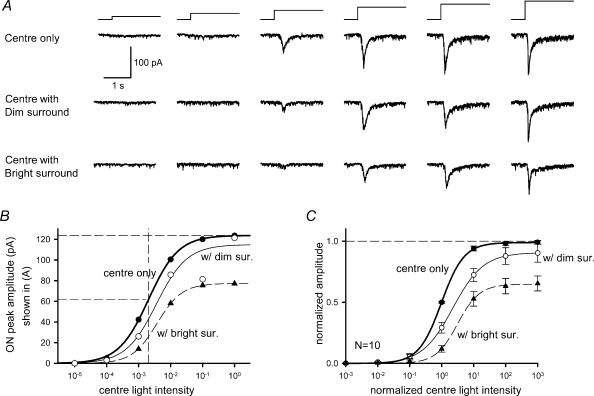
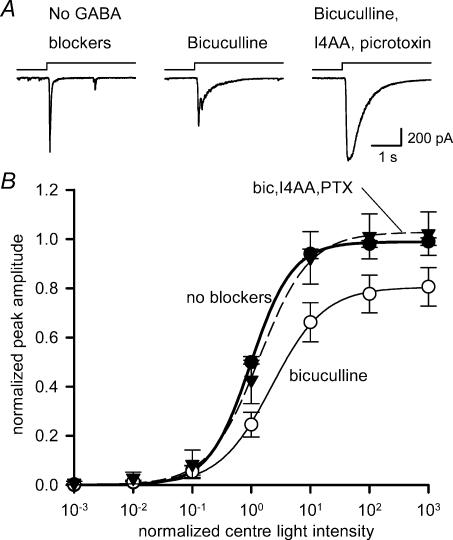
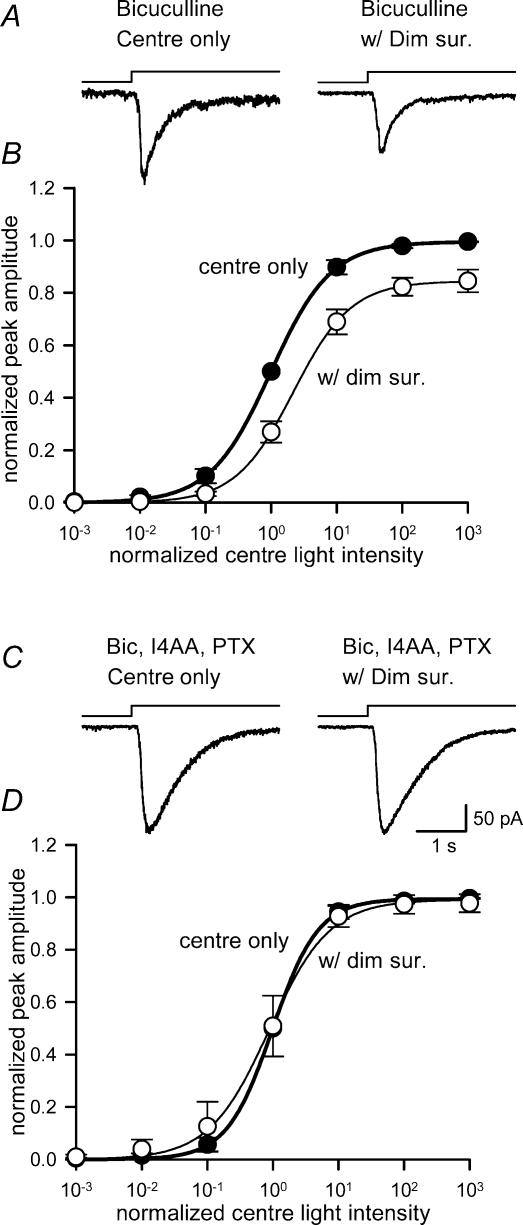
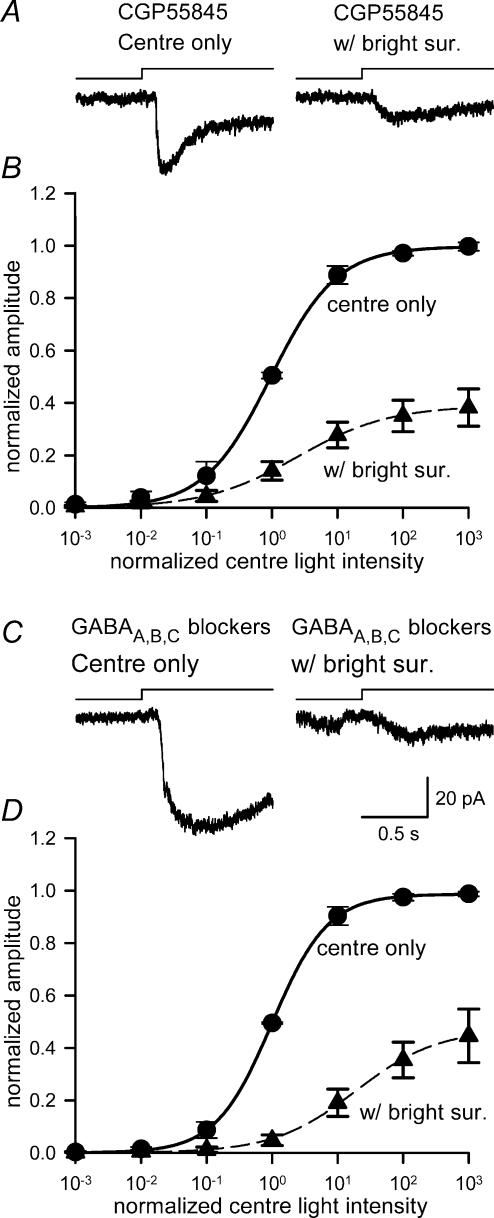
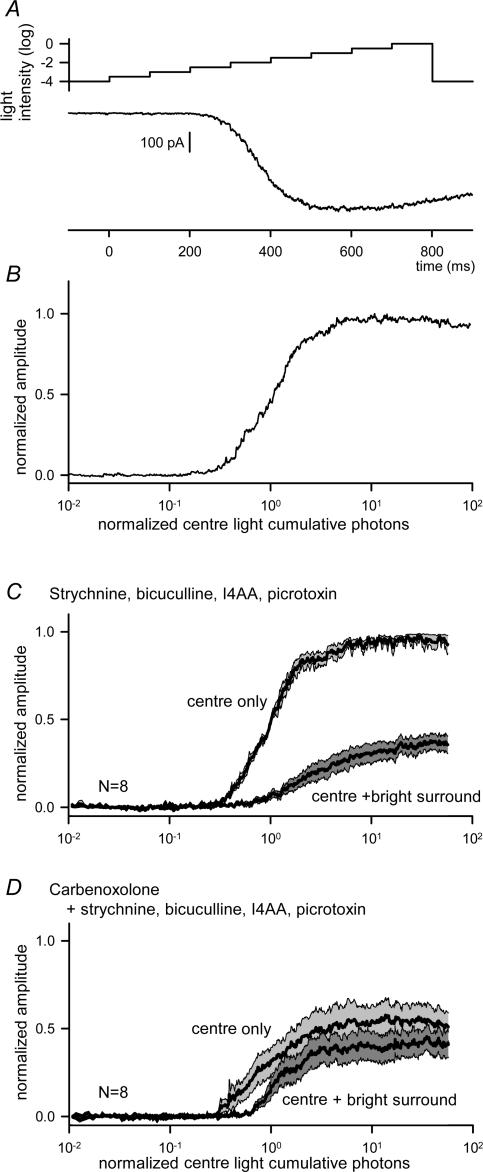
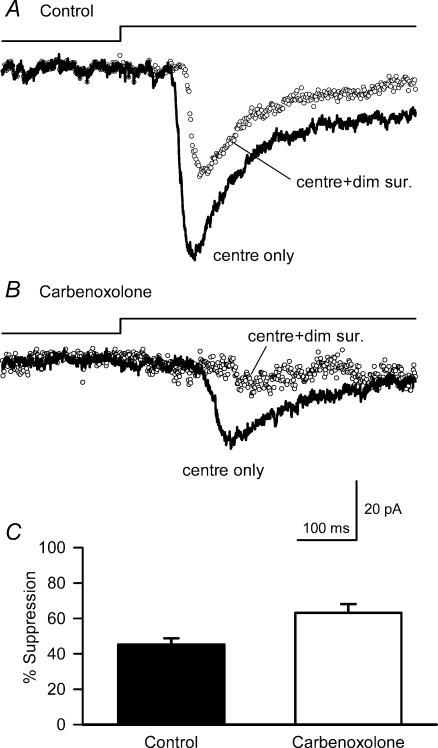
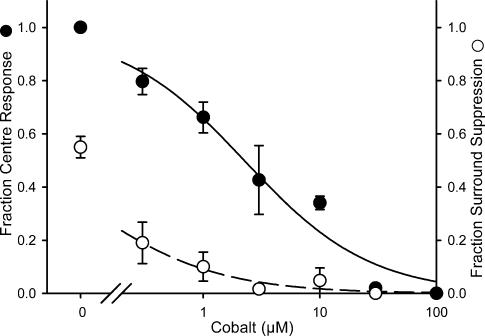
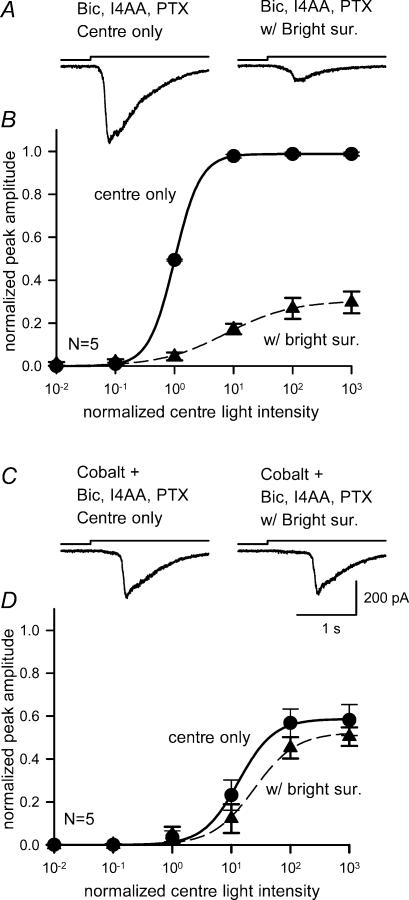
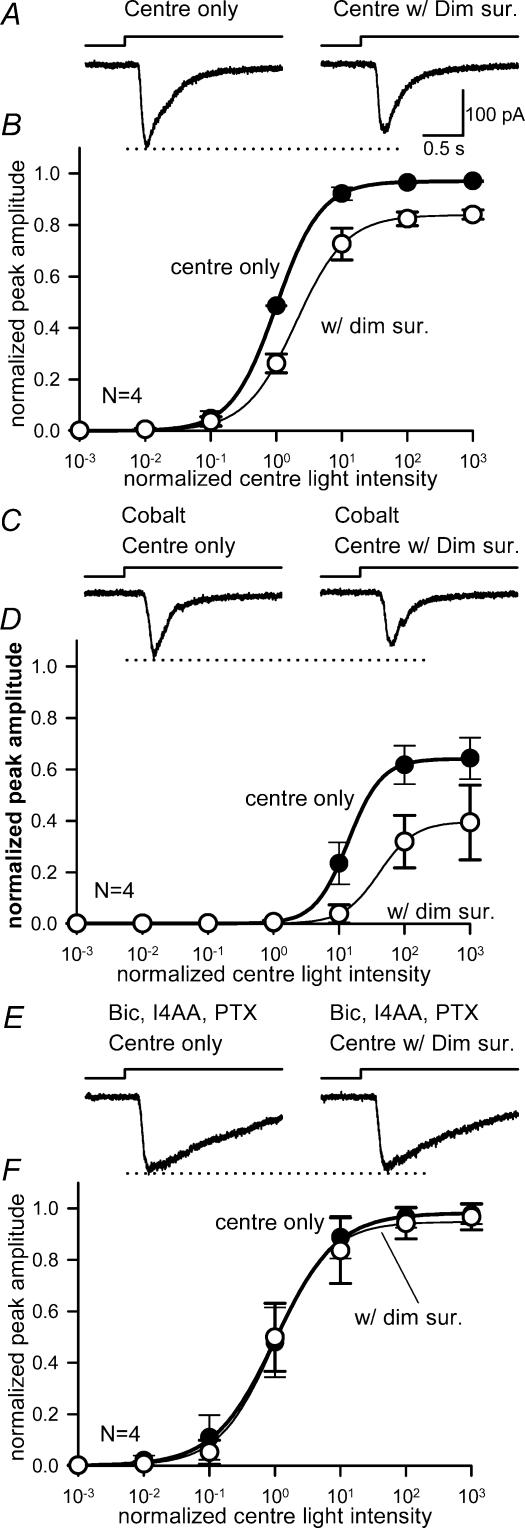
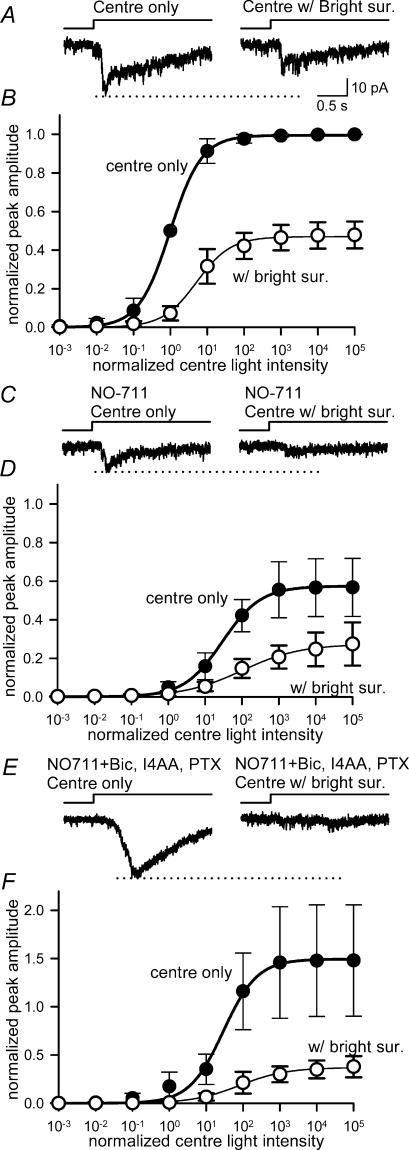
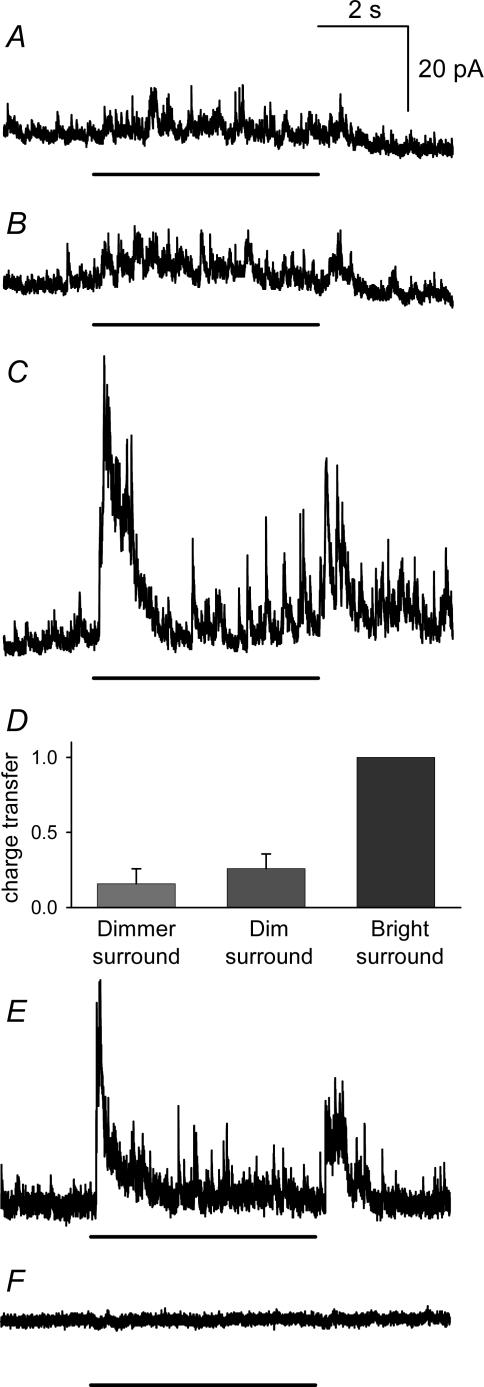
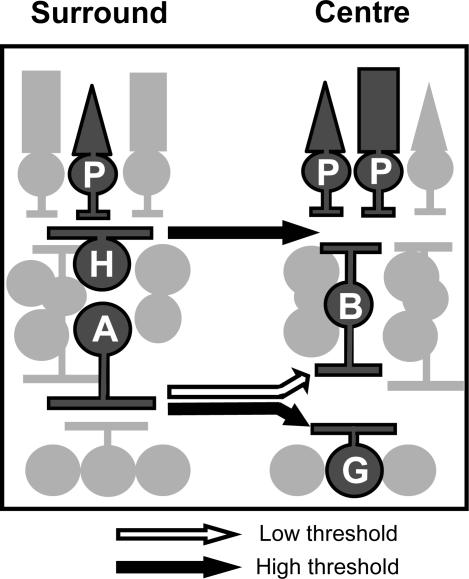
Illumination of the receptive-field surround reduces the sensitivity of a retinal ganglion cell to centre illumination. The steady, antagonistic receptive-field surround of retinal ganglion cells is classically attributed to the signalling of horizontal cells in the outer plexiform layer (OPL). However, amacrine cell signalling in the inner plexiform layer (IPL) also contributes to the steady receptive-field surround of the ganglion cell. We examined the contributions of these two forms of presynaptic lateral inhibition to ganglion cell light sensitivity by measuring the effects of surround illumination on EPSCs evoked by centre illumination. GABA(C) receptor antagonists reduced inhibition attributed to dim surround illumination, suggesting that this inhibition was mediated by signalling to bipolar cell axon terminals. Brighter surround illumination further reduced the light sensitivity of the ganglion cell. The bright surround effects on the EPSCs were insensitive to GABA receptor blockers. Perturbing outer retinal signalling with either carbenoxolone or cobalt blocked the effects of the bright surround illumination, but not the effects of dim surround illumination. We found that the light sensitivities of presynaptic, inhibitory pathways in the IPL and OPL were different. GABA(C) receptor blockers reduced dim surround inhibition, suggesting it was mediated in the IPL. By contrast, carbenoxolone and cobalt reduced bright surround, suggesting it was mediated by horizontal cells in the OPL. Direct amacrine cell input to ganglion cells, mediated by GABA(A) receptors, comprised another surround pathway that was most effectively activated by bright illumination. Our results suggest that surround activation of lateral pathways in the IPL and OPL differently modulate the sensitivity of the ganglion cell to centre illumination.
Figures

References
-
- Cook PB, McReynolds JS. Lateral inhibition in the inner retina is important for spatial tuning of ganglion cells. Nat Neurosci. 1998a;1:714–719. - PubMed
-
- Cook PB, McReynolds JS. Modulation of sustained and transient lateral inhibitory mechanisms in the mudpuppy retina during light adaptation. J Neurophysiol. 1998b;79:197–204. - PubMed
-
- Cook PB, McReynolds JS, Lukasiewicz PD. Action potentials are necessary for wide-field inhibitory signals in the inner plexiform layer of amphibian retina. Invest Ophthalmol Vis Sci. 1996;37:S1153.
Publication types
MeSH terms
Substances
Grants and funding
LinkOut - more resources
Full Text Sources
