


The Epstein-Barr virus EBNA-LP protein preferentially coactivates EBNA2-mediated stimulation of latent membrane proteins expressed from the viral divergent promoter
- PMID: 15767449
- PMCID: PMC1061541
- DOI: 10.1128/JVI.79.7.4492-4505.2005
The Epstein-Barr virus EBNA-LP protein preferentially coactivates EBNA2-mediated stimulation of latent membrane proteins expressed from the viral divergent promoter
Abstract
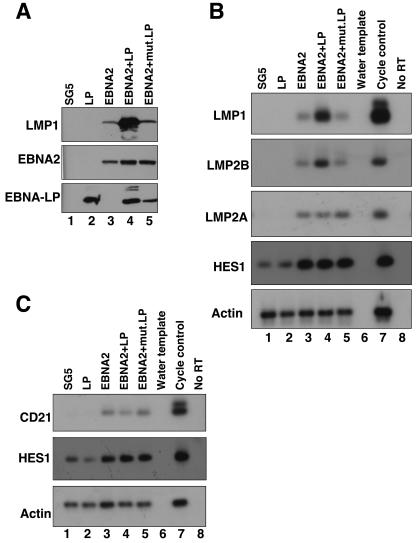
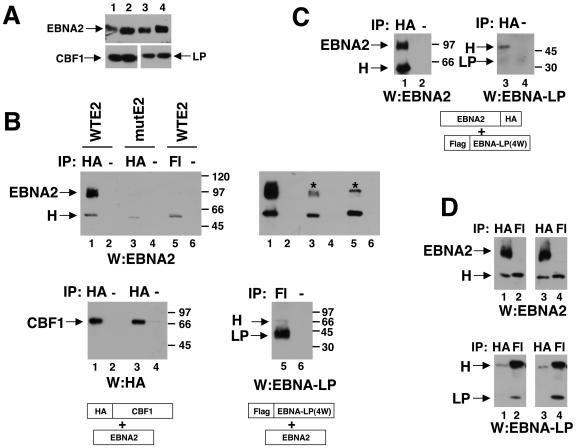
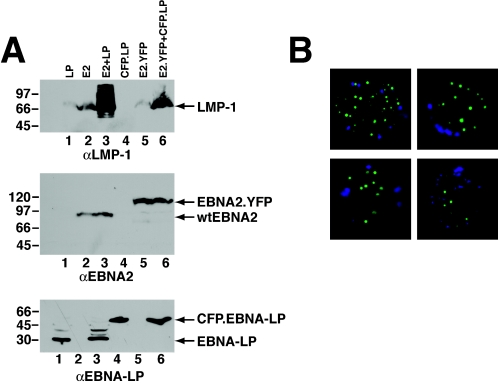
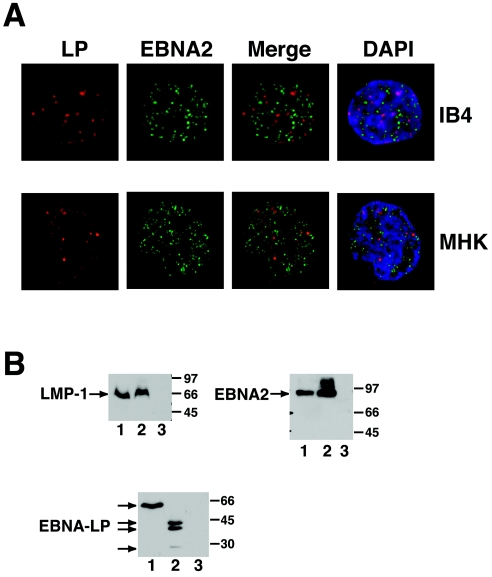
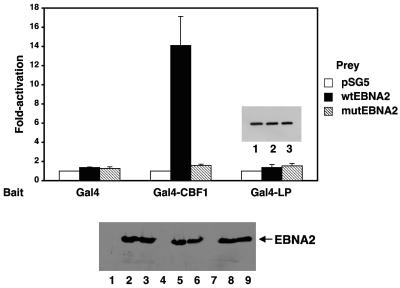
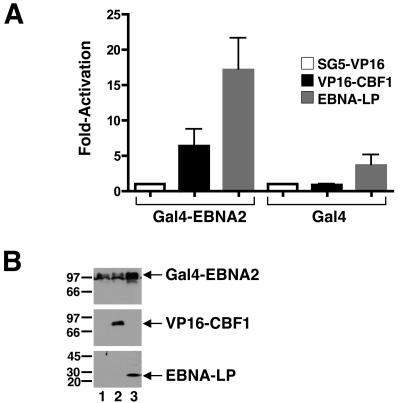
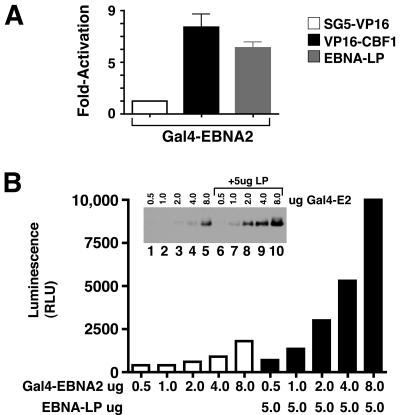
The mechanistic contribution of the Epstein-Barr virus (EBV) EBNA-LP protein to B-cell immortalization remains an enigma. However, previous studies have indicated that EBNA-LP may contribute to immortalization by enhancing EBNA2-mediated transcriptional activation of the LMP-1 gene. To gain further insight into the potential role EBNA-LP has in EBV-mediated B-cell immortalization, we asked whether it is a global or gene-specific coactivator of EBNA2 and whether coactivation requires interaction between these proteins. In type I Burkitt's lymphoma cells, we found that EBNA-LP strongly coactivated EBNA2 stimulation of LMP-1 and LMP2B RNAs, which are expressed from the viral divergent promoter. Surprisingly, the viral LMP2A gene and cellular CD21 and Hes-1 genes were induced by EBNA2 but showed no further induction after EBNA-LP coexpression. We also found that EBNA-LP did not stably interact with EBNA2 in coimmunoprecipitation assays, even though the conditions were adequate to observe specific interactions between EBNA2 and its cellular cofactor, CBF1. Colocalization between EBNA2 and EBNA-LP was not detectable in EBV-transformed cell lines or transfected type I Burkitt's cells. Finally, no significant interactions between EBNA2 and EBNA-LP were found with mammalian two-hybrid assays. From this data, we conclude that EBNA-LP is not a global coactivator of EBNA2 targets, but it preferentially coactivates EBNA2 stimulation of the viral divergent promoter. While this may require specific transient interactions between these proteins that only occur in the context of the divergent promoter, our data strongly suggest that EBNA-LP also cooperates with EBNA2 through mechanisms that do not require direct or indirect complex formation between these proteins.
Figures

References
-
- Allan, G. J., G. J. Inman, B. D. Parker, D. T. Rowe, and P. J. Farrell. 1992. Cell growth effects of Epstein-Barr virus leader protein. J. Gen. Virol. 73:1547-1551. - PubMed
-
- Allday, M. J., D. H. Crawford, and J. A. Thomas. 1993. Epstein-Barr virus (EBV) nuclear antigen 6 induces expression of the EBV latent membrane protein and an activated phenotype in Raji cells. J. Gen. Virol. 74:361-369. - PubMed
-
- Castillo, J. P., and T. F. Kowalik. 2002. Human cytomegalovirus immediate early proteins and cell growth control. Gene 290:19-34. - PubMed
Publication types
MeSH terms
Substances
LinkOut - more resources
Full Text Sources
Molecular Biology Databases
Miscellaneous
