Proportion of fibrin and platelets differs in thrombi on ruptured and eroded coronary atherosclerotic plaques in humans
- PMID: 15772220
- PMCID: PMC1768846
- DOI: 10.1136/hrt.2004.034058
Proportion of fibrin and platelets differs in thrombi on ruptured and eroded coronary atherosclerotic plaques in humans
Abstract
Objective: To determine the proportion of platelets and fibrin in coronary thrombi.
Design: Immunohistochemical and morphometric means to examine the coronary arteries of 31 patients who died of acute myocardial infarction.
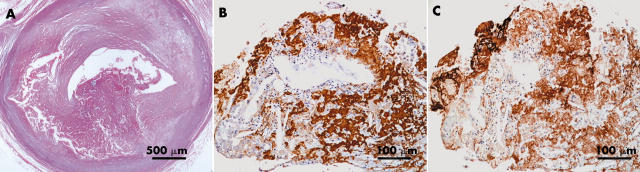
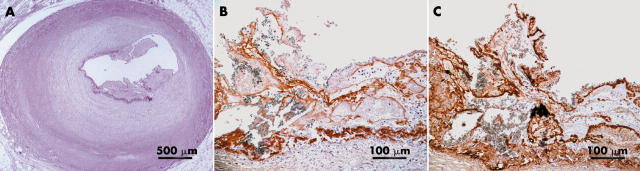
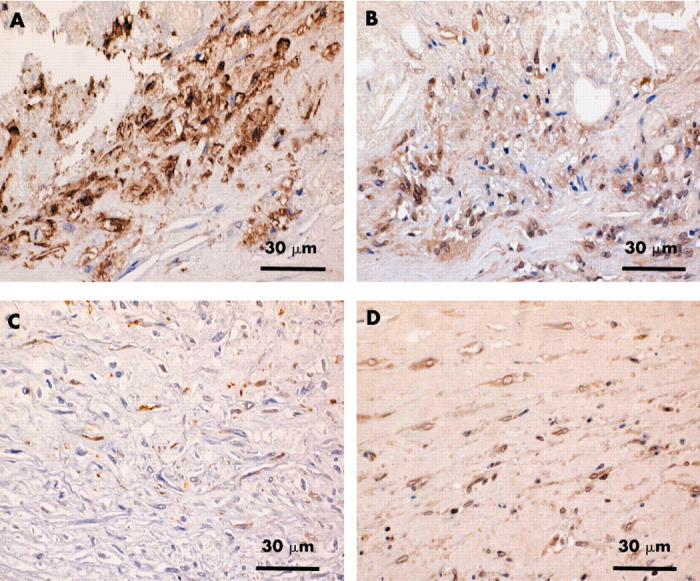
Results: Fresh thrombi were detected in the feeding arteries of infarction areas in 23 cases (74%) and were associated with plaque rupture in 18 (78%) and plaque erosion in 5 (22%). An immunohistochemical study showed that the thrombi consisted of a mixture of fibrin and platelets as well as some other types of blood cells. The fibrin and platelet positive areas in the thrombi associated with plaque rupture accounted for 74 (19)% and 35 (20)% (p < 0.01) and those associated with erosion accounted for 51 (6)% and 70 (21)%, respectively, of the total areas. Areas of positive immunoreactivity for tissue factor and C reactive protein were also significantly greater in ruptured than in eroded plaques.
Conclusion: These results indicate that the proportions of fibrin and of platelets differ in coronary thrombi on ruptured and eroded plaques. Higher proportions of tissue factor and C reactive protein contribute more significantly to thrombus formation on plaque rupture than on plaque erosion.
Figures
References
-
- Fuster V, Badimon JJ, Chesebro JH. The pathogenesis of coronary artery disease and the acute coronary syndromes. N Engl J Med 1992;326:242–50. - PubMed
-
- Farb A, Burke AP, Tang AL, et al. Coronary plaque erosion without rupture into a lipid core: a frequent cause of coronary thrombosis in sudden coronary death. Circulation 1996;93:1354–63. - PubMed
-
- Burke AP, Farb A, Malcom GT, et al. Coronary risk factors and plaque morphology in men with coronary disease who died suddenly. N Engl J Med 1997;336:1276–82. - PubMed
Publication types
MeSH terms
Substances
LinkOut - more resources
Full Text Sources
Medical
Research Materials