


Cultural competence: a systematic review of health care provider educational interventions
- PMID: 15778639
- PMCID: PMC3137284
- DOI: 10.1097/01.mlr.0000156861.58905.96
Cultural competence: a systematic review of health care provider educational interventions
Abstract
Objective: We sought to synthesize the findings of studies evaluating interventions to improve the cultural competence of health professionals.
Design: This was a systematic literature review and analysis.
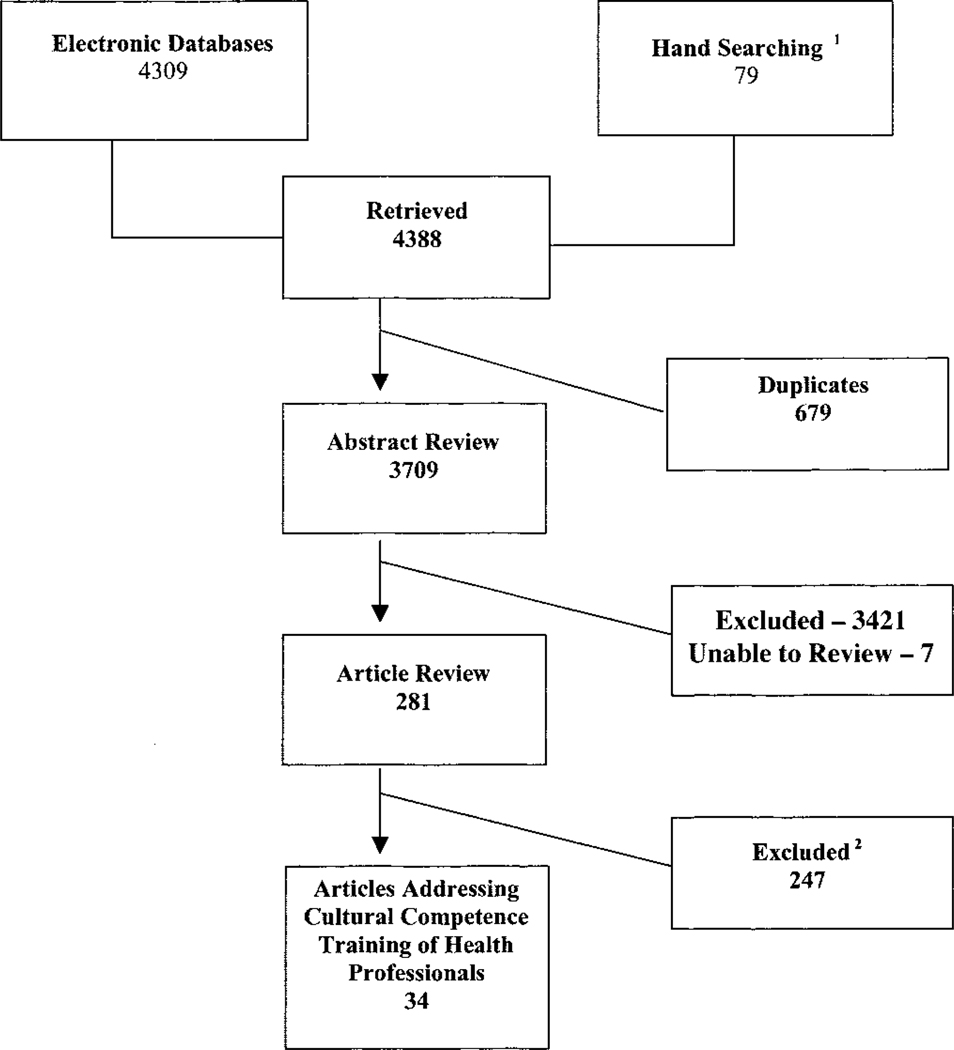
Methods: We performed electronic and hand searches from 1980 through June 2003 to identify studies that evaluated interventions designed to improve the cultural competence of health professionals. We abstracted and synthesized data from studies that had both a before- and an after-intervention evaluation or had a control group for comparison and graded the strength of the evidence as excellent, good, fair, or poor using predetermined criteria.
Main outcome measures: We sought evidence of the effectiveness and costs of cultural competence training of health professionals.
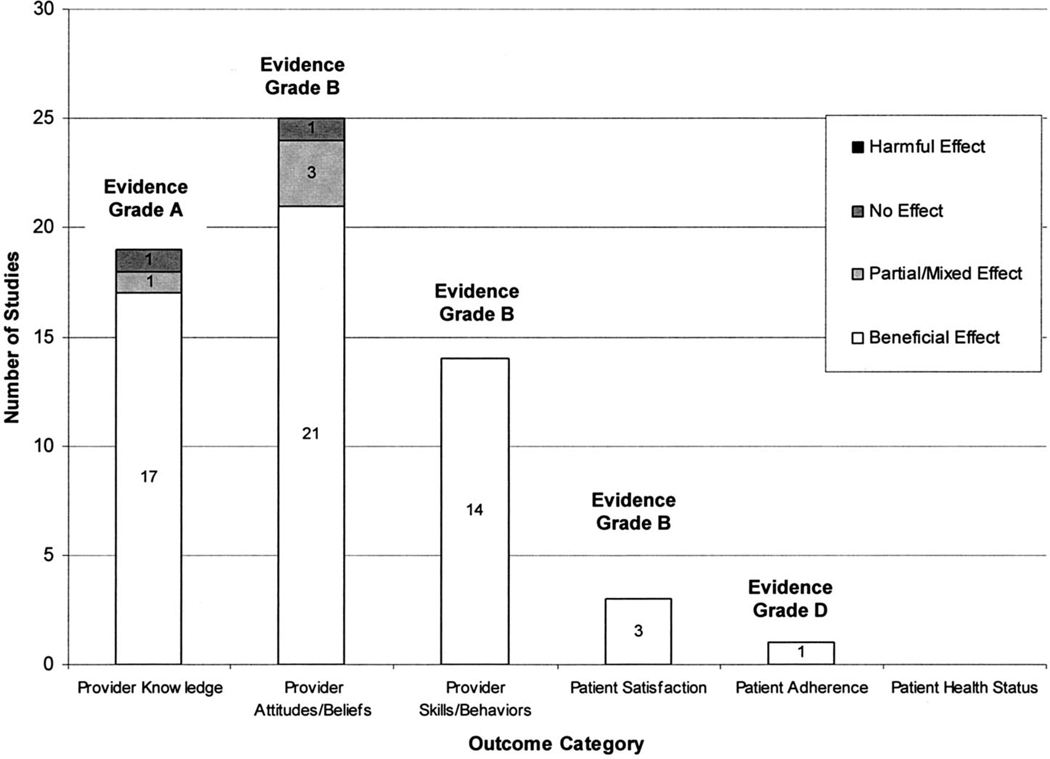
Results: Thirty-four studies were included in our review. There is excellent evidence that cultural competence training improves the knowledge of health professionals (17 of 19 studies demonstrated a beneficial effect), and good evidence that cultural competence training improves the attitudes and skills of health professionals (21 of 25 studies evaluating attitudes demonstrated a beneficial effect and 14 of 14 studies evaluating skills demonstrated a beneficial effect). There is good evidence that cultural competence training impacts patient satisfaction (3 of 3 studies demonstrated a beneficial effect), poor evidence that cultural competence training impacts patient adherence (although the one study designed to do this demonstrated a beneficial effect), and no studies that have evaluated patient health status outcomes. There is poor evidence to determine the costs of cultural competence training (5 studies included incomplete estimates of costs).
Conclusions: Cultural competence training shows promise as a strategy for improving the knowledge, attitudes, and skills of health professionals. However, evidence that it improves patient adherence to therapy, health outcomes, and equity of services across racial and ethnic groups is lacking. Future research should focus on these outcomes and should determine which teaching methods and content are most effective.
Figures
References
-
- Committee on Understanding and Eliminating Racial and Ethnic Disparities in Health Care. Unequal Treatment: Confronting Racial and Ethnic Disparities in Care. Washington, DC: The National Academies Press; 2002. - PubMed
-
- Cooper LA, Roter DL. Patient-provider communication: The effect of race and ethnicity on process and outcomes of healthcare. In: Smedley BD, Stith AY, Nelson AR, editors. Unequal Treatment: Confronting Racial and Ethnic Disparities in Healthcare. Washington, DC: The National Academies Press; 2002. pp. 552–593.
-
- Office of Minority Health DoHaHS. National Standards on Culturally and Linguistically Appropriate Services (CLAS) in Health Care. Federal Register. 2002;65:247.
Publication types
MeSH terms
Grants and funding
LinkOut - more resources
Full Text Sources
Medical
