


Immunodetection of SV40 large T antigen in human central nervous system tumours
- PMID: 15790713
- PMCID: PMC1770612
- DOI: 10.1136/jcp.2004.020131
Immunodetection of SV40 large T antigen in human central nervous system tumours
Abstract
Background/aims: DNA sequences from Simian virus 40 (SV40) have been previously isolated from various human tumours of the central nervous system (CNS). This study aimed to investigate a series of tumours of the CNS for the expression of the SV40 large T antigen (Tag), which is an oncogenic protein of the virus.
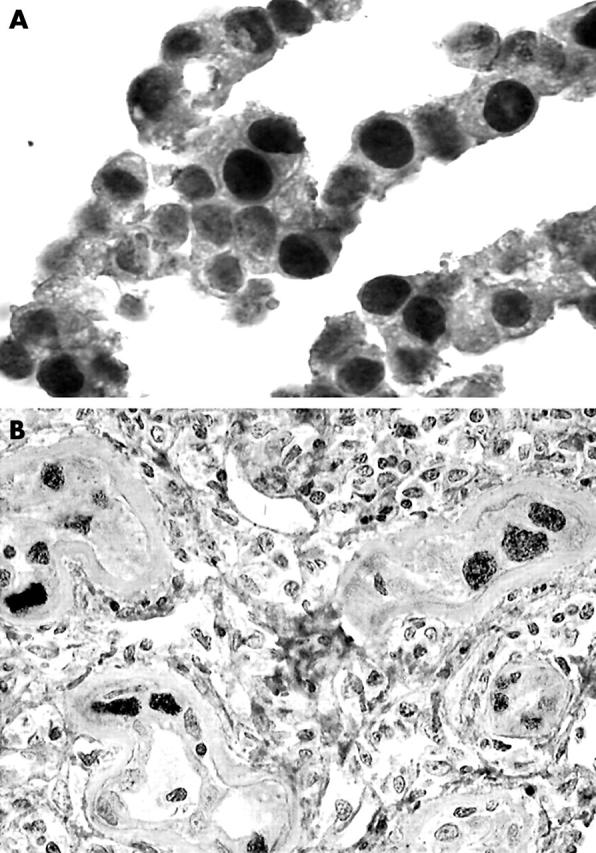
Methods: A French series of 82 CNS tumours was investigated for Tag expression using a monoclonal antibody and immunohistochemistry. A Tag positive hepatocellular carcinoma cell line from transgenic mice and a kidney biopsy from a patient infected by SV40 were used as positive controls.
Results: None of the tumours (20 ependymomas, 20 glioblastomas, 12 oligodendrogliomas, three plexus choroid adenomas, two plexus choroid carcinomas, 15 meningiomas, and 10 medulloblastomas) contained SV40 Tag positive cells.
Conclusions: The lack of SV40 Tag in 82 CNS tumours of various types is at variance with previous studies from different countries, and suggests that the virus may not be an important factor in CNS tumorigenesis, at least in French cases.
Figures
References
-
- Carbone M, Pass HI, Miele L, et al. New developments about the association of SV40 with human mesothelioma. Oncogene 2003;22:5173–80. - PubMed
-
- Vilchez RA, Butel JS. SV40 in human brain cancers and non-Hodgkin’s lymphoma. Oncogene 2003;22:5164–72. - PubMed
-
- Klein G, Powers A, Croce C. Association of SV40 with human tumors. Oncogene 2002;21:1141–9. - PubMed
-
- Bergsagel DJ, Finegold MJ, Butel JS, et al. DNA sequences similar to those of simian virus 40 in ependymomas and choroid plexus tumors of childhood. N Engl J Med 1992;326:988–93. - PubMed
-
- Martini F, Iaccheri L, Lazzarin L, et al. SV40 early region and large T antigen in human brain tumors, peripheral blood cells, and sperm fluids from healthy individuals. Cancer Res 1996;56:4820–5. - PubMed
Publication types
MeSH terms
Substances
LinkOut - more resources
Full Text Sources
