The contributions of dsRNA structure to Dicer specificity and efficiency
- PMID: 15811921
- PMCID: PMC1370754
- DOI: 10.1261/rna.7272305
The contributions of dsRNA structure to Dicer specificity and efficiency
Abstract
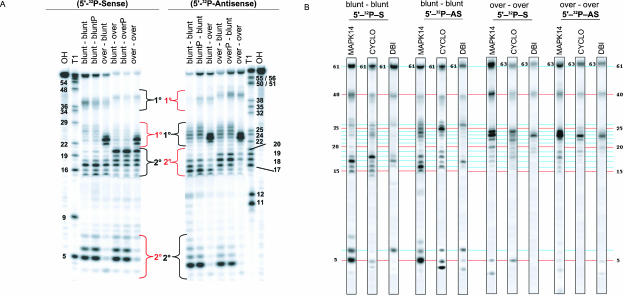
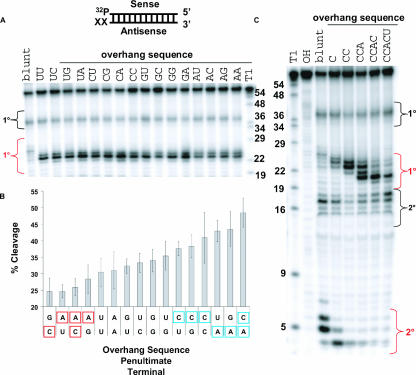
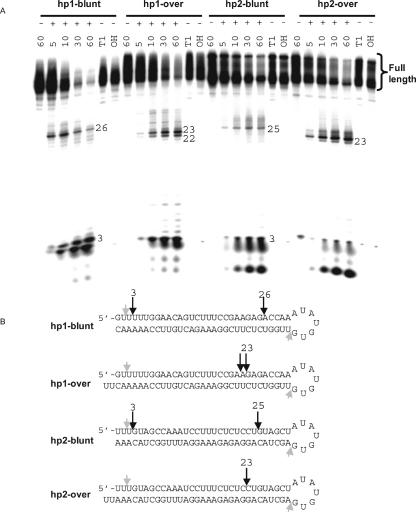
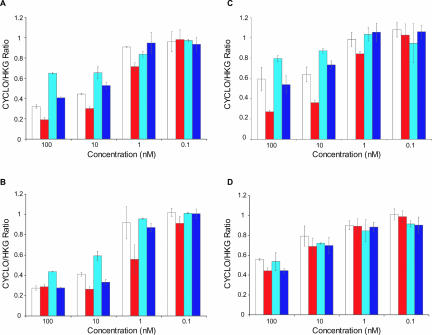
Dicer processes long double-stranded RNA (dsRNA) and pre-microRNAs to generate the functional intermediates (short interfering RNAs and microRNAs) of the RNA interference pathway. Here we identify features of RNA structure that affect Dicer specificity and efficiency. The data presented show that various attributes of the 3' end structure, including overhang length and sequence composition, play a primary role in determining the position of Dicer cleavage in both dsRNA and unimolecular, short hairpin RNA (shRNA). We also demonstrate that siRNA end structure affects overall silencing functionality. Awareness of these new features of Dicer cleavage specificity as it is related to siRNA functionality provides a more detailed understanding of the RNAi mechanism and can shape the development of hairpins with enhanced functionality.
Figures

References
-
- Bartel, D. 2004. MicroRNAs: Genomics, biogenesis, mechanism, and function. Cell 116: 281–297. - PubMed
-
- Bogenhagen, D. and Brown, D. 1981. Nucleotide sequences in Xenopus 5S DNA required for transcription termination. Cell 24: 261–270. - PubMed
-
- Brummelkamp, T.R., Bernards, R., and Agami, R. 2002. A system for stable expression of short interfering RNAs in mammalian cells. Science 296: 550–553. - PubMed
Publication types
MeSH terms
Substances
LinkOut - more resources
Full Text Sources
Other Literature Sources