


Indomethacin-induced activation of the death receptor-mediated apoptosis pathway circumvents acquired doxorubicin resistance in SCLC cells
- PMID: 15812552
- PMCID: PMC2361992
- DOI: 10.1038/sj.bjc.6602516
Indomethacin-induced activation of the death receptor-mediated apoptosis pathway circumvents acquired doxorubicin resistance in SCLC cells
Abstract
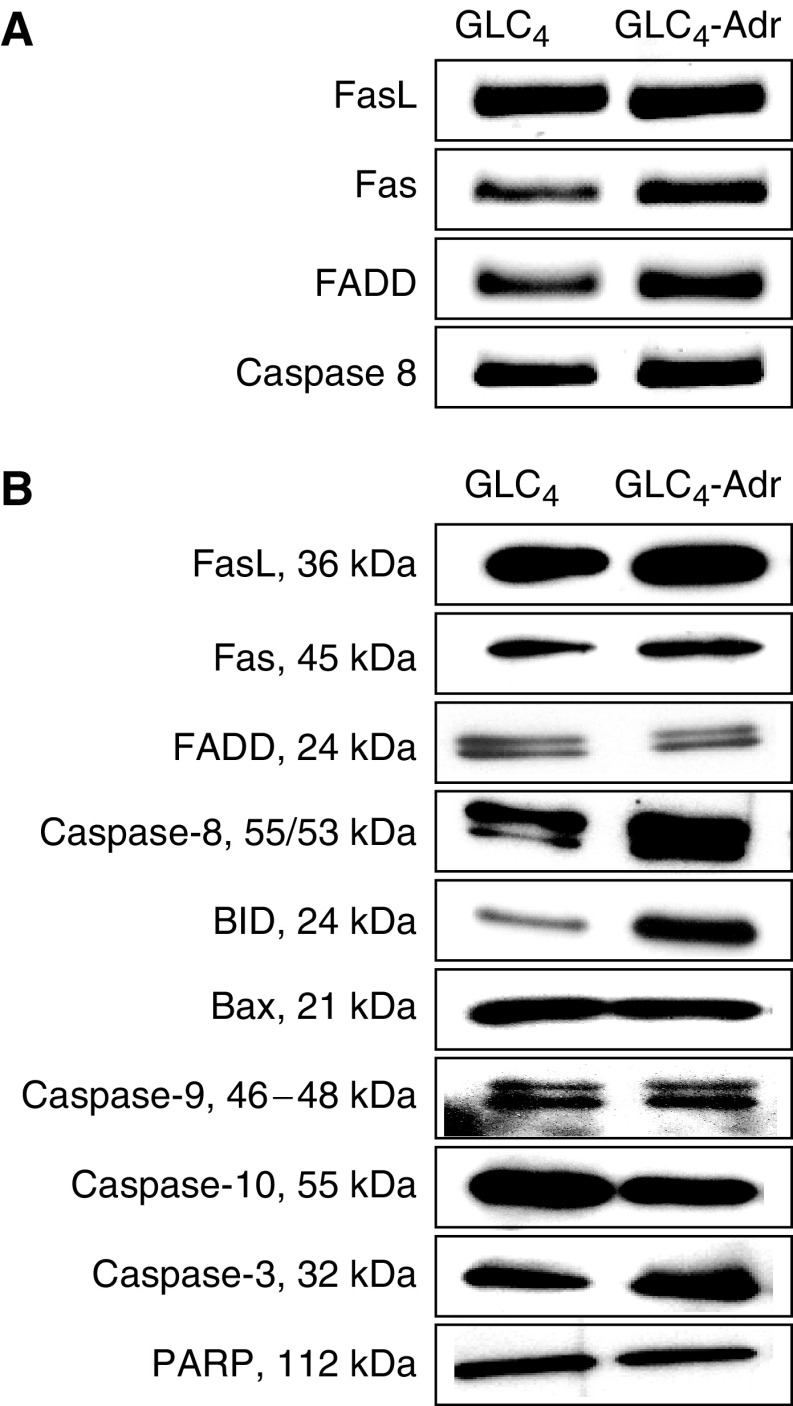
Small-cell lung cancers (SCLCs) initially respond to chemotherapy but are often resistant at recurrence. A potentially new method to overcome resistance is to combine classical chemotherapeutic drugs with apoptosis induction via tumour necrosis factor (TNF) death receptor family members such as Fas. The doxorubicin-resistant human SCLC cell line GLC4-Adr and its parental doxorubicin-sensitive line GLC4 were used to analyse the potential of the Fas-mediated apoptotic pathway and the mitochondrial apoptotic pathway to modulate doxorubicin resistance in SCLC. Western blotting showed that all proteins necessary for death-inducing signalling complex formation and several inhibitors of apoptosis were expressed in both lines. The proapototic proteins Bid and caspase-8, however, were higher expressed in GLC4-Adr. In addition, GLC4-Adr expressed more Fas (3.1x) at the cell membrane. Both lines were resistant to anti-Fas antibody, but plus the protein synthesis inhibitor cycloheximide anti-Fas antibody induced 40% apoptosis in GLC4-Adr. Indomethacin, which targets the mitochondrial apoptotic pathway, induced apoptosis in GLC4-Adr but not in GLC4 cells. Surprisingly, in GLC4-Adr indomethacin induced caspase-8 and caspase-9 activation as well as Bid cleavage, while both caspase-8 and caspase-9 specific inhibitors blocked indomethacin-induced apoptosis. In GLC4-Adr, doxorubicin plus indomethacin resulted in elevated caspase activity and a 2.7-fold enhanced sensitivity to doxorubicin. In contrast, no effect of indomethacin on doxorubicin sensitivity was observed in GLC4. Our findings show that indomethacin increases the cytotoxic activity of doxorubicin in a doxorubicin-resistant SCLC cell line partly via the death receptor apoptosis pathway, independent of Fas.
Figures


References
-
- Altorki NK, Keresztes RS, Port JL, Libby DM, Korst RJ, Flieder DB, Ferrara CA, Yankelevitz DF, Subbaramaiah K, Pasmantier MW, Dannenberg AJ (2003) Celecoxib, a selective cyclo-oxygenase-2 inhibitor, enhances the response to preoperative paclitaxel and carboplatin in early-stage non-small-cell lung cancer. JClin Oncol 21: 2645–2650 - PubMed
-
- Bagrij T, Klokouzas A, Hladky SB, Barrand MA (2001) Influences of glutathione on anionic substrate efflux in tumour cells expressing the multidrug resistance-associated protein, MRP1. Biochem Pharmacol 62: 199–206 - PubMed
-
- Bennett M, Macdonald K, Chan SW, Luzio JP, Simari R, Weissberg P (1998) Cell surface trafficking of Fas: a rapid mechanism of p53-mediated apoptosis. Science 282: 290–293 - PubMed
-
- Broxterman HJ, Pinedo HM, Kuiper CM, Schuurhuis GJ, Lankelma J (1989) Glycolysis in P-glycoprotein-overexpressing human tumor cell lines. Effects of resistance-modifying agents. FEBS Lett 247: 405–410 - PubMed
-
- Crosby CG, DuBois RN (2003) The cyclooxygenase-2 pathway as a target for treatment or prevention of cancer. Expert Opin Emerg Drugs 8: 1–7 - PubMed
Publication types
MeSH terms
Substances
LinkOut - more resources
Full Text Sources
Research Materials
Miscellaneous
