Longitudinal mechanical tension induces growth in the small bowel of juvenile rats
- PMID: 15840689
- PMCID: PMC1774906
- DOI: 10.1136/gut.2004.061481
Longitudinal mechanical tension induces growth in the small bowel of juvenile rats
Abstract
Introduction: The aim of our study was to apply longitudinal force to the small bowel to increase the length of intestine in juvenile rats.
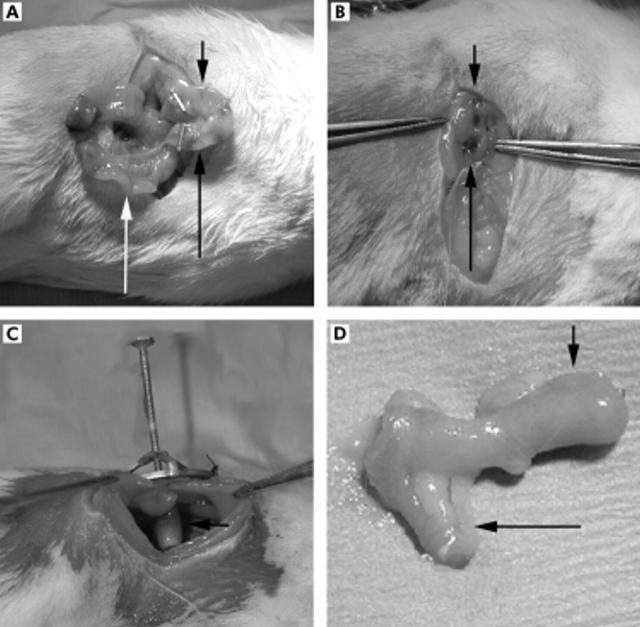
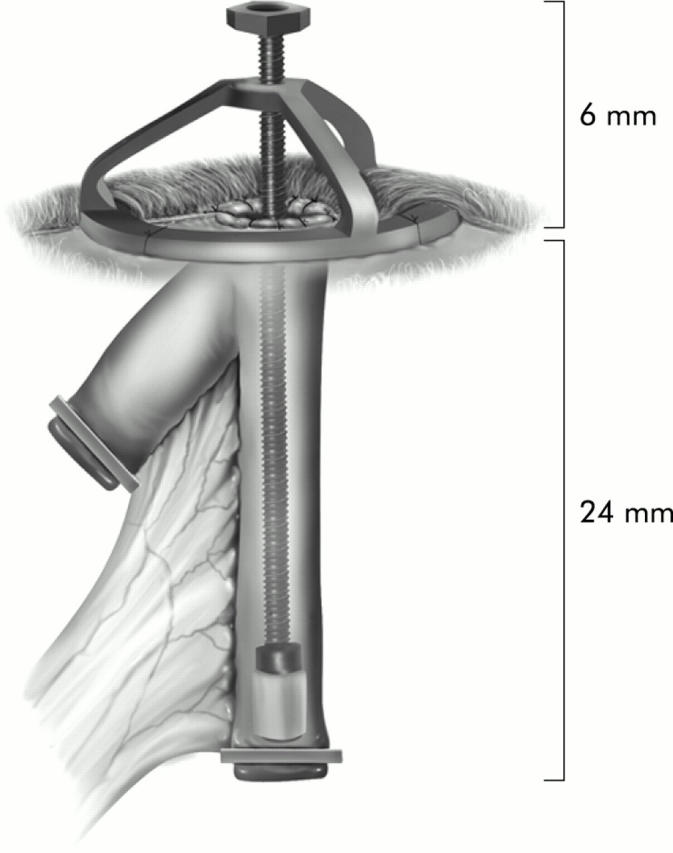
Methods: Fifty juvenile rats had double barrelled, blind loop ostomies created using an isolated segment of bowel. Our intestinal lengthening device was inserted into one of the loops and the second loop served as a control. Once the device was deployed, the experimental, control, and in situ segments of bowel were evaluated for length, weight, histology, and disaccharidase enzyme activity.
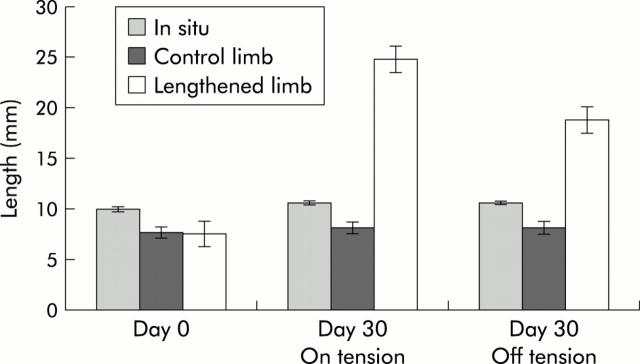
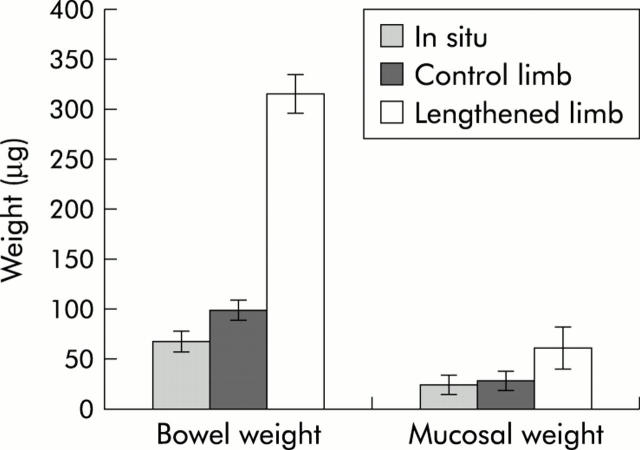
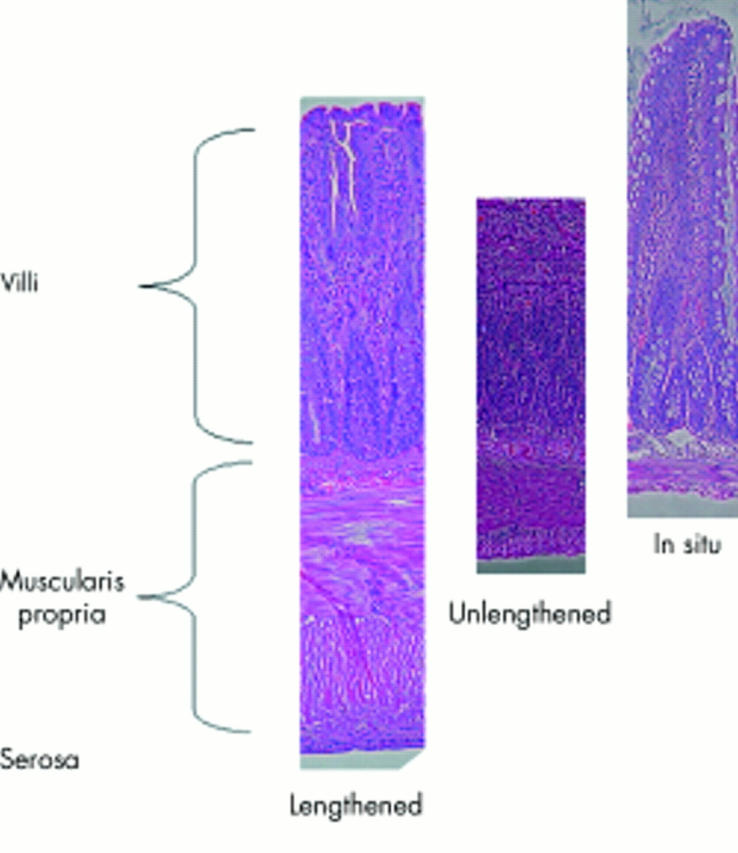
Results: Mechanical tension increased intestinal length by 149%. The lengthened bowel also exhibited a greater total weight (218%), greater mucosal weight (122%), and increased protein mass (164%) compared with the control limb of bowel. Histologically, there was a markedly increased thickness of the muscularis propria in the lengthened bowel (200% increase compared with the control limb). Functionally, we found increased total disaccharidase activity in the lengthened bowel (between 47% and 350%, depending on the particular enzyme tested; p<0.01).
Conclusion: Mechanical tension induces intestinal growth by increasing length, weight of the bowel and mucosa, and protein mass. Histological changes, such as increases in Paneth cells, suggest that increased proliferation and reorganisation of the mucosa and muscularis propria are a response to mechanical tension. Functionally, increased intestinal length corresponds with increased disaccharidase activity, thus implying potential increased absorptive capacity of the lengthened bowel.
Figures
References
-
- Vanderhoof J, Young R. Enteral and parenteral nutrition in the care of patients with short-bowel syndrome. Baillieres Best Pract Res Clin Gastroenterol 2003;17:997–1015. - PubMed
-
- Williamson R. Intestinal adaptation (first of two parts). Structural, functional and cytokinetic changes. N Engl J Med 1978;298:1393–402. - PubMed
-
- Fisher K, Dhanvantari S, Drucker D, et al. Intestinal growth is associated with elevated levels of glucagon-like protein 2 in diabetic rats. Am J Physiol 1997;273:E815–20. - PubMed
-
- Hine I. Block staining of mammalian tissues with hematoxylin and eosin. Stain Technol 1981;56:119. - PubMed
-
- Howard L, Heaphey L, Fleming CR, et al. Four years of North American registry home parenteral nutrition outcome data and their implications for patient management. J Parenter Enteral Nutr 1991;15:384–93. - PubMed
MeSH terms
Substances
LinkOut - more resources
Full Text Sources
Other Literature Sources