


Prevalence of respiratory symptoms in under 5s: 1993 to 2001
- PMID: 15851436
- PMCID: PMC1720411
- DOI: 10.1136/adc.2004.061879
Prevalence of respiratory symptoms in under 5s: 1993 to 2001
Abstract
Aim: To describe changes in the prevalence of respiratory symptoms in 1-4 year olds in two general practice populations observed on four occasions over an eight year period.
Methods: In 1993, 1995, 1999, and 2001, questionnaires were posted to the parents of patients aged 15 years or younger and registered with either of two general practices. Only children aged 1-4 years at time of questionnaire completion were included in this study. For each survey, the prevalence of five key variables was determined.
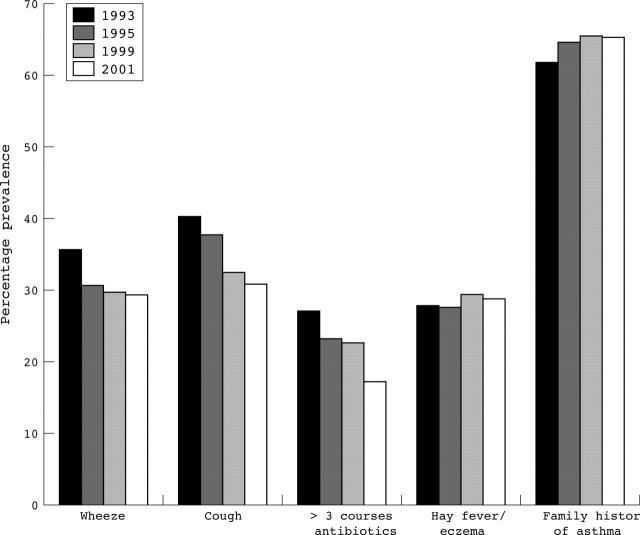
Results: The response rates for all children in the four surveys were 72.8%, 70.6%, 65.0%, and 60.7% respectively. When respondents aged 1-4 years old were stratified into one-year age bands, there was a decrease in the prevalence of symptoms over the study period. This was statistically significant for wheeze and night cough in 2 year olds and for night cough in 4 year olds. Repeated antibiotic prescriptions decreased significantly for 2 and 3 year olds. There were no changes in the prevalence of hay fever or eczema and family history of asthma.
Conclusions: The downward trend in symptom prevalence might represent a real decrease in symptoms or improvements in treatment. In the absence of changes in the prevalence of hay fever and family history of asthma, the downward trend in symptom prevalence may suggest changes in the prevalence of conditions other than asthma.
Figures
References
Publication types
MeSH terms
LinkOut - more resources
Full Text Sources
