


Aberrant expression of RAB1A in human tongue cancer
- PMID: 15870709
- PMCID: PMC2361773
- DOI: 10.1038/sj.bjc.6602594
Aberrant expression of RAB1A in human tongue cancer
Abstract
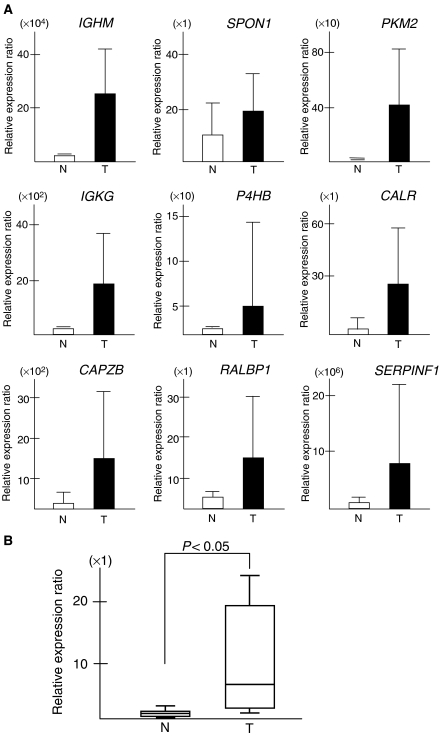
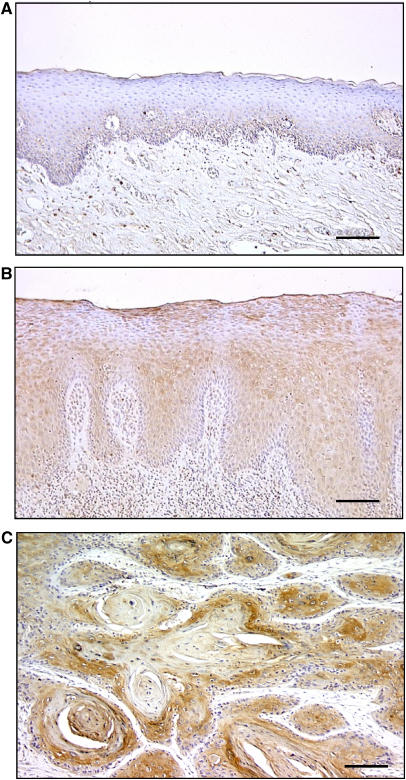
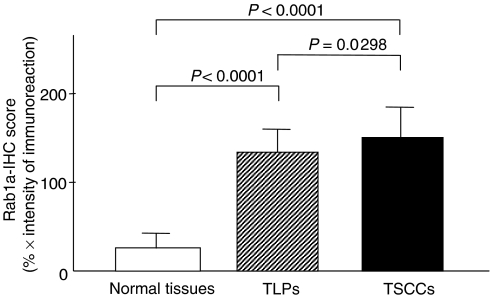
This study was designed to identify specific gene expression changes in tongue squamous cell carcinomas (TSCCs) compared with normal tissues using in-house cDNA microarray that comprised of 2304 full-length cDNAs from a cDNA library prepared from normal oral tissues, primary oral cancers, and oral cancer cell lines. The genes identified by our microarray system were further analysed at the mRNA or protein expression level in a series of clinical samples by real-time quantitative reverse transcriptase-polymerase chain reaction (qRT-PCR) analysis and imuunohositochemistry. The microarray analysis identified a total of 16 genes that were significantly upregulated in common among four TSCC specimens. Consistent with the results of the microarray, increased mRNA levels of selected genes with known molecular functions were found in the four TSCCs. Among genes identified, Rab1a, a member of the Ras oncogene family, was further analysed for its protein expression in 54 TSCCs and 13 premalignant lesions. We found a high prevalence of Rab1A-overexpression not only in TSCCs (98%) but also in premalignant lesions (93%). Thus, our results suggest that rapid characterisation of the target gene(s) for TSCCs can be accomplished using our in-house cDNA microarray analysis combined with the qRT-PCR and immunohistochemistry, and that the Rab1A is a potential biomarker of tongue carcinogenesis.
Figures
References
-
- Alevizos I, Mahadevappa M, Zhang X, Ohyama H, Kohno Y, Posner M, Gallagher GT, Varvares M, Cohen D, Kim D, Kent R, Donoff RB, Todd R, Yung CM, Warrington JA, Wong DT (2001) Oral cancer in vivo gene expression profiling assisted by laser capture microdissection and microarray analysis. Oncogene 20: 6196–6204 - PubMed
-
- Assersohn L, Gangi L, Zhao Y, Dowsett M, Simon R, Powles TJ, Liu ET (2002) The feasibility of using fine needle aspiration from primary breast cancers for cDNA microarray analyses. Clin Cancer Res 8: 794–801 - PubMed
-
- Barron-Casella EA, Torres MA, Scherer SW, Heng HH, Tsui LC, Casella JF (1995) Sequence analysis and chromosomal localization of human cap Z. J Biol Chem 270: 21472–21479 - PubMed
-
- Boyle P, Macfarlane GJ, Zheng T, Maisonneuve P, Evstifeeva T, Scully C (1992) Recent advances in epidemiology of head and neck cancer. Curr Opin Oncol 4: 471–477 - PubMed
Publication types
MeSH terms
Substances
LinkOut - more resources
Full Text Sources
Other Literature Sources
