


Effects of low- and high-nicotine cigarette smoking on mood states and the HPA axis in men
- PMID: 15870834
- PMCID: PMC1383570
- DOI: 10.1038/sj.npp.1300753
Effects of low- and high-nicotine cigarette smoking on mood states and the HPA axis in men
Abstract
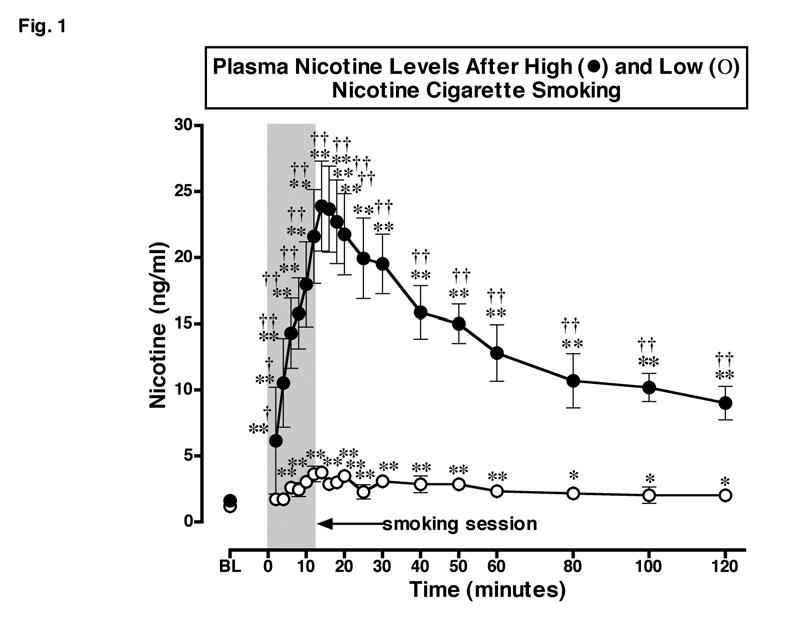
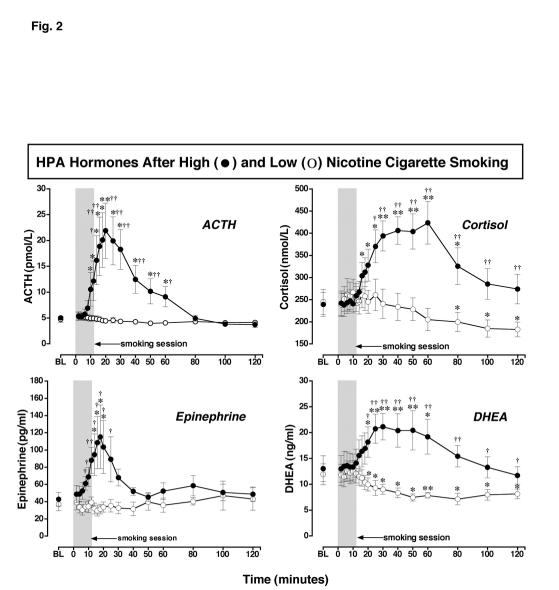
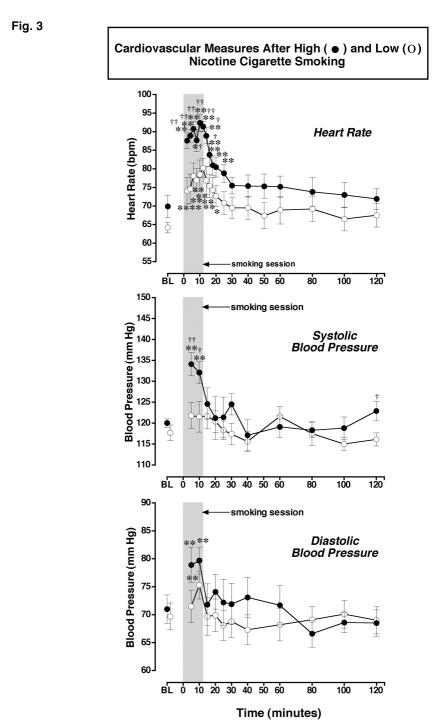
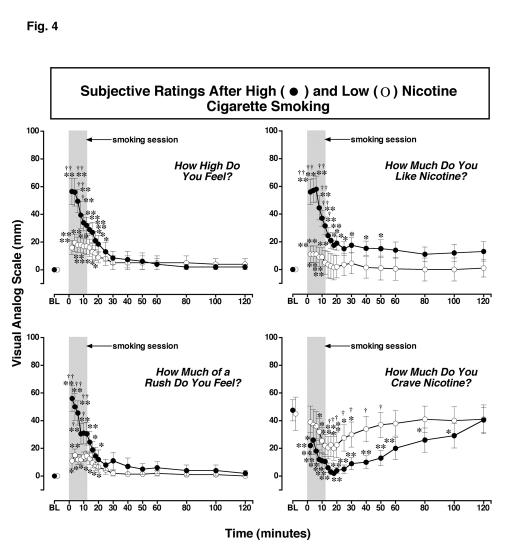
The acute effects of smoking a low- or high-nicotine cigarette on hypothalamic-pituitary-adrenal (HPA) hormones, subjective responses, and cardiovascular measures were studied in 20 healthy men who met American Psychiatric Association Diagnostic and Statistical Manual IV criteria for nicotine dependence. Within four puffs (or 2 min) after cigarette smoking began, plasma nicotine levels and heart rate increased significantly (P<0.01), and peak ratings of 'high' and 'rush' on a Visual Analogue Scale were reported. Reports of 'high', 'rush', and 'liking' and reduction of 'craving' were significantly greater after smoking a high-nicotine cigarette than a low-nicotine cigarette (P<0.05). Peak plasma nicotine levels after high-nicotine cigarette smoking (23.9+/-2.6 ng/ml) were significantly greater than after low-nicotine cigarette smoking (3.63+/-0.59 ng/ml) (P<0.001). After smoking a low-nicotine cigarette, adrenocorticotropin hormone (ACTH), cortisol, dehydroepiandrosterone (DHEA), and epinephrine did not change significantly from baseline. After high-nicotine cigarette smoking began, plasma ACTH levels increased significantly above baseline within 12 min and reached peak levels of 21.88+/-5.34 pmol/l within 20 min. ACTH increases were significantly correlated with increases in plasma nicotine (r=0.85; P<0.0001), DHEA (r=0.66; P=0.002), and epinephrine (r=0.86; P<0.0001). Cortisol and DHEA increased significantly within 20 min (P<0.05) and reached peak levels of 424+/-48 and 21.13+/-2.55 ng/ml within 60 and 30 min, respectively. Thus cigarette smoking produced nicotine dose-related effects on HPA hormones and subjective and cardiovascular measures. These data suggest that activation of the HPA axis may contribute to the abuse-related effects of cigarette smoking.
Figures
References
-
- U.S. Department of Health and Human Services, Centers for Disease Control and Prevention, National Center for Chronic Disease Prevention and Health Promotion. Office on Smoking and Health; Atlanta, GA: 2004. U.S. Department of Health and Human Services. The Health Consequences of Smoking: A Report of the Surgeon General; p. 941.
-
- Abreu ME, Bigelow GE, Fleisher L. Effect of intravenous injection speed on responses to cocaine and hydromorphone in humans. Psychopharmacology. 2001;154:76–84. - PubMed
-
- al'Absi M, Hatsukami DK, Davis GL, Wittmers LE. Prospective examination of effects of smoking abstinence on cortisol and withdrawal symptoms as predictors of early smoking relapse. Drug Alc. Depend. 2004;73:267–278. - PubMed
-
- al'Absi M, Wittmers LE, Erickson J, Hatsukami DK, Crouse B. Attenuated adrenocortical and blood pressure responses to psychological stress in ad libitum and abstinent smokers. Pharmacol. Biochem. Behav. 2003;74:401–410. - PubMed
-
- APA . Diagnostic and Statistical Manual of Mental Disorders. Fourth Edition American Psychiatric Association; Washington, D.C.: 1994. p. 886.
Publication types
MeSH terms
Substances
Grants and funding
LinkOut - more resources
Full Text Sources
Other Literature Sources
Miscellaneous
