


The genome of the social amoeba Dictyostelium discoideum
- PMID: 15875012
- PMCID: PMC1352341
- DOI: 10.1038/nature03481
The genome of the social amoeba Dictyostelium discoideum
Abstract
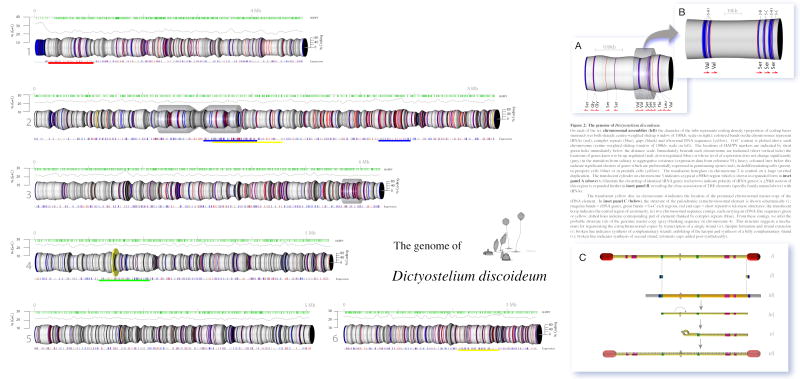
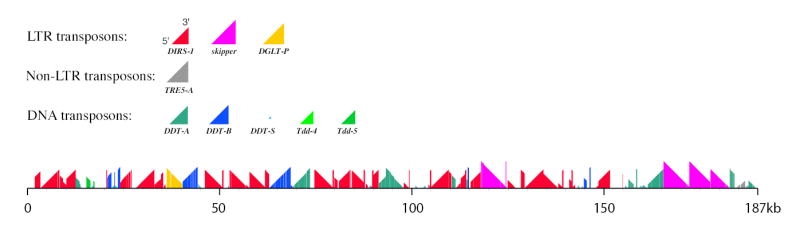
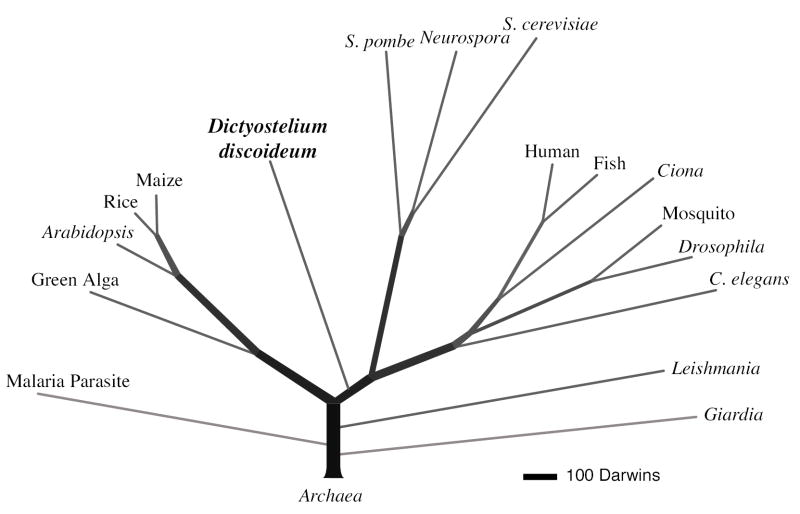
The social amoebae are exceptional in their ability to alternate between unicellular and multicellular forms. Here we describe the genome of the best-studied member of this group, Dictyostelium discoideum. The gene-dense chromosomes of this organism encode approximately 12,500 predicted proteins, a high proportion of which have long, repetitive amino acid tracts. There are many genes for polyketide synthases and ABC transporters, suggesting an extensive secondary metabolism for producing and exporting small molecules. The genome is rich in complex repeats, one class of which is clustered and may serve as centromeres. Partial copies of the extrachromosomal ribosomal DNA (rDNA) element are found at the ends of each chromosome, suggesting a novel telomere structure and the use of a common mechanism to maintain both the rDNA and chromosomal termini. A proteome-based phylogeny shows that the amoebozoa diverged from the animal-fungal lineage after the plant-animal split, but Dictyostelium seems to have retained more of the diversity of the ancestral genome than have plants, animals or fungi.
Conflict of interest statement
Competing interests statement
The authors declare that they have no competing financial interests.
Figures
References
-
- Kessin, R.H., Dictyostelium - Evolution, cell biology, and the development of multicellularity. 2001, Cambridge, UK: Cambridge Univ. Press. xiv + 294.
-
- Müller K, Gerisch G. A specific glycoprotein as the target site of adhesion blocking Fab in aggregating Dictyostelium cells. Nature. 1978;274:445–449. - PubMed
-
- Raper KB. Pseudoplasmodium formation and organization in Dictyostelium discoideum. J Elisha Mitchell Sci Soc. 1940;56:241–282.
-
- Raper KB. Dictyostelium discoideum, a new species of slime mold from decaying forest leaves. J Agr Res. 1935;50:135–147.
Publication types
MeSH terms
Substances
Associated data
- Actions
- Actions
- Actions
- Actions
- Actions
- Actions
Grants and funding
LinkOut - more resources
Full Text Sources
Other Literature Sources
Molecular Biology Databases
