


Technology-dependency among patients discharged from a children's hospital: a retrospective cohort study
- PMID: 15882452
- PMCID: PMC1142327
- DOI: 10.1186/1471-2431-5-8
Technology-dependency among patients discharged from a children's hospital: a retrospective cohort study
Abstract
Background: Advances in medical technology may be increasing the population of children who are technology-dependent (TD). We assessed the proportion of children discharged from a children's hospital who are judged to be TD, and determined the most common devices and number of prescription medications at the time of discharge.
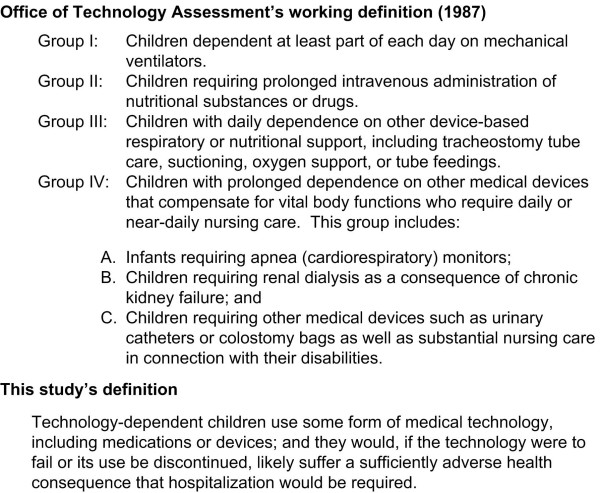
Methods: Chart review of 100 randomly selected patients from all services discharged from a children's hospital during the year 2000. Data were reviewed independently by 4 investigators who classified the cases as TD if the failure or withdrawal of the technology would likely have adverse health consequences sufficient to require hospitalization. Only those cases where 3 or 4 raters agreed were classified as TD.
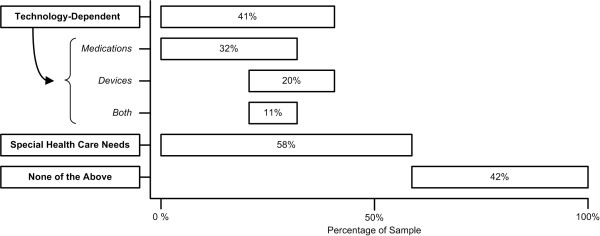
Results: Among the 100 randomly sampled patients, the median age was 7 years (range: 1 day to 24 years old), 52% were male, 86% primarily spoke English, and 54% were privately insured. The median length of stay was 3 days (range: 1 to 103 days). No diagnosis accounted for more than 5% of cases. 41% were deemed to be technology dependent, with 20% dependent upon devices, 32% dependent upon medications, and 11% dependent upon both devices and medications. Devices at the time of discharge included gastrostomy and jejeunostomy tubes (10%), central venous catheters (7%), and tracheotomies (1%). The median number of prescription medications was 2 (range: 0-13), with 12% of cases having 5 or more medications. Home care services were planned for 7% of cases.
Conclusion: Technology-dependency is common among children discharged from a children's hospital.
Figures
References
-
- Baker JP. The machine in the nursery : incubator technology and the origins of newborn intensive care. Baltimore , Johns Hopkins University Press; 1996. p. x, 247 p..
-
- Stern A, Markel H. Formative years : children's health in the United States, 1880-2000. Ann Arbor , University of Michigan Press; 2002. p. xvi, 304 p..
-
- Howell JD. Technology in the hospital : transforming patient care in the early twentieth century. Baltimore , Johns Hopkins University Press; 1995. p. xv, 341 p.. - PubMed
-
- Treaster JB. New York Times. New York ; 1981. Cost President cited for girl's treatment is described as 'low'; p. A25.
-
- Headliners . New York Times. New York ; 1981. Home is better; p. E9.
Publication types
MeSH terms
Grants and funding
LinkOut - more resources
Full Text Sources
Medical
