


Dendritic cells maximize the memory CD8 T cell response to infection
- PMID: 15894274
- PMCID: PMC2857562
- DOI: 10.1016/j.immuni.2005.03.005
Dendritic cells maximize the memory CD8 T cell response to infection
Abstract
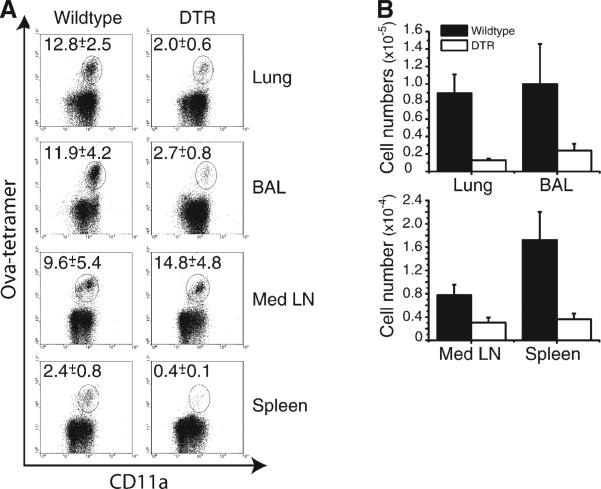
Costimulatory signals from dendritic cells (DCs) are required for naive T cells to respond to antigenic stimulation. To what extent DCs reactivate memory T cells during recall responses is not known. Here, an in vivo depletion system has been used to analyze the role of DCs in reactivating CD8 memory T cells during recall responses to three different microbial infections. We show a profound decrease in the numbers of responding memory CD8 T cells in both lymphoid and nonlymphoid tissues during the recall responses to infection with vesicular stomatitis virus, Listeria monocytogenes (Lm), or influenza virus. These data show that interaction with DCs is a major mechanism driving T cell reactivation in vivo, even during a tissue-specific infection of the respiratory tract.
Figures




References
-
- Ahmed R, Gray D. Immunological memory and protective immunity: understanding their relation. Science. 1996;272:54–60. - PubMed
-
- Bachmann MF, Barner M, Viola A, Kopf M. Distinct kinetics of cytokine production and cytolysis in effector and memory T cells after viral infection. Eur. J. Immunol. 1999a;29:291–299. - PubMed
-
- Badovinac VP, Porter BB, Harty JT. Programmed contraction of CD8(+) T cells after infection. Nat. Immunol. 2002;3:619–626. - PubMed
-
- Banchereau J, Steinman RM. Dendritic cells and the control of immunity. Nature. 1998;392:245–252. - PubMed
Publication types
MeSH terms
Substances
Grants and funding
LinkOut - more resources
Full Text Sources
Other Literature Sources
Molecular Biology Databases
Research Materials
