


The design and implementation of the immune epitope database and analysis resource
- PMID: 15895191
- PMCID: PMC4780685
- DOI: 10.1007/s00251-005-0803-5
The design and implementation of the immune epitope database and analysis resource
Abstract
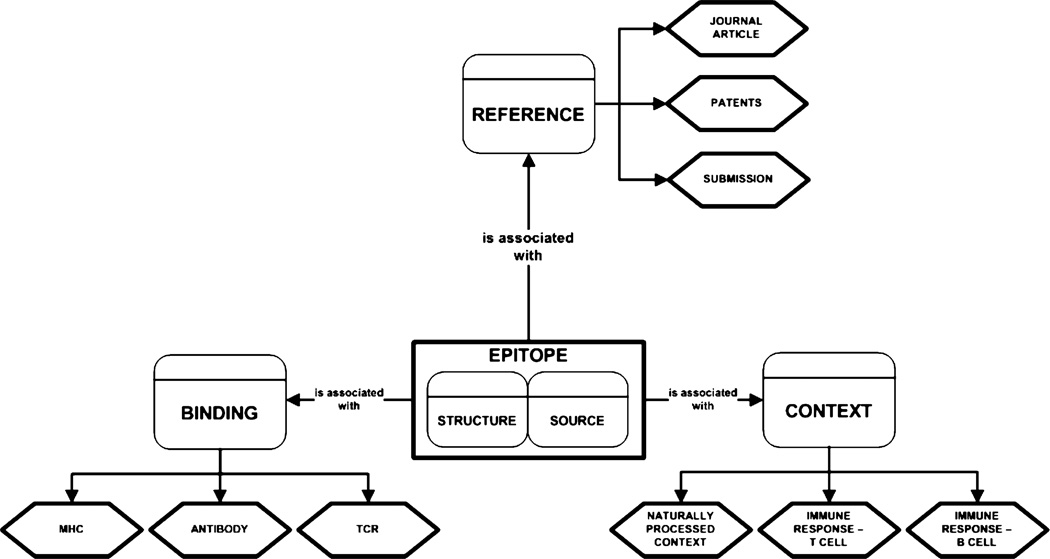
Epitopes are defined as parts of antigens interacting with receptors of the immune system. Knowledge about their intrinsic structure and how they affect the immune response is required to continue development of techniques that detect, monitor, and fight diseases. Their scientific importance is reflected in the vast amount of epitope-related information gathered, ranging from interactions between epitopes and major histocompatibility complex molecules determined by X-ray crystallography to clinical studies analyzing correlates of protection for epitope based vaccines. Our goal is to provide a central resource capable of capturing this information, allowing users to access and connect realms of knowledge that are currently separated and difficult to access. Here, we portray a new initiative, "The Immune Epitope Database and Analysis Resource." We describe how we plan to capture, structure, and store this information, what query interfaces we will make available to the public, and what additional predictive and analytical tools we will provide.
Figures


References
-
- Aalberse RC, Platts-Mills TA. How do we avoid developing allergy: modifications of the TH2 response from a B-cell perspective. J Allergy Clin Immunol. 2004;113:983–986. - PubMed
-
- Aguilar A, Carrazana Y, Duarte CA. Impact of epitope permutations in the antibody response of mice to a multi-epitope polypeptide of the V3 loop of human immunodeficiency virus type 1. Biomol Eng. 2001;18:117–124. - PubMed
-
- Alexander J, Del Guercio MF, Fikes JD, Chesnut RW, Chisari FV, Chang KM, Appella E, Sette A. Recognition of a novel naturally processed, A2 restricted, HCV-NS4 epitope triggers IFN-gamma release in absence of detectable cytopathicity. Hum Immunol. 1998;59:776–782. - PubMed
-
- Atassi MZ, Dolimbek BZ, Hayakari M, Middlebrook JL, Whitney B, Oshima M. Mapping of the antibody-binding regions on botulinum neurotoxin H-chain domain 855–1296 with antitoxin antibodies from three host species. J Protein Chem. 1996;15:691–700. - PubMed
-
- Barber LD, Parham P. Peptide binding to major histocompatibility complex molecules. Annu Rev Cell Biol. 1993;9:163–206. - PubMed
Publication types
MeSH terms
Substances
Grants and funding
LinkOut - more resources
Full Text Sources
Other Literature Sources
