


Genome-wide expression analysis of therapy-resistant tumors reveals SPARC as a novel target for cancer therapy
- PMID: 15902309
- PMCID: PMC1090471
- DOI: 10.1172/JCI23002
Genome-wide expression analysis of therapy-resistant tumors reveals SPARC as a novel target for cancer therapy
Abstract
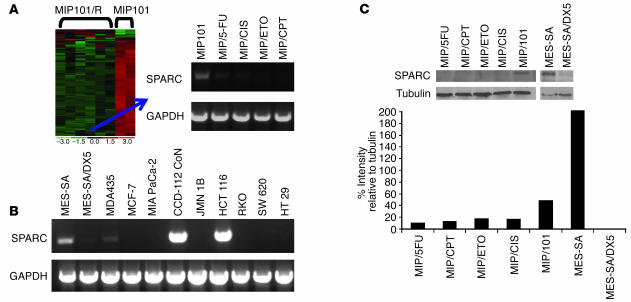
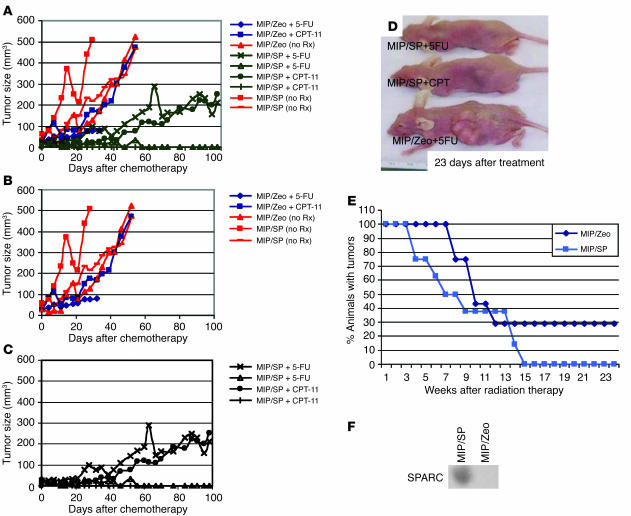
Overcoming resistance to chemotherapy and radiation therapy has been a difficult but important goal in the effort to cure cancer. We used gene-expression microarrays to identify differentially expressed genes involved in colorectal cancer resistance to chemotherapy and identified secreted protein, acidic and rich in cysteine (osteonectin) (SPARC) as a putative resistance-reversal gene by demonstrating low SPARC expression in refractory human MIP101 colon cancer cells. We were able to achieve restoration of their radiosensitivity and sensitivity to 5-fluorouracil and irinotecan by reexpression of SPARC in tumor xenografts. Moreover, treatment of mice with SPARC conferred increased sensitivity to chemotherapy and led to significant regression of xenografted tumors. The results show that modulation of SPARC expression affects colorectal cancer sensitivity to radiation and chemotherapy. SPARC-based gene or protein therapy may ameliorate the emergence of resistant clones and eradicate existing refractory clones and offers a novel approach to treating cancer.
Figures




References
-
- de las Alas MM, Aebi S, Fink D, Howell SB, Los G. Loss of DNA mismatch repair: effects on the rate of mutation to drug resistance. J. Natl. Cancer Inst. 1997;89:1537–1541. - PubMed
-
- Tang R, et al. p53 is an independent pre-treatment markers for long-term survival in stage II and III colorectal cancers: an analysis of interaction between genetic markers and fluorouracil-based adjuvant therapy. Cancer Lett. 2004;210:101–109. - PubMed
-
- Ahnen DJ, et al. Ki-ras mutation and p53 overexpression predict the clinical behavior of colorectal cancer: a Southwest Oncology Group study. Cancer Res. 1998;58:1149–1158. - PubMed
-
- Bunz F, et al. Requirement for p53 and p21 to sustain G2 arrest after DNA damage. Science. 1998;282:1497–1501. - PubMed
Publication types
MeSH terms
Substances
LinkOut - more resources
Full Text Sources
Other Literature Sources
Research Materials
Miscellaneous
