


Abstinence-induced changes in self-report craving correlate with event-related FMRI responses to smoking cues
- PMID: 15920499
- PMCID: PMC1571136
- DOI: 10.1038/sj.npp.1300780
Abstinence-induced changes in self-report craving correlate with event-related FMRI responses to smoking cues
Abstract
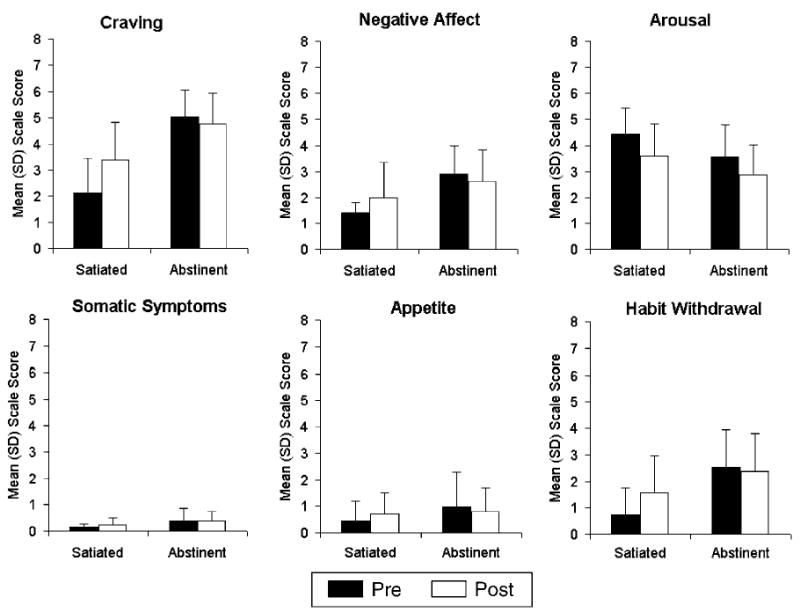
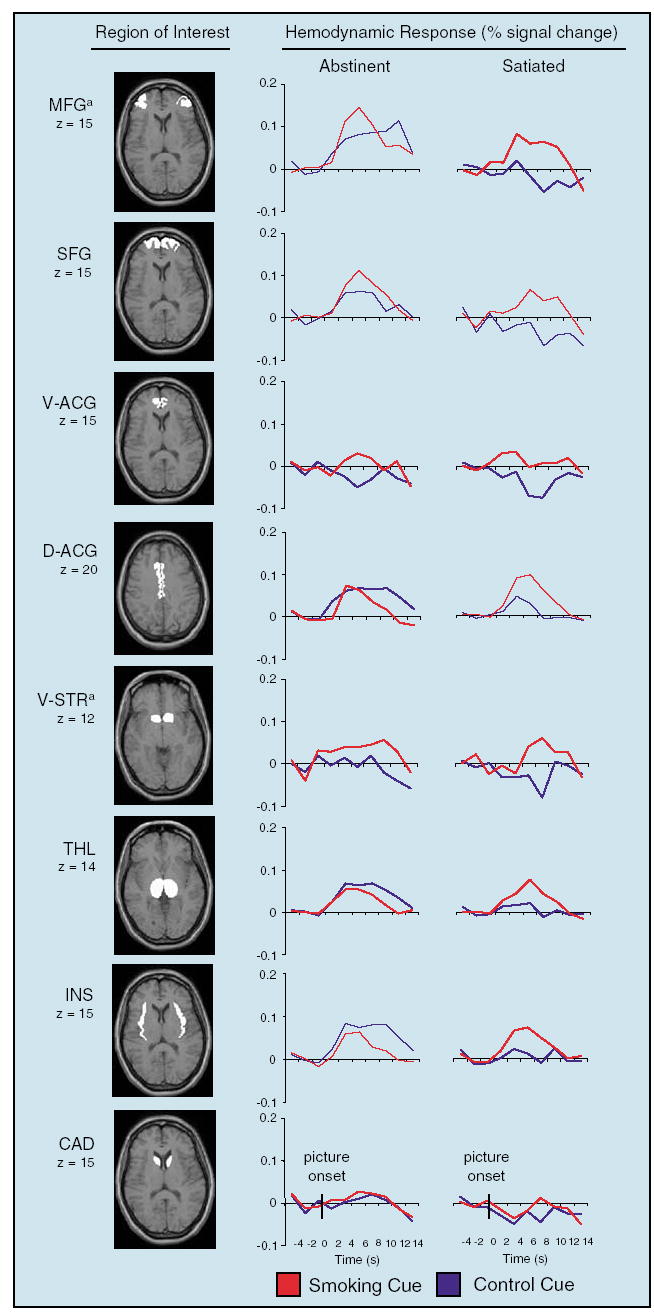
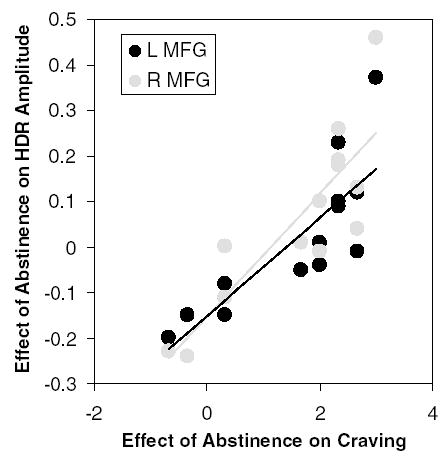
Drug cues have been shown to activate brain regions involved in attention, motivation, and reward in addicted users. However, as studies have typically measured responses in only one state (ie drug abstinence), it is unclear whether observed activations represent amplification by abstinence or stable responses. Thus, the present study was designed to evaluate the stability of event-related responses to visual drug cues in dependent smokers (n=13) using event-related functional magnetic resonance imaging measures. Imaging was conducted following smoking as usual and following overnight abstinence, and self-reported craving measures were obtained before, during, and after scanning. Analysis of hemodynamic response (HDR) amplitudes in each of 13 regions of interest revealed larger responses to smoking compared to control cues in ventral anterior cingulate gyrus (vACG) and superior frontal gyrus. Responses to smoking cues in these and all other regions revealed no effects of abstinence/satiety, thus supporting the notion that cue-elicited brain responses are relatively stable. However, while the abstinence manipulation did not alter group-level responses to smoking cues, at the individual level, abstinence-induced changes in craving (abstinence minus satiety) were positively correlated with changes in HDR amplitude to smoking cues in frontal regions including left inferior frontal gyrus, left vACG, and bilateral middle frontal gyrus. These results suggest that brain responses to smoking cues, while relatively stable at the group level following short-term abstinence, may be modulated by individual differences in craving in response to abstinence-particularly in regions subserving attention and motivation.
Figures
References
-
- Bell SL, Taylor RC, Singleton EG, Henningfield JE, Heishman SJ. Smoking after nicotine deprivation enhances cognitive performance and decreases tobacco craving in drug abusers. Nicotine Tob Res. 1999;1:45–52. - PubMed
-
- Bonson KR, Grant SJ, Contoreggi CS, Links JM, Metcalfe J, Weyl HL, et al. Neural systems and cue-induced cocaine craving. Neuropsychopharmacology. 2002;26:376–386. - PubMed
-
- Brody AL, Mandelkern MA, London ED, Childress AR, Lee GS, Bota RG, et al. Brain metabolic changes during cigarette craving. Arch Gen Psychiatry. 2002;59:1162–1172. - PubMed
-
- Bush G, Luu P, Posner MI. Cognitive and emotional influences in anterior cingulate cortex. Trends Cogn Sci. 2000;4:215–222. - PubMed
-
- Caggiula AR, Donny EC, White AR, Chaudhri N, Booth S, Gharib MA, et al. Cue dependency of nicotine self-administration and smoking. Pharmacol Biochem Behav. 2001;70:515–530. - PubMed
Publication types
MeSH terms
Substances
Grants and funding
LinkOut - more resources
Full Text Sources
Medical
