Flares in chronic hepatitis B patients induced by the host or the virus? Relation to treatment response during Peg-interferon {alpha}-2b therapy
- PMID: 15923670
- PMCID: PMC1774756
- DOI: 10.1136/gut.2004.062208
Flares in chronic hepatitis B patients induced by the host or the virus? Relation to treatment response during Peg-interferon {alpha}-2b therapy
Abstract
Background and aims: Flares are a well known phenomenon during antiviral treatment for chronic hepatitis B. Little is known about the effect of flares on response. We investigated the timing and characteristics of flares, in relation to treatment response (hepatitis B e antigen loss).
Patients: A total of 266 patients, participating in a global randomised controlled study, were assigned to 52 weeks of 100 mug pegylated (Peg)-interferon alpha-2b weekly, combined with either daily lamivudine 100 mg or placebo.
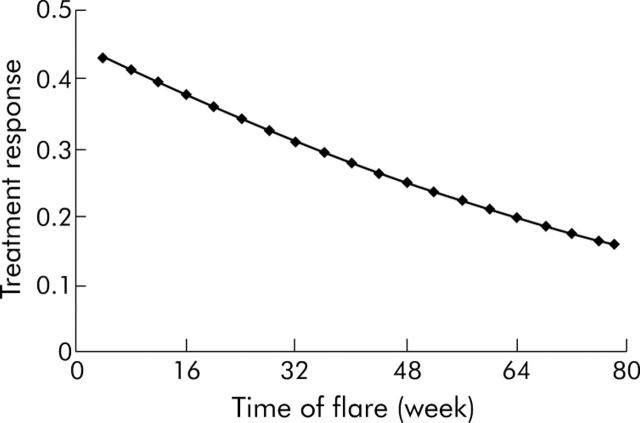
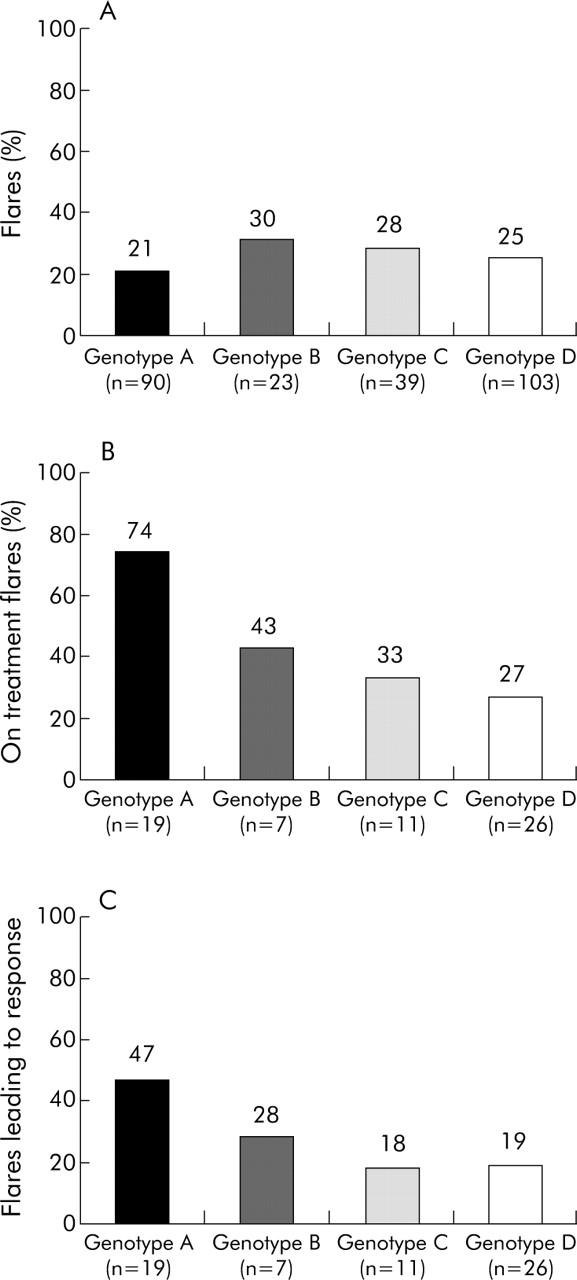
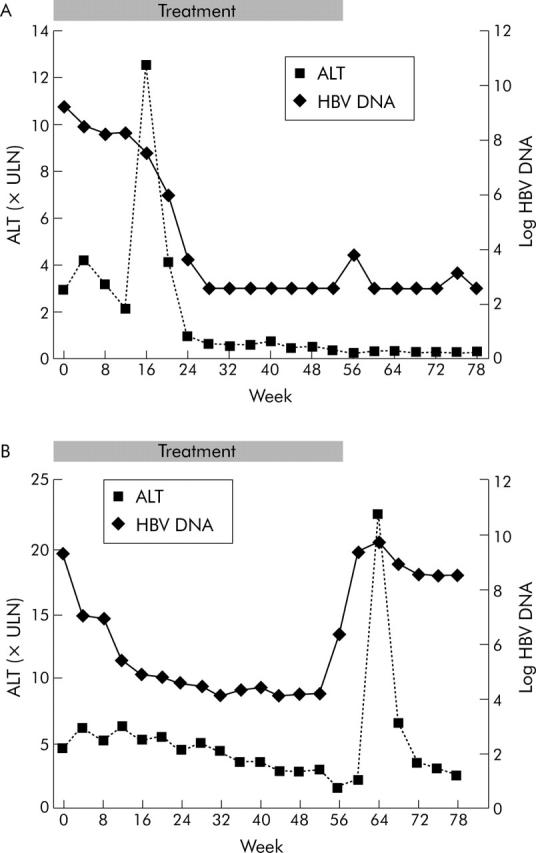
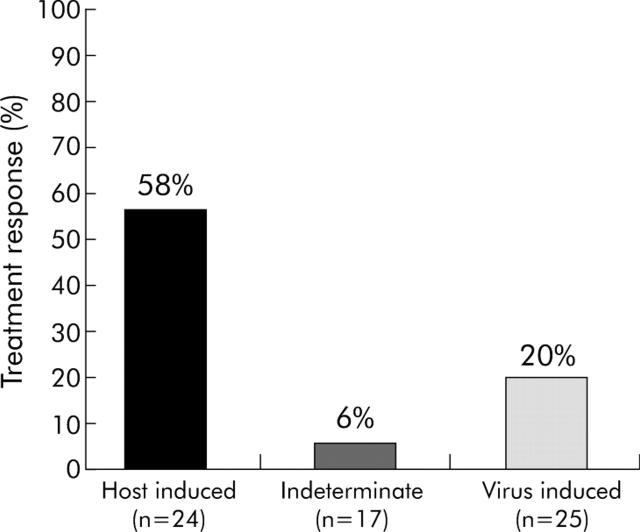
Results: Sixty seven patients (25%) exhibited 75 flares, with 38 (51%) flares in the combination therapy and 37 (49%) in the monotherapy groups. Overall, 30% of patients with and 38% of patients without a flare responded to therapy (p = 0.25). In 24 patients (36%) the flare was followed by a decrease in hepatitis B virus (HBV) DNA (host induced flare). In 25 (38%) patients the flare was preceded by an increase in HBV DNA (virus induced flare). In 17 (26%) patients the flare did not meet one of these criteria (indeterminate flare). Of patients with host induced flare, 58% responded whereas only 20% of patients with virus induced flares responded (p = 0.008). Hepatitis B surface antigen loss (n = 8) was exclusively seen in patients experiencing a host induced flare. Multivariate logistic analysis showed that host induced flares was an independent predictor of response (p = 0.043).
Conclusion: Flares are not more common in responders than in non-responders to Peg-interferon alpha-2b therapy. Virus induced flares, which occur after an increase in HBV DNA level, and most probably are indicative for increased expression of viral antigens, did not lead to treatment response. In contrast, host induced flares which were followed by a HBV DNA decrease were highly associated with treatment response.
Figures
References
-
- Lee W. Hepatitis B virus infection. N Eng J Med 1997;337:1733–45. - PubMed
-
- Peters M, Davis GL, Dooley JS, et al. The interferon system in acute and chronic viral hepatitis. Prog Liver Dis 1986;8:453–67. - PubMed
-
- Perrillo RP. Acute flares in chronic hepatitis B: the natural and unnatural history of an immunologically mediated liver disease. Gastroenterology 2001;120:1009–22. - PubMed
-
- Perrillo RP, Schiff ER, Davis GL, et al. A randomized, controlled trial of interferon alfa-2b alone and after prednisone withdrawal for the treatment of chronic hepatitis B. The Hepatitis Interventional Therapy Group. N Engl J Med 1990;323:295–301. - PubMed
-
- Alexander GJ, Brahm J, Fagan EA, et al. Loss of HBsAg with interferon therapy in chronic hepatitis B virus infection. Lancet 1987;2:66–9. - PubMed
Publication types
MeSH terms
Substances
LinkOut - more resources
Full Text Sources
Other Literature Sources