. 2005 May 31:2:48.
doi: 10.1186/1743-422X-2-48.

Neutrophil elastase, an acid-independent serine protease, facilitates reovirus uncoating and infection in U937 promonocyte cells

Affiliations

Neutrophil elastase, an acid-independent serine protease, facilitates reovirus uncoating and infection in U937 promonocyte cells

Joseph W Golden et al. Virol J. .

Abstract

Background: Mammalian reoviruses naturally infect their hosts through the enteric and respiratory tracts. During enteric infections, proteolysis of the reovirus outer capsid protein sigma3 is mediated by pancreatic serine proteases. In contrast, the proteases critical for reovirus replication in the lung are unknown. Neutrophil elastase (NE) is an acid-independent, inflammatory serine protease predominantly expressed by neutrophils. In addition to its normal role in microbial defense, aberrant expression of NE has been implicated in the pathology of acute respiratory distress syndrome (ARDS). Because reovirus replication in rodent lungs causes ARDS-like symptoms and induces an infiltration of neutrophils, we investigated the capacity of NE to promote reovirus virion uncoating.

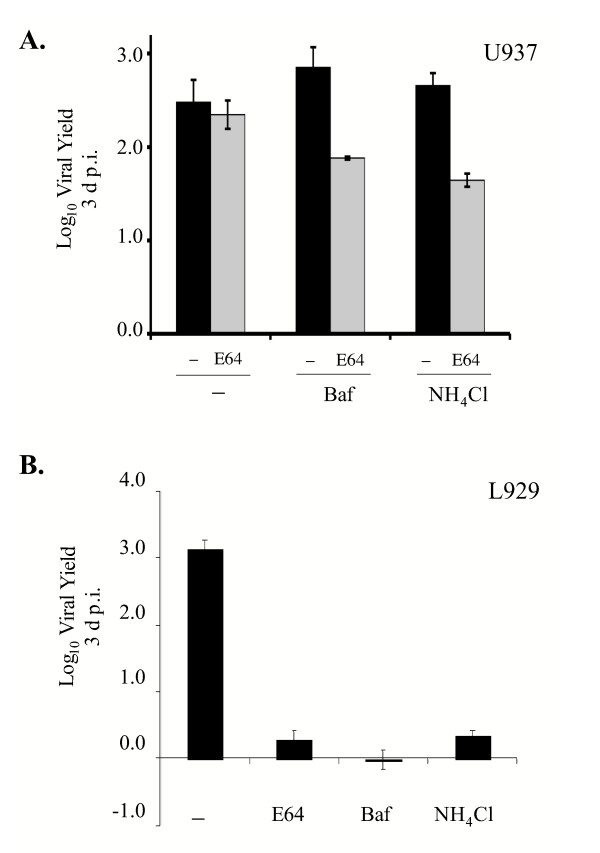
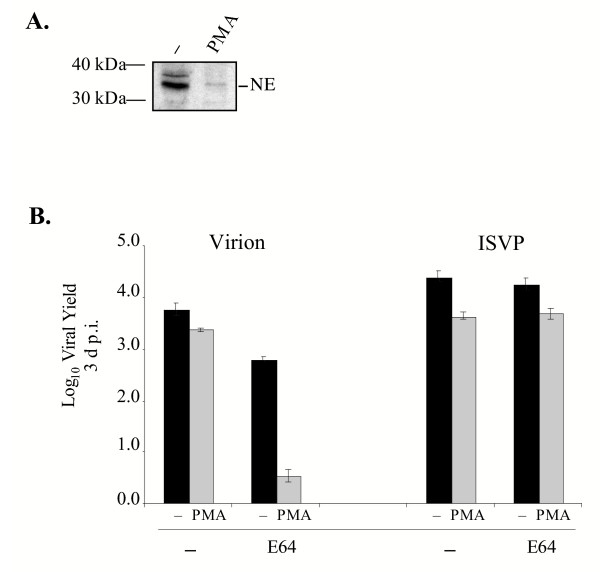
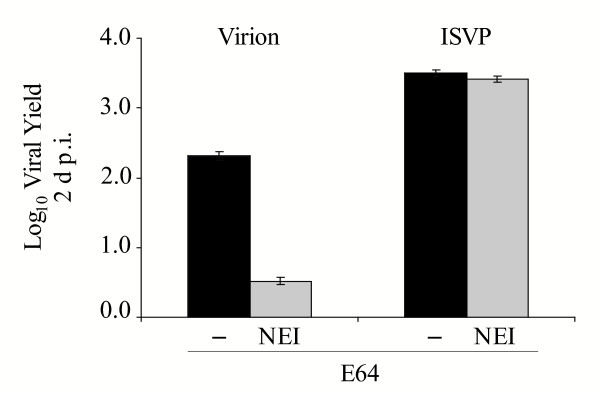
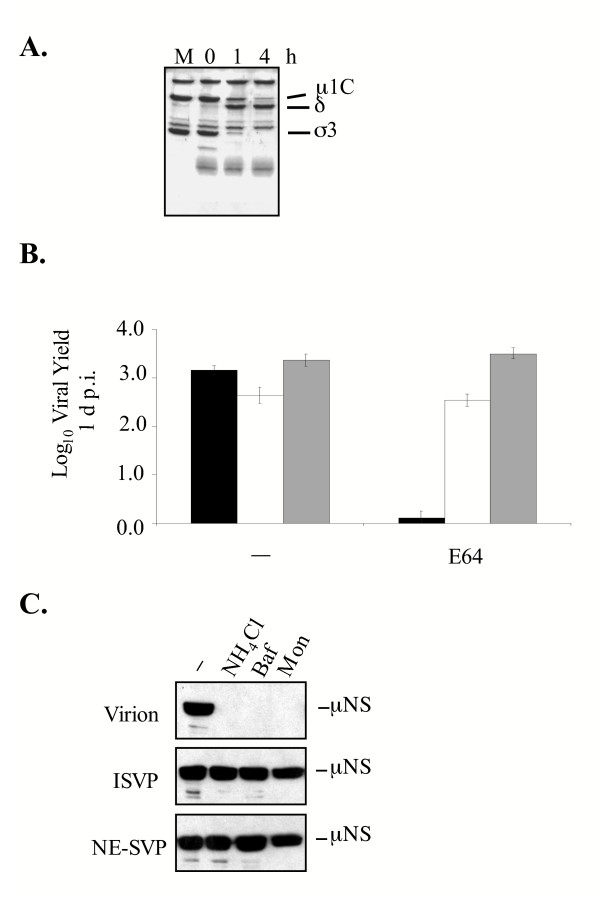
Results: The human promonocyte cell line U937 expresses NE. Treatment of U937 cells with the broad-spectrum cysteine-protease inhibitor E64 [trans-epoxysuccinyl-L-leucylamido-(4-guanidino)butane] and with agents that increase vesicular pH did not inhibit reovirus replication. Even when these inhibitors were used in combination, reovirus replicated to significant yields, indicating that an acid-independent non-cysteine protease was capable of mediating reovirus uncoating in U937 cell cultures. To identify the protease(s) responsible, U937 cells were treated with phorbol 12-myristate 13-acetate (PMA), an agent that induces cellular differentiation and results in decreased expression of acid-independent serine proteases, including NE and cathepsin (Cat) G. In the presence of E64, reovirus did not replicate efficiently in PMA-treated cells. To directly assess the role of NE in reovirus infection of U937 cells, we examined viral growth in the presence of N-Ala-Ala-Pro-Val chloromethylketone, a NE-specific inhibitor. Reovirus replication in the presence of E64 was significantly reduced by treatment of cells with the NE inhibitor. Incubation of virions with purified NE resulted in the generation of infectious subviron particles that did not require additional intracellular proteolysis.

Conclusion: Our findings reveal that NE can facilitate reovirus infection. The fact that it does so in the presence of agents that raise vesicular pH supports a model in which the requirement for acidic pH during infection reflects the conditions required for optimal protease activity. The capacity of reovirus to exploit NE may impact viral replication in the lung and other tissues during natural infections.


Figures
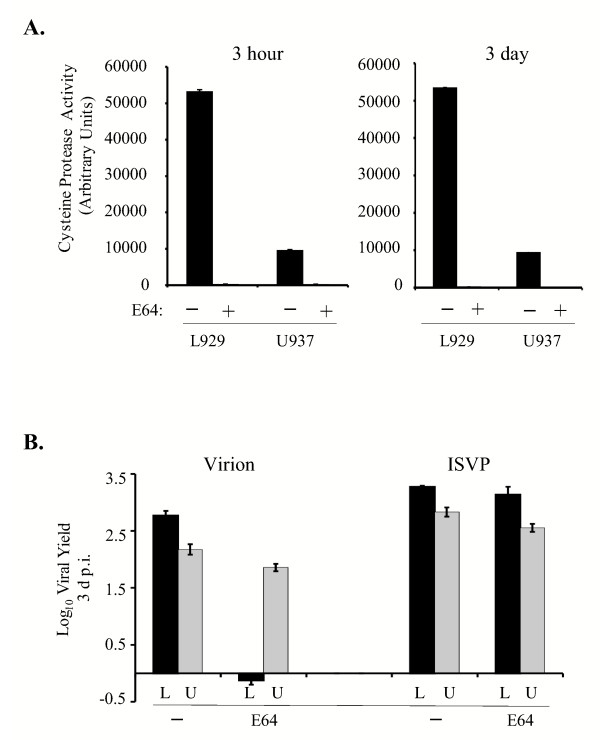
Figure 1
Figure 1
Analysis of viral replication in L929 and U937 cells treated with E64. A. 3 × 10⁶ L929 and U937 cells were untreated (-; black) or treated (+; grey) with 300 μM E64 for 3 h or 3 d. Cysteine protease activity was assessed using the fluorogenic substrate Z-Phe-Arg-MCA (Sigma) and plotted in arbitrary units. Activity levels in treated cells were so low (in L939 cells, 254 units at 3 h and 231 units at 3 d; in U937 cells, 200 units at 3 h and 115 units at 3 days) that they cannot be visualized on this graph. B. L929 (L; black bars) and U937 (U; grey bars) cells were treated with 300 μM E64 for 3 h prior to infection. Cells were then infected with reovirus strain Lang virions or ISVPs at an MOI of 3. Infectious virus present at 3 d p.i. was determined by plaque assay on L929 cell monolayers. Each time point represents the mean (+/- SD) derived from three independent samples.
Figure 2
Figure 2
Effects of agents that raise vesicular pH on reovirus replication in U937 and L929 cells. A. U937 cells were pre-treated without (-; black bars) or with 300 μM E64 (E64; grey bars) in the presence or absence of 25 nM Baf or 20 mM NH4Cl. Following pre-treatment, cells were infected with reovirus strain Lang at an MOI of 3 and viral yield was measured at 3 d.p.i as described in the legend to Fig. 1B. B. L929 cells were pre-treated without (-) or with E64, 25 nM Baf or 20 mM NH4Cl. Pre-treated cells were infected with reovirus strain Lang at an MOI of 3 and viral yield was measured at 3 d p.i. as described in the legend to Fig. 1B.
Figure 3
Figure 3
Analysis of reovirus replication in U937 cells differentiated with PMA. A. Lysates generated from 105 U937 cells that were untreated (-) or treated with 150 nM PMA for 72 h were resolved on SDS-12% polyacrylamide gels and electrophoretically transferred to a nitrocellulose filter. The filter was subsequently incubated with a polyclonal goat antibody against human NE (1:400) (Santa Cruz Biotechnology). The filter was washed and incubated with a secondary anti-goat antibody conjugated to horseradish peroxidase (1:5000) (Santa Cruz Biotechnology). Protein bands were detected using reagents that generate a chemiluminescent signal (Amersham). B. U937 cells that were undifferentiated (-; black bars) or differentiated (PMA; grey bars) with 150 nM of PMA for 72 h were left untreated (-) or were treated with 300 μM E64. Following pre-treatment with the protease inhibitor, cells were infected with Lang virions or ISVPs at an MOI of 3. Viral yield was quantified at 3 d p.i. as described in the legend to Fig. 1B.
Figure 4
Figure 4
Analysis of viral replication in U937 cells treated with E64 and NE inhibitor. U937 cells were pre-treated with 300 μM E64 in the absence (-; black bars) or presence (NEI; grey bars) of 200 μM N-Ala-Ala-Pro-Val chloromethylketone, an inhibitor of NE. Following inhibitor pre-treatment, cells were infected with Lang virions or ISVPs at an MOI of 3. Viral yield was analyzed at 2 d p.i. as described in the legend to Fig. 1B.
Figure 5
Figure 5
Analysis of NE treatment of reovirus virions. A. Lang virions (7.5 × 10¹⁰) were incubated with purified 25 μg/ml NE (Calbiochem) at 37°C for the indicated times (in min) and analyzed on SDS-12% polyacrylamide gels and proteins were visualized by Coomasssie staining. The mock sample (M) consisted of virions held in reaction buffer in the absence of protease for 4 h. The positions of reovirus capsid proteins are labeled. B. L929 cells were left untreated (-) or were pre-treated with 300 μM E64 and infected with Lang virions (black bars), ISVPs (white bars) or NE-treated particles (grey bars) at an MOI of 3. Viral yield was determined at 1 d p.i. C. L929 cells were left untreated (-) or were pre-treated with 20 mM NH4Cl, 25 nM Baf or 25 μM monensin and infected with Lang virions or protease-treated particles. Cell extracts prepared at 1 d p.i. were analyzed for the expression of the viral non-structural protein μNS by immunoblotting using antiserum against μNS (diluted 1:12500).

References

    1. Tyler KL. Reoviruses. In: Knipe DM and Howley PM, editor. Fields Virology. 4th. Philadelphia, Lippincott, Williams and Wilkins; 2001. pp. 1729–1746.
    1. Golden JW, Linke J, Schmechel S, Thoemke K, Schiff LA. Addition of exogenous protease facilitates reovirus infection in many restrictive cells. J Virol. 2002;76:7430–7443. doi: 10.1128/JVI.76.15.7430-7443.2002. - DOI - PMC - PubMed
    1. Golden JW, Bahe JA, Lucas WT, Nibert ML, Schiff LA. Cathepsin S supports acid-independent infection by some reoviruses. J Biol Chem. 2004;279:8547–8557. doi: 10.1074/jbc.M309758200. - DOI - PubMed
    1. Lee PWK, Hayes EC, Joklik WK. Protein sigma 1 is the reovirus cell attachment protein. Virology. 1981;108:156–163. - PubMed
    1. Weiner HL, Powers ML, Fields BN. Absolute linkage of virulence and central nervous system cell tropism of reoviruses to viral hemagglutinin. Journal of Infectious Diseases. 1980;141:609–616. - PubMed

Publication types

MeSH terms

Substances

LinkOut - more resources