


ZD6474--a novel inhibitor of VEGFR and EGFR tyrosine kinase activity
- PMID: 15928657
- PMCID: PMC2362058
- DOI: 10.1038/sj.bjc.6602603
ZD6474--a novel inhibitor of VEGFR and EGFR tyrosine kinase activity
Abstract
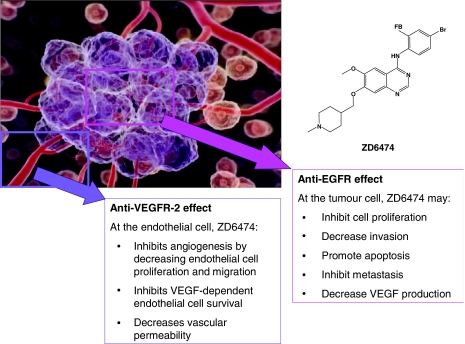
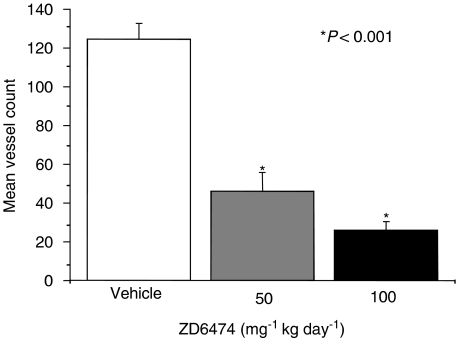
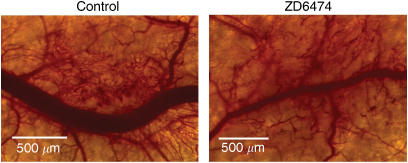
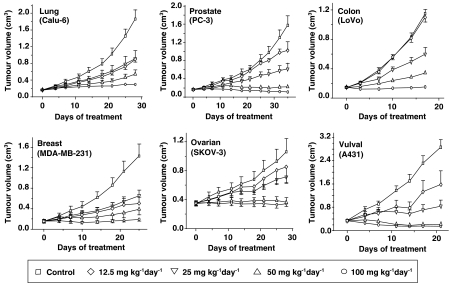
Angiogenesis is crucial for maintaining the supply of oxygen and nutrients required to support solid tumour growth. Inhibitors of tumour blood vessel formation are therefore being sought, in particular, inhibitors of vascular endothelial growth factor-A (VEGF)-signalling, which has a pivotal role in stimulating neovascular growth and survival. ZD6474 is an orally bioavailable inhibitor of VEGF receptor-2 tyrosine kinase activity that in preclinical studies has been shown to inhibit both VEGF-induced signalling in endothelial cells and tumour-induced angiogenesis. Consistent with inhibition of angiogenesis, once-daily oral dosing of ZD6474 produced significant broad-spectrum antitumour activity in a panel of histologically diverse human tumour xenografts. In addition to its antiangiogenic properties, ZD6474 also has activity against the epidermal growth factor receptor (EGFR) tyrosine kinase, which could impart a direct inhibitory effect on tumour cell growth and survival. This may be particularly relevant in tumours with a dependency upon EGFR signalling, for example in certain tumours harbouring activating mutations in EGFR. RET kinase has also been identified as a third target for ZD6474. This review summarises preclinical studies with this unique agent and considers its future direction in cancer treatment.
Figures
References
-
- Arao T, Fukumoto H, Takeda M, Tamura T, Saijo N, Nishio K (2004) Small in-frame deletion in the epidermal growth factor receptor as a target for ZD6474. Cancer Res 64: 9101–9104 - PubMed
-
- Bando H, Brokelmann M, Toi M, Alitalo K, Sleeman JP, Sipos B, Grone HJ, Weich HA (2004) Immunodetection and quantification of vascular endothelial growth factor receptor-3 in human malignant tumor tissues. Int J Cancer 111: 184–191 - PubMed
-
- Bradley DP, Tessier JT, Checkley DR, Kuribayashi H, Wedge SR (2004) The VEGF signaling inhibitors ZD6474 and AZD2171 compromise hemodynamic parameters in an SW620 human colon tumor model: an analysis using perfusion-permeability dynamic contrast-enhanced magnetic resonance imaging (pp-DCE-MRI). Proc Am Assoc Cancer Res 45: 1051
Publication types
MeSH terms
Substances
LinkOut - more resources
Full Text Sources
Other Literature Sources
Medical
Research Materials
Miscellaneous
