


Pesticide poisoning in south India: opportunities for prevention and improved medical management
- PMID: 15941422
- PMCID: PMC1762001
- DOI: 10.1111/j.1365-3156.2005.01412.x
Pesticide poisoning in south India: opportunities for prevention and improved medical management
Abstract
Objective: Warangal district in Andhra Pradesh, southern India, records >1000 pesticide poisoning cases each year and hundreds of deaths. We aimed to describe their frequency and distribution, and to assess quality of management and subsequent outcomes from pesticide poisoning in one large hospital in the district.
Methods: We reviewed data on all patients admitted with pesticide poisoning to a district government hospital for the years 1997 to 2002. For 2002, details of the particular pesticide ingested and management were abstracted from the medical files.
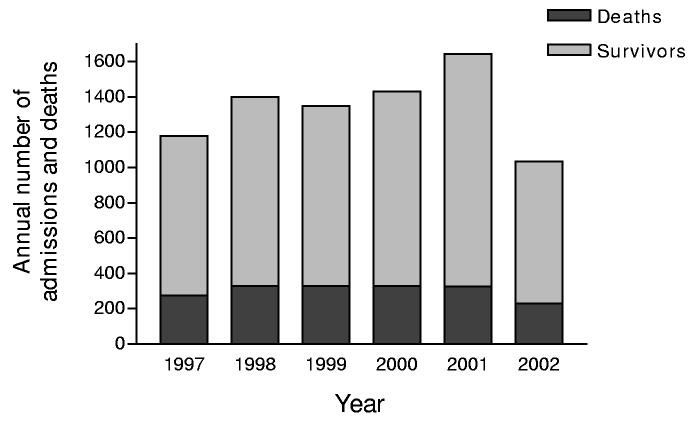
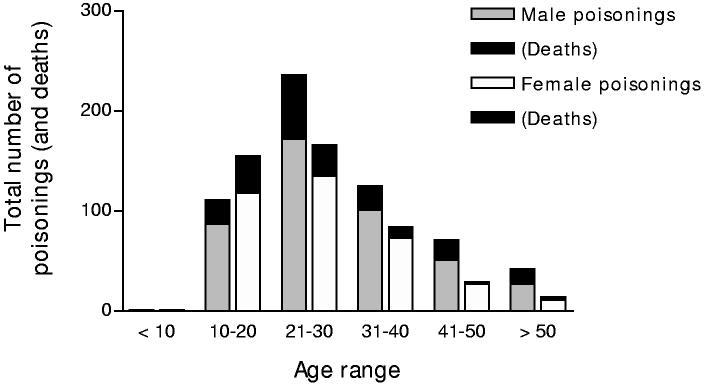
Findings: During these 6 years, 8040 patients were admitted to the hospital with pesticide poisoning. The overall case fatality ratio was 22.6%. More detailed data from 2002 revealed that two-thirds of the patients were <30 years old, 57% were male and 96% had intentionally poisoned themselves. Two compounds, monocrotophos and endosulfan, accounted for the majority of deaths with known pesticides in 2002. Low fixed-dose regimens were used in the majority of cases for the most commonly used antidotes (atropine and pralidoxime). Inappropriate antidotes were also used in some patients.
Conclusions: It is likely that these findings reflect the situation in many rural hospitals of the Asia Pacific region. Even without an increase in resources, there appear to be significant opportunities for reducing mortality by better medical management and further restrictions on the most toxic pesticides.
Figures
References
-
- American Academy of Clinical Toxicology and European Association of Poison Centres and Clinical Toxicologists Position statement: single-dose activated charcoal. J.Toxicol.Clin.Toxicol. 1997;35:721–741. - PubMed
-
- American Academy of Clinical Toxicology and European Association of Poisons Centres and Clinical Toxicologists Position statement: gastric lavage. J.Toxicol.Clin.Toxicol. 1997;35:711–719. - PubMed
-
- Atul M, Sharma GK. A comparative study of poisoning cases autopsied in LHMC, New Delhi, and JIPMER, Pondicherry. J.Forensic Med.Toxicol. 2002;XIX http://www.jfmt.org/ARTICLE16.htm.
-
- Ballantyne B, Marrs TC. Overview of the biological and clinical aspects of organophosphates and carbamates. In: Ballantyne B, Marrs TC, editors. Clinical and experimental toxicology of organophosphates and carbamates. 0 edn. Butterworth heinemann; Oxford: 1992. pp. 3–14.
-
- Batra YK, Keoliya AN, Jadhav GU. Poisoning: an unnatural cause of morbidity and mortality in rural india. J.Assoc.Physicians India. 2003;51:955–959. - PubMed
Publication types
MeSH terms
Substances
Grants and funding
LinkOut - more resources
Full Text Sources
Medical
