


Alpha-synuclein phosphorylation enhances eosinophilic cytoplasmic inclusion formation in SH-SY5Y cells
- PMID: 15944382
- PMCID: PMC6724982
- DOI: 10.1523/JNEUROSCI.0482-05.2005
Alpha-synuclein phosphorylation enhances eosinophilic cytoplasmic inclusion formation in SH-SY5Y cells
Abstract
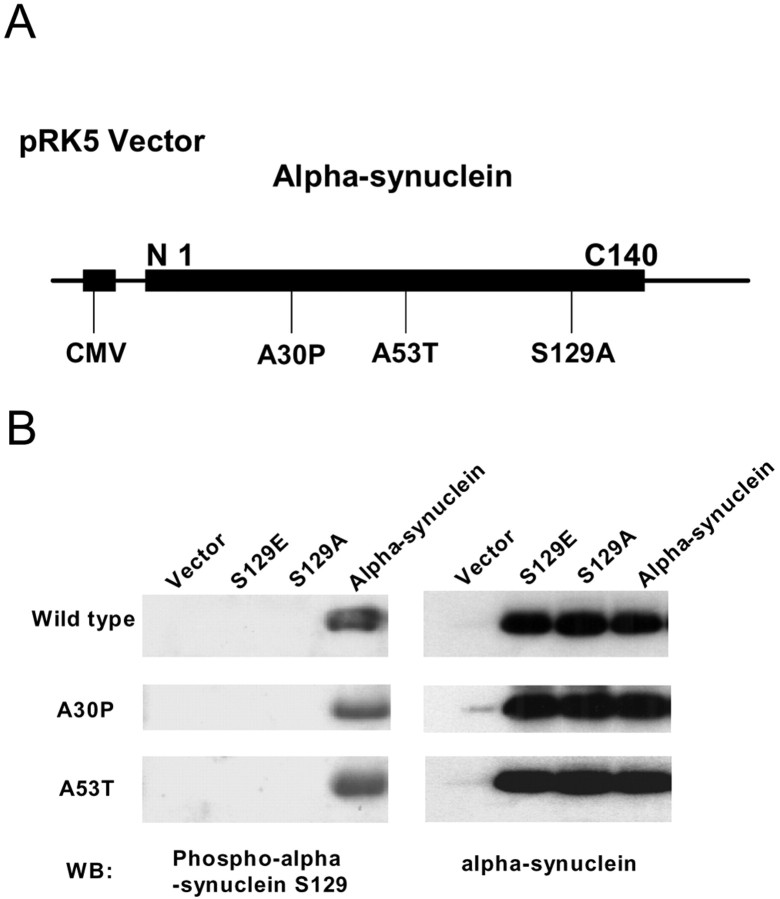
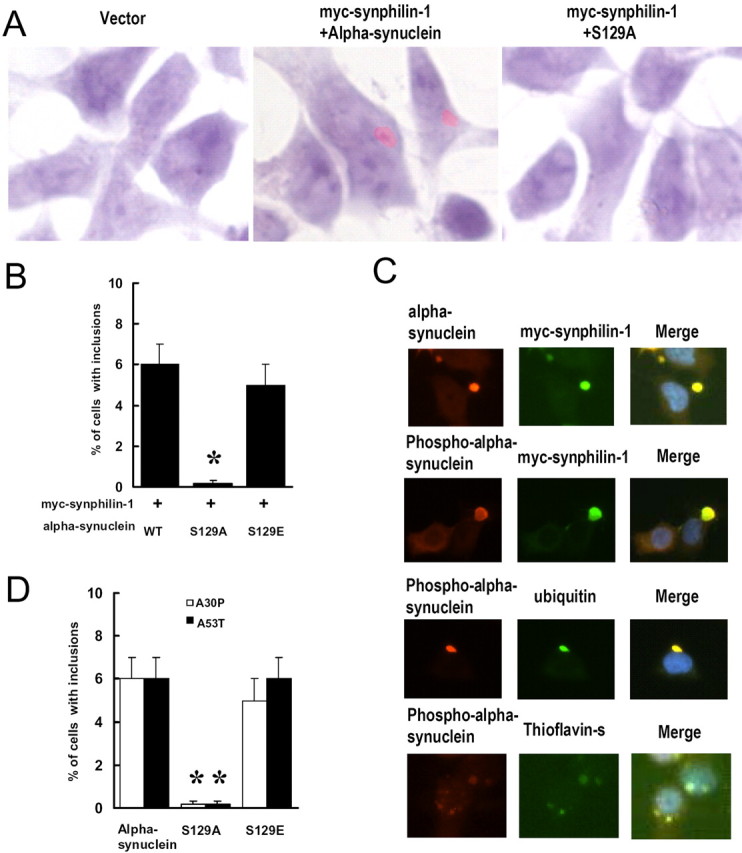
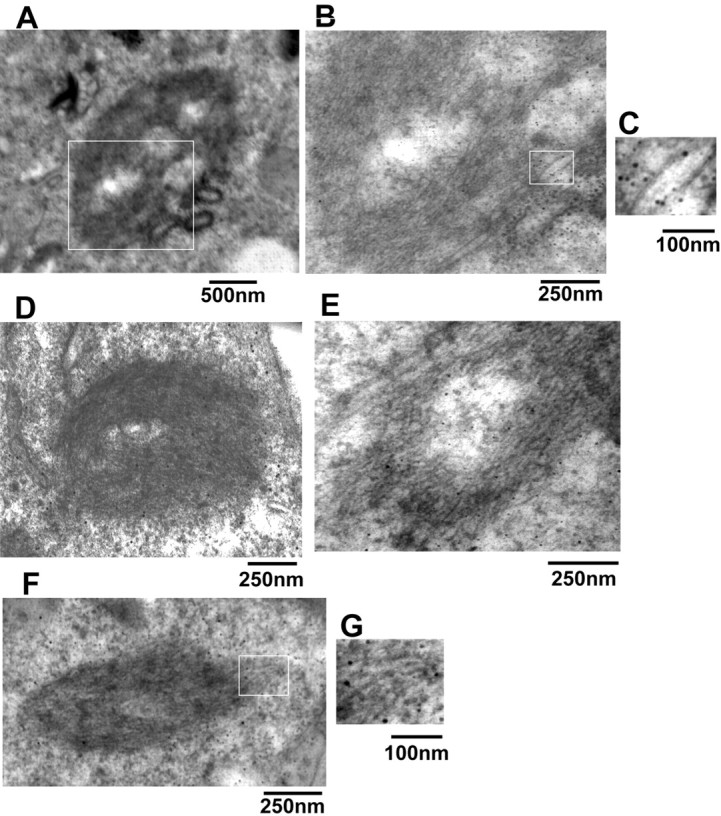
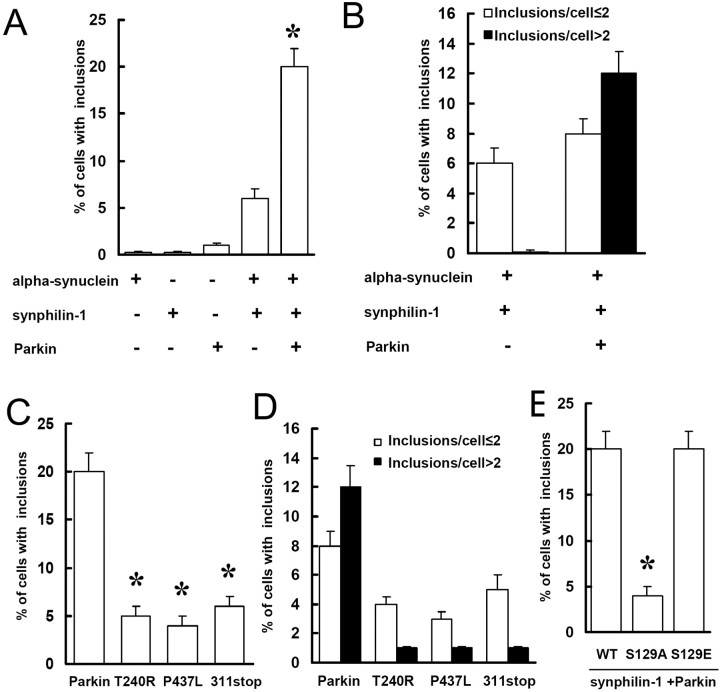
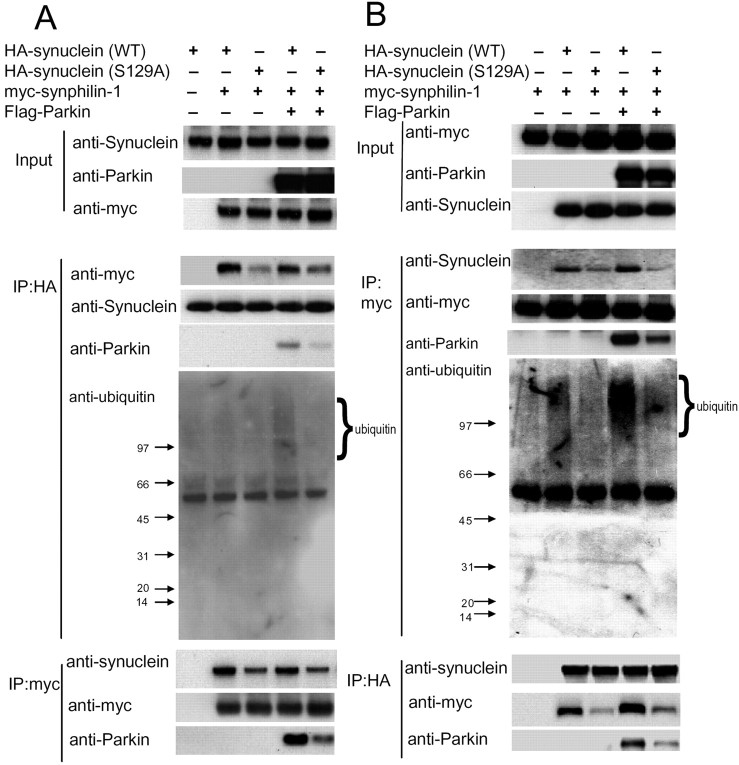
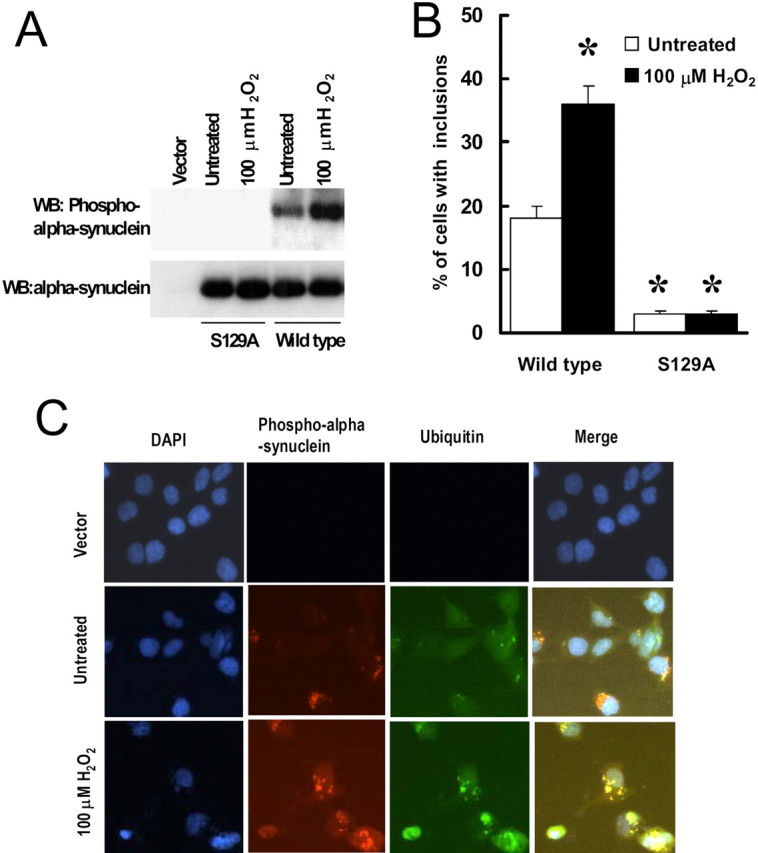
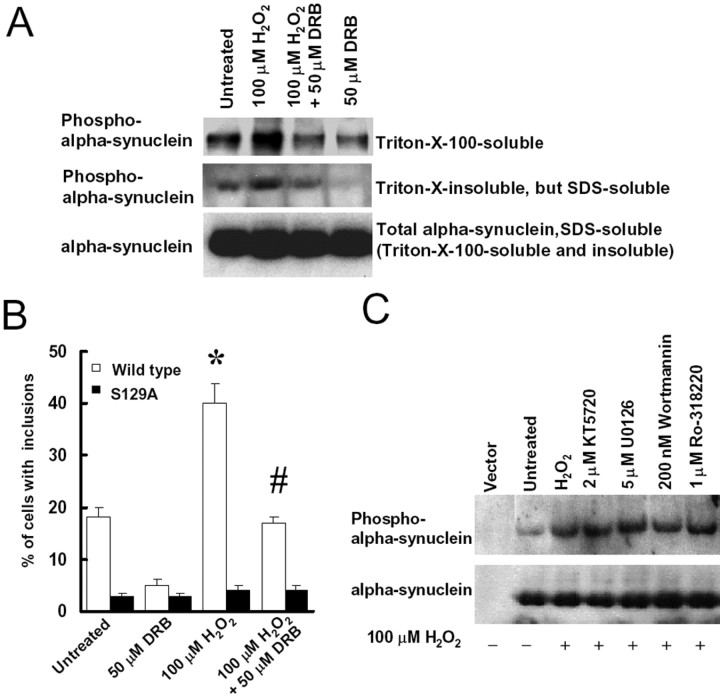
Parkinson's disease (PD) is a neurodegenerative disorder characterized by selective loss of dopaminergic neurons and the presence of Lewy bodies. Previous reports have shown that alpha-synuclein deposited in brain tissue from individuals with synucleinopathy is extensively phosphorylated at Ser-129. Here, we investigate the role of phosphorylation of alpha-synuclein in the formation of inclusions involving synphilin-1 and parkin using site-directed mutagenesis to change Ser-129 of alpha-synuclein to alanine (S129A) to abolish phosphorylation at this site. Coexpression of wild-type alpha-synuclein and synphilin-1 in human neuroblastoma SH-SY5Y cells yielded cytoplasmic eosinophilic inclusions with some features resembling Lewy bodies, whereas coexpression of S129A alpha-synuclein and synphlin-1 formed few or no inclusions. Moreover, coexpression of parkin with alpha-synuclein and synphilin-1 formed more ubiquitinated inclusions, but these inclusions decreased with expression of S129A alpha-synuclein instead of wild-type alpha-synuclein. Coimmunoprecipitation assays revealed a decreased interaction of S129A alpha-synuclein with synphilin-1 compared with wild-type alpha-synuclein. Expression of S129A alpha-synuclein instead of wild-type alpha-synuclein also decreased the association of synphilin-1 and parkin and subsequently reduced the parkin-mediated ubiquitination of synphilin-1 and the formation of ubiquitinated inclusions. Treatment of SH-SY5Y cells with H(2)O(2) increased alpha-synuclein phosphorylation and enhanced the formation of inclusions formed by coexpression of alpha-synuclein, synphilin-1, and parkin, whereas treatment with the casein kinase 2 inhibitor 5,6-dichloro-1-beta-d-ribofuranosylbenzimidazole had the opposite affect. These results indicate that phosphorylation of alpha-synuclein at S129 may be important for the formation of inclusions in PD and related alpha synucleinopathies.
Figures
References
-
- Braak H, Del TK, Rub U, de Vos RA, Jansen SEN, Braak E (2003) Staging of brain pathology related to sporadic Parkinson's disease. Neurobiol Aging 24: 197-211. - PubMed
-
- Chen HK, Fernandez-Funez P, Acevedo SF, Lam YC, Kaytor MD, Fernandez MH, Aitken A, Skoulakis EM, Orr HT, Botas J, Zoghbi HY (2003) Interaction of Akt-phosphorylated ataxin-1 with 14 -3-3 mediates neurodegeneration in spinocerebellar ataxia type 1. Cell 113: 457-468. - PubMed
-
- Chung KK, Zhang Y, Lim KL, Tanaka Y, Huang H, Gao J, Ross CA, Dawson VL, Dawson TM (2001a) Parkin ubiquitinates the alpha-synuclein-interacting protein, synphilin-1: implications for Lewy-body formation in Parkinson disease. Nat Med 7: 1144 -1150. - PubMed
-
- Chung KK, Dawson VL, Dawson TM (2001b) The role of the ubiquitin-proteasomal pathway in Parkinson's disease and other neurodegenerative disorders. Trends Neurosci 24: S7-14. - PubMed
Publication types
MeSH terms
Substances
Grants and funding
LinkOut - more resources
Full Text Sources
Molecular Biology Databases
