


Altered nucleosome occupancy and histone H3K4 methylation in response to 'transcriptional stress'
- PMID: 15944735
- PMCID: PMC1173152
- DOI: 10.1038/sj.emboj.7600711
Altered nucleosome occupancy and histone H3K4 methylation in response to 'transcriptional stress'
Abstract
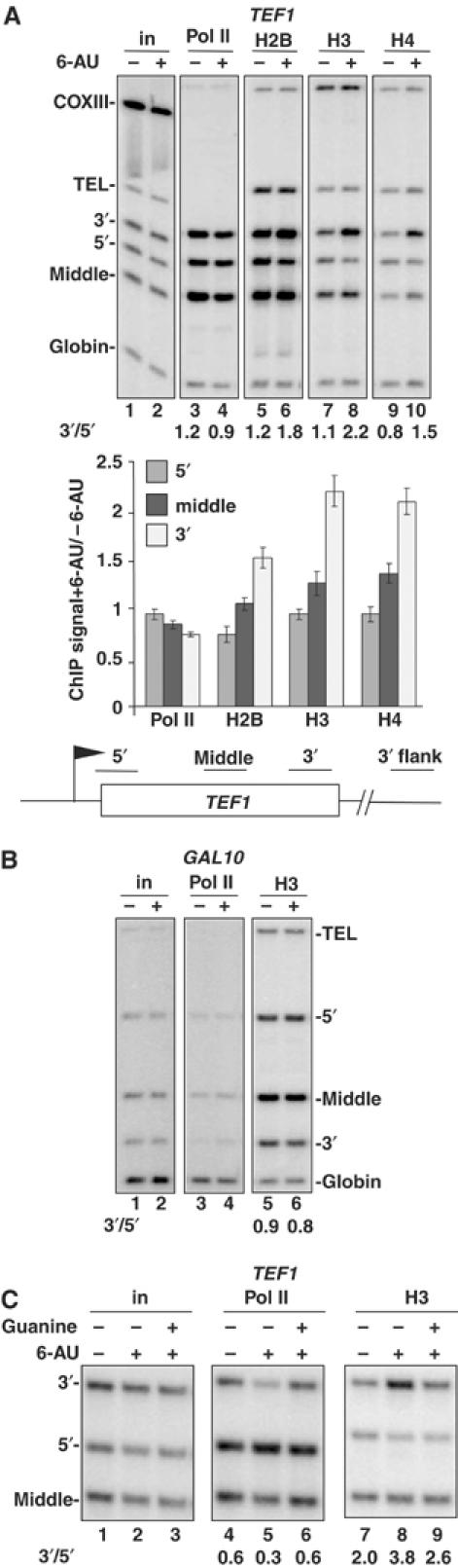
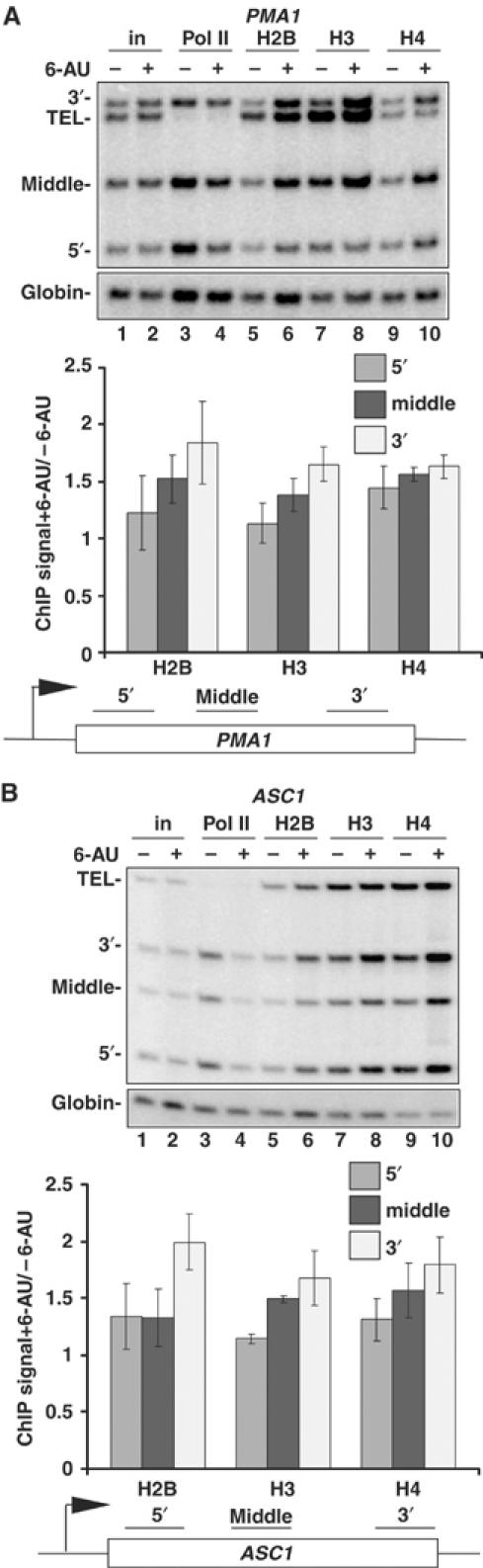
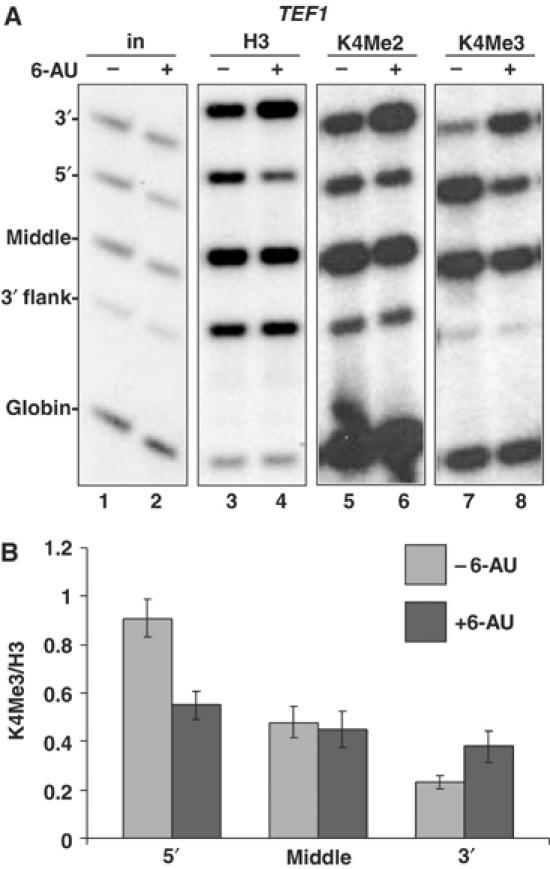
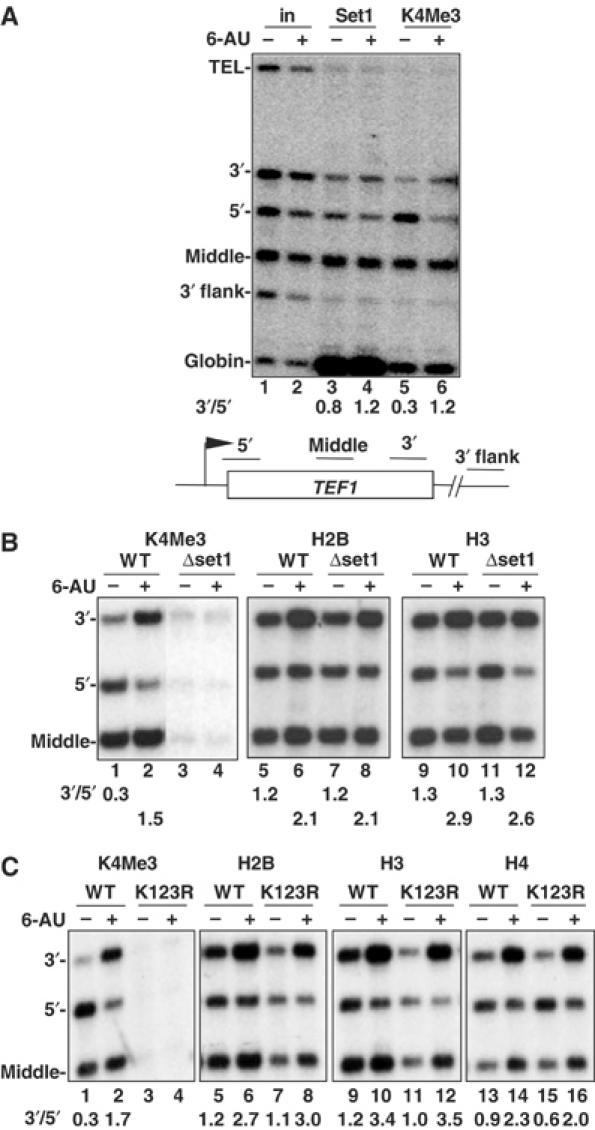
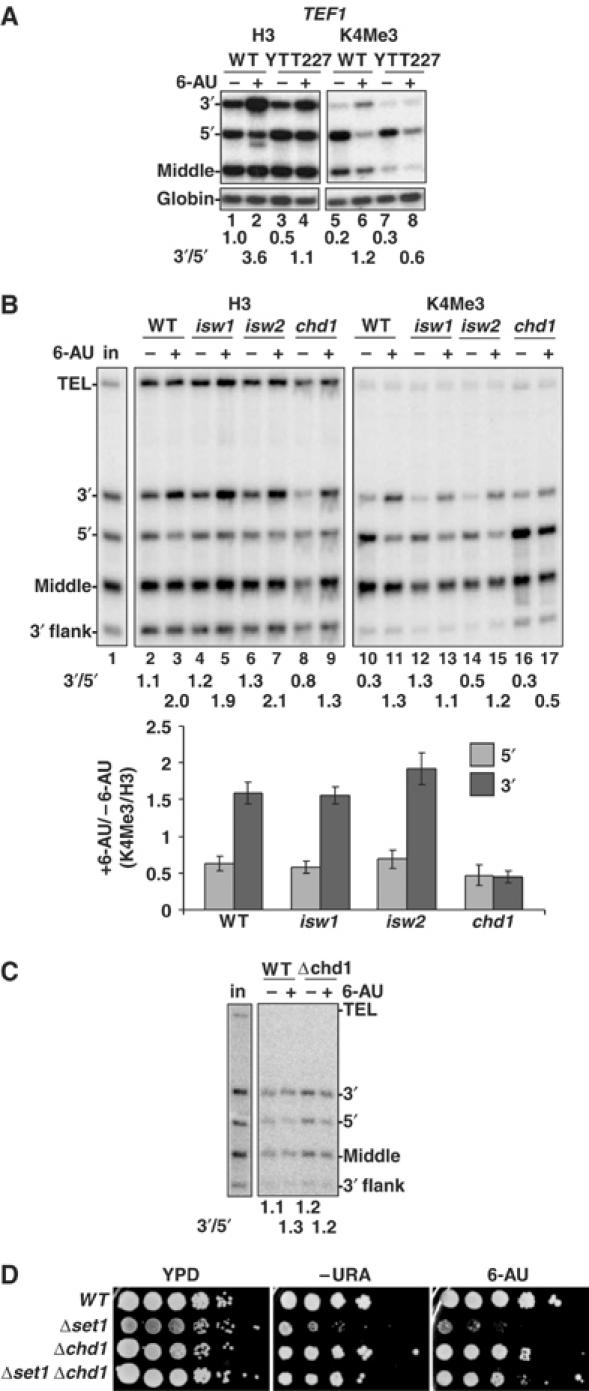
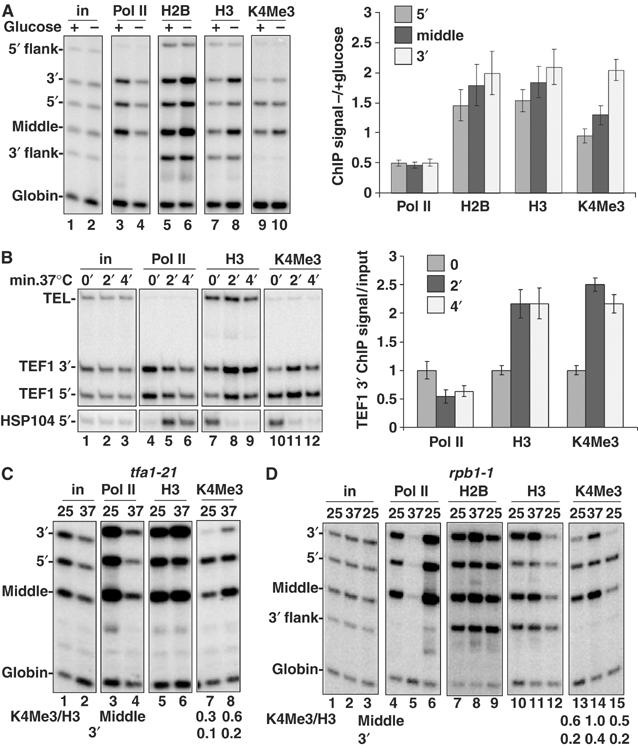
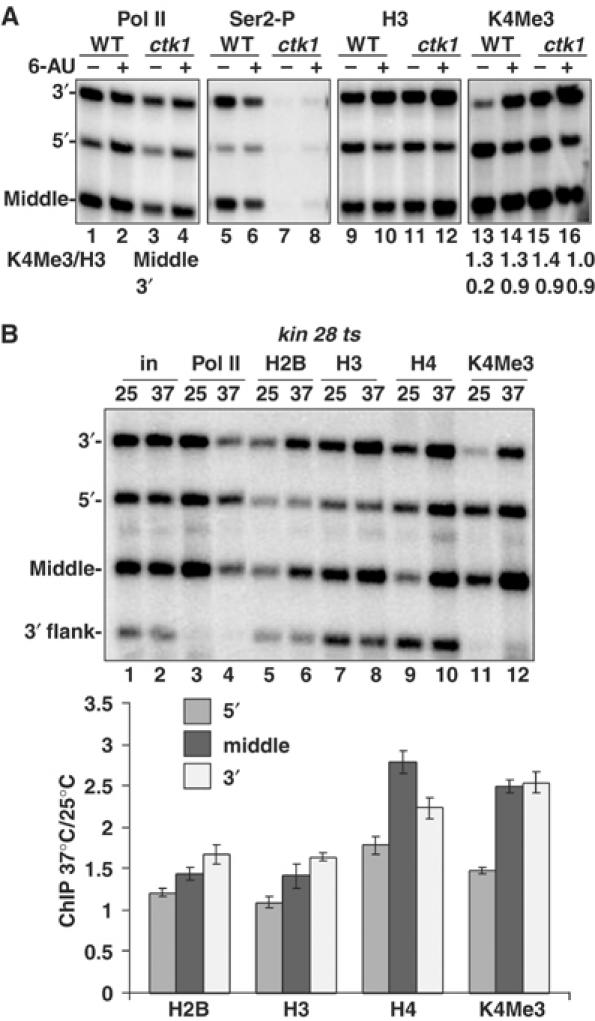
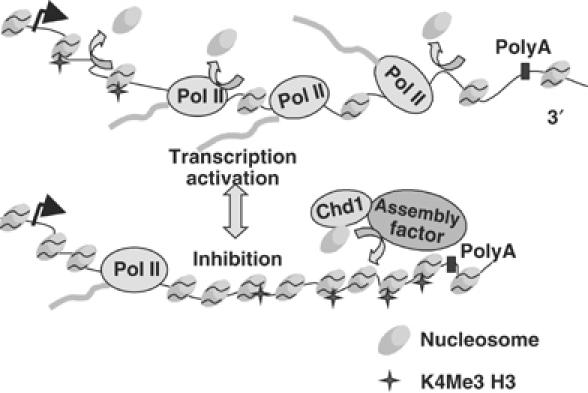
We report that under 'transcriptional stress' in budding yeast, when most pol II activity is acutely inhibited, rapid deposition of nucleosomes occurs within genes, particularly at 3' positions. Whereas histone H3K4 trimethylation normally marks 5' ends of highly transcribed genes, under 'transcriptional stress' induced by 6-azauracil (6-AU) and inactivation of pol II, TFIIE or CTD kinases Kin28 and Ctk1, this mark shifted to the 3' end of the TEF1 gene. H3K4Me3 at 3' positions was dynamic and could be rapidly removed when transcription recovered. Set1 and Chd1 are required for H3K4 trimethylation at 3' positions when transcription is inhibited by 6-AU. Furthermore, Deltachd1 suppressed the growth defect of Deltaset1. We suggest that a 'transcriptional stress' signal sensed through Set1, Chd1, and possibly other factors, causes H3K4 hypermethylation of newly deposited nucleosomes at downstream positions within a gene. This response identifies a new role for H3K4 trimethylation at the 3' end of the gene, as a chromatin mark associated with impaired pol II transcription.
Figures
References
-
- Adkins MW, Howar SR, Tyler JK (2004) Chromatin disassembly mediated by the histone chaperone Asf1 is essential for transcriptional activation of the yeast PHO5 and PHO8 genes. Mol Cell 14: 657–666 - PubMed
-
- Ahmad K, Henikoff S (2002) The histone variant H3.3 marks active chromatin by replication-independent nucleosome assembly. Mol Cell 9: 1191–1200 - PubMed
-
- Alen C, Kent NA, Jones HS, O'Sullivan J, Aranda A, Proudfoot NJ (2002) A role for chromatin remodeling in transcriptional termination by RNA polymerase II. Mol Cell 10: 1441–1452 - PubMed
-
- Boeger H, Griesenbeck J, Strattan JS, Kornberg RD (2003) Nucleosomes unfold completely at a transcriptionally active promoter. Mol Cell 11: 1587–1598 - PubMed
Publication types
MeSH terms
Substances
Grants and funding
LinkOut - more resources
Full Text Sources
Molecular Biology Databases
