. 2005 Oct 1;391(Pt 1):25-32.
doi: 10.1042/BJ20050342.

Regulation of cell survival by lipid phosphate phosphatases involves the modulation of intracellular phosphatidic acid and sphingosine 1-phosphate pools

Affiliations

Regulation of cell survival by lipid phosphate phosphatases involves the modulation of intracellular phosphatidic acid and sphingosine 1-phosphate pools

Jaclyn Long et al. Biochem J. .

Abstract

We have shown previously that LPPs (lipid phosphate phosphatases) reduce the stimulation of the p42/p44 MAPK (p42/p44 mitogen-activated protein kinase) pathway by the GPCR (G-protein-coupled receptor) agonists S1P (sphingosine 1-phosphate) and LPA (lysophosphatidic acid) in serum-deprived HEK-293 cells [Alderton, Darroch, Sambi, McKie, Ahmed, N. J. Pyne and S. Pyne (2001) J. Biol. Chem. 276, 13452-13460]. In the present study, we now show that this can be blocked by pretreating HEK-293 cells with the caspase 3/7 inhibitor, Ac-DEVD-CHO [N-acetyl-Asp-Glu-Val-Asp-CHO (aldehyde)]. Therefore LPP2 and LPP3 appear to regulate the apoptotic status of serum-deprived HEK-293 cells. This was supported further by: (i) caspase 3/7-catalysed cleavage of PARP [poly(ADP-ribose) polymerase] was increased in serum-deprived LPP2-overexpressing compared with vector-transfected HEK-293 cells; and (ii) serum-deprived LPP2- and LPP3-overexpressing cells exhibited limited intranucleosomal DNA laddering, which was absent in vector-transfected cells. Moreover, LPP2 reduced basal intracellular phosphatidic acid levels, whereas LPP3 decreased intracellular S1P in serum-deprived HEK-293 cells. LPP2 and LPP3 are constitutively co-localized with SK1 (sphingosine kinase 1) in cytoplasmic vesicles in HEK-293 cells. Moreover, LPP2 but not LPP3 prevents SK1 from being recruited to a perinuclear compartment upon induction of PLD1 (phospholipase D1) in CHO (Chinese-hamster ovary) cells. Taken together, these data are consistent with an important role for LPP2 and LPP3 in regulating an intracellular pool of PA and S1P respectively, that may govern the apoptotic status of the cell upon serum deprivation.


Figures
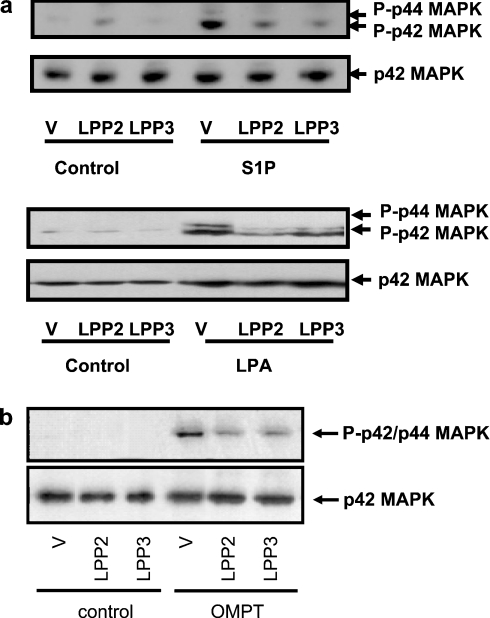
Figure 1
Figure 1. Overexpression of LPP2 or LPP3 reduces the activation of p42/p44 MAPK by LPA, S1P and OMPT
Western blots showing that activation of p42/p44 MAPK by (a) 5 μM S1P or 1 μM LPA for 10 min, or (b) 5 μM OMPT for 10 min, is reduced in HEK-293 cells stably overexpressing either LPP2 or LPP3. HEK-293 cell lysates were Western blotted and probed with an anti-(phospho- p42/p44 MAPK) antibody. Blots were stripped and re-probed with anti-(p42 MAPK) antibody (to confirm equal protein loading). V, vector.
Figure 2
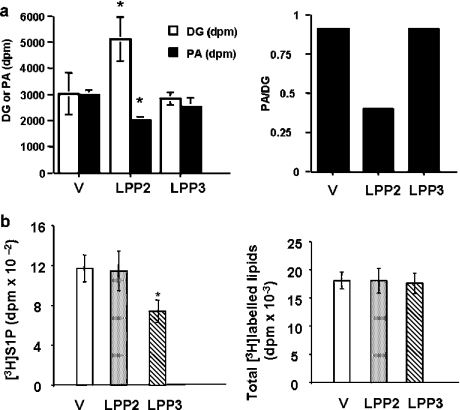
Figure 2. LPP2- and LPP3-dependent changes in intracellular PA and S1P levels
Intracellular PA and S1P were measured as described in the Experimental section. The histograms show the effect of (a) overexpression of LPP2 and LPP3 on basal intracellular PA and DG levels; and (b) overexpression of LPP2 and LPP3 on intracellular S1P produced from exogenous sphingosine and total [3H]sphingosine-labelled lipids. *P<0.05 compared with stable vector-transfected HEK-293 cells. V, vector.
Figure 3
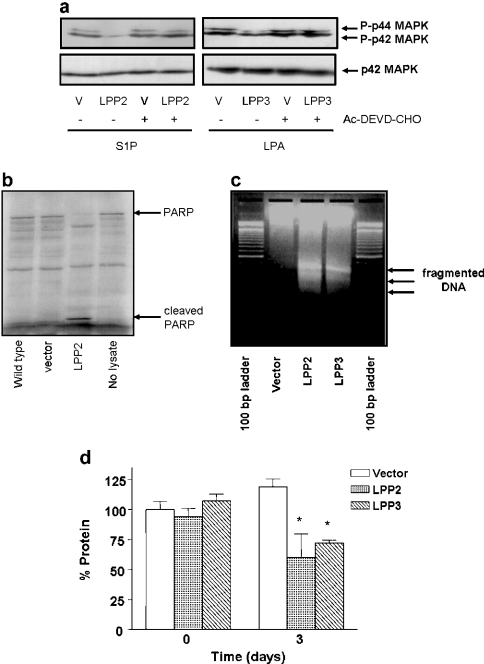
Figure 3. LPP2 and LPP3 attenuate p42/p44 MAPK activation via a caspase 3/7-dependent mechanism dependent on the apoptotic state of the cells
Stable vector or LPP2- or LPP3-transfected HEK-293 cells were treated without or with Ac-DEVD-CHO (100 μM; 18 h) prior to stimulation with 1 μM LPA or 5 μM S1P for 10 min. (a) Western blot showing that Ac-DEVD-CHO blocks the ability of LPP2 and LPP3 to reduce the activation of p42/p44 MAPK by S1P and LPA respectively; (b) autoradiograph showing the cleavage of 35S-labelled PARP in lysates from vector and LPP2-overexpressing cells; (c) agarose gel showing the intranucleosomal DNA laddering in LPP2- and LPP3- overexpressing cells compared with vector-transfected cells; (d) protein determination (Bradford assay) in vector and LPP2- and LPP3-overexpressing cells after serum deprivation. Results are presented as the percentage of protein in vector-transfected cells before serum deprivation. *P<0.05 for vector-transfected versus LPP2- and LPP3-transfected cells (n=3 experiments).
Figure 4
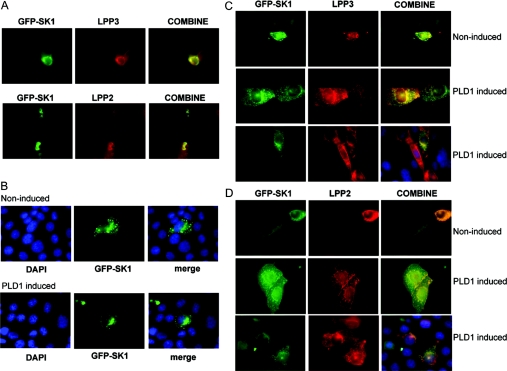
Figure 4. LPP–SK1 co-localization
(A) HEK-293 cells stably expressing LPP3 or LPP2 were transiently transfected with plasmid construct encoding GFP-tagged SK1. LPP3 or LPP2 expression was detected using anti-LPP3 or anti-LPP2 antibodies respectively. The panel shows constitutive co-localization of LPP3 or LPP2 and SK1 (yellow fluorescence) in HEK-293 cells. (BD) CHO cells were transiently transfected with vector or plasmid constructs encoding GFP-tagged SK1 (green) and FLAG-tagged LPP3 or FLAG-tagged LPP2 for 24 h prior to treatment without or with doxycycline to induce PLD1 expression. Epitope-tagged LPPs were visualized using anti-FLAG primary and TRITC-coupled secondary antibodies (red). (B) SK1 (green) moves to a perinuclear compartment under conditions of PLD1 induction. Cells were co-stained with DAPI (4,6-diamidino-2-phenylindole) to identify the nucleus. In this case, cells were not co-transfected with LPP plasmid constructs, but instead were co-transfected with corresponding empty vector. (C) In cells co-transfected with FLAG–LPP3 and GFP–SK1 plasmid constructs, LPP3 and SK1 are co-localized (yellow fluorescence) in control cells and move from a vesicular localization in the cytoplasm to a perinuclear compartment upon induction of PLD1. (D) In cells co-transfected with FLAG–LPP2 and GFP–SK1 plasmid constructs, LPP2 and SK1 are co-localized in cytoplasmic vesicles (yellow fluorescence), but fail to move to the perinuclear compartment upon induction of PLD1. In (C) and (D), additional panels are presented to show co-staining with DAPI (blue), GFP–SK1 and anti-FLAG antibody in PLD1-induced cells.
Figure 5
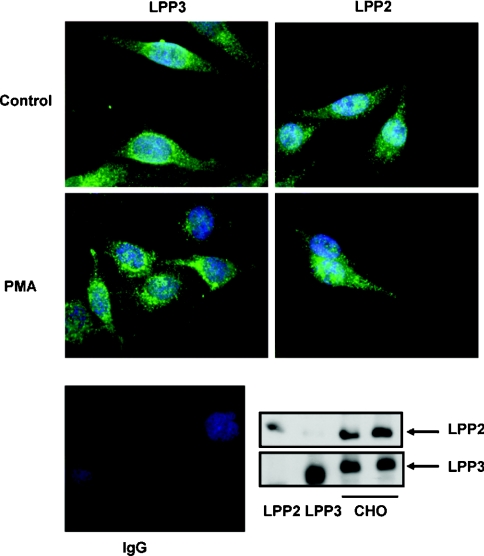
Figure 5. Subcellular distribution of endogenous LPP2 and LPP3 in CHO cells
Serum-deprived CHO cells were stimulated without and with PMA (1 μM; 10 min). LPP3 or LPP2 expression was detected using anti-LPP3 or anti-LPP2 antibodies (green) respectively. The photograph shows re-localization of endogenous LPP3, but not LPP2, to the perinuclear compartment in response to PMA. The nuclei were stained with DAPI (4,6-diamidino-2-phenylindole) (blue). Also shown are Western blots probed with anti-LPP3 and -LPP2 antibodies to demonstrate expression of endogenous LPP3 and LPP2 in cell lysates respectively. Recombinant LPP2 and LPP3 in detergent extracts of cell membranes from stably transfected HEK-293 cells are shown as positive controls. Secondary antibody alone (Ig) was used in immunofluorescent staining experiments to show the specificity of the LPP2 and LPP3 immunoreactivity with the respective anti-LPP2 and -LPP3 antibodies.

References

    1. Brindley D. N., Waggoner D. W. Mammalian lipid phosphate phosphohydrolases. J. Biol. Chem. 1998;273:24281–24284. - PubMed
    1. Kai M., Wada I., Imai S., Sakane F., Kanoh H. Identification and cDNA cloning of 35-kDa phosphatidic acid phosphatase (type 2) bound to plasma membranes. Polymerase chain reaction amplification of mouse H2O2-inducible hic53 clone yielded the cDNA encoding phosphatidic acid phosphatase. J. Biol. Chem. 1996;271:18931–18938. - PubMed
    1. Kai M., Wada I., Imai S., Sakane F., Kanoh H. Cloning and characterization of two human isozymes of Mg2+-independent phosphatidic acid phosphatase. J. Biol. Chem. 1997;272:24572–24578. - PubMed
    1. Roberts R., Sciorra V. A., Morris A. J. Human type 2 phosphatidic acid phosphohydrolases. Substrate specificity of the type 2a, 2b, and 2c enzymes and cell surface activity of the 2a isoform. J. Biol. Chem. 1998;273:22059–22067. - PubMed
    1. Leung D. W., Tompkins C. K., White T. Molecular cloning of two alternatively spliced forms of human phosphatidic acid phosphatase cDNAs that are differentially expressed in normal and tumor cells. DNA Cell. Biol. 1998;17:377–385. - PubMed

Publication types